Why Better Customers Matter More than Bigger Audiences
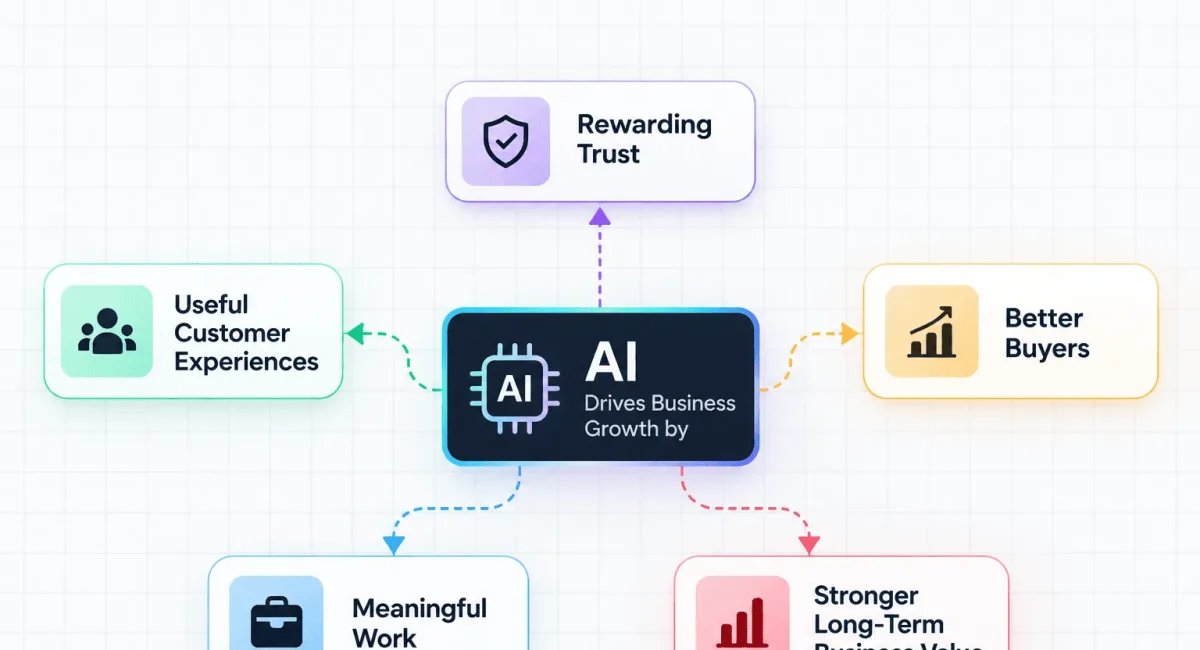
Modern marketing often treats growth as a race for scale. Bigger audiences promise more traffic. Larger email lists promise more sales. Wider reach can look impressive on a dashboard. Yet a business can become stronger when it chooses quality over sheer volume.
Healthy growth can come from better customers and better experiences. People who care about a product tend to engage more and share useful feedback. Buyers who see real value may also pay more. Strong customer relationships can create a business with greater stability than constant audience expansion.
Artificial intelligence introduces a new dimension to this dynamic. Companies can use it to cut costs and produce more output. They can also use it to create richer customer experiences and more useful relationships. The second path can create greater long-term value because customers acquire stronger reasons to stay close to a business.
Better Can Matter More Than Bigger
Many companies assume growth requires more customers. Scale can help. Quality can matter even more.
A business with a loyal customer base can produce healthy revenue without chasing endless expansion. Limited supply can even protect quality when products depend on scarce resources or specialist knowledge.
Growth can mean deeper value for chosen customers. Revenue can rise because existing buyers care more. Loyalty can grow because people receive something worth recommending. Strong businesses can choose a size that supports quality and maintains a strong customer experience.
Marketing teams often receive pressure to chase another click or another lead. Scale can quickly become the goal itself. A better question asks which customers deserve the business's energy.
Customer choice influences product decisions and pricing. Company culture changes with it. People who care about quality tend to ask stronger questions and pay for better outcomes. Customers who talk about their experience can create steady demand through trust.

Customer Choice Shapes Business Direction
Mass appeal can pull a product toward average expectations. Companies that try to please broad audiences may spend more energy chasing reach than building greater value for committed buyers.
A stronger model starts with people who care enough to respond and pay for useful work. Customer selection can guide what a business builds and how it prices its offer.
Premium software works best for people who value the result enough to pay for it. Specialist products grow when buyers appreciate expertise. Niche services succeed when customers value the experience and share it with peers.
Business owners gain leverage when they know which customers matter most. Product decisions become easier because customer priorities guide the work. Pricing gains useful context because value grows through relevance and trust.
Customer selection can influence a company for years. Buyers affect feedback and expectations. Good customers can push a business toward higher standards because they care about the result.
Easy Metrics Can Lead to Weak Decisions
Clicks and views offer convenient numbers. Revenue matters too. Easy measurement can push teams toward goals that look impressive, while customer value receives less energy.
Business activity acquires weight when customers receive a real benefit. People who recommend a product have experienced enough value to place personal trust behind the recommendation. Buyers who willingly pay more have decided that the experience deserves a premium.
Marketing teams can still track data. Better questions can sit beside the numbers. Do customers return? Do they recommend the business? Do they feel understood? Do they gain enough useful value to deepen the relationship?
Measurement works best when numbers support a rational business purpose. Metrics can work as signals while customer value stays central.
High traffic can create opportunities. Strong customer relationships can create businesses with staying power. Leaders gain more when they think beyond whichever number rises fastest on a dashboard.
AI Can Create a New Customer Relationship
AI can do far more than reduce costs. A useful system can learn what a customer owns and what they need. Imagine a person who shares photos of a workshop and later asks where a certain tool is stored. AI could help locate it or identify a missing item needed for a project.
Useful guidance could extend to purchasing. The assistant could identify a needed product and offer a convenient way to obtain it. Trust grows because the system helps the customer complete genuine work.
Personal knowledge becomes valuable when customers willingly share information and receive useful benefits in return. Companies build stronger relationships because an AI helper can become part of a customer's workflow.
Brand value can then grow through usefulness and earned trust. Price still matters. Convenience still matters. Personal relevance can carry more weight because customers gain assistance that understands their goals and available resources.
Marketing has long tried to learn what customers want. AI allows a richer interaction. Customers can explain projects and preferences directly. Businesses can respond with useful guidance based on context.

Permission Can Become a Valuable Business Asset
Many digital businesses collect behavioral data in the background. A stronger model invites customers to share information because the benefit feels useful and welcome.
Permission changes the relationship. Customers can choose what the system learns. Companies can offer help based on information customers provide willingly. Trust grows through an exchange where customer value stays visible.
Useful relationships can reach a point where customers miss the service when access disappears. Trust at that level carries greater weight than frequent promotional messages. People welcome help when it solves a real problem.
AI makes permission especially important because personalized systems can learn a great deal about users. Companies that earn access through useful experiences can build strong relationships with customers who willingly participate.
Trust also creates commercial value. Customers can become more comfortable sharing preferences when previous exchanges have produced worthwhile results. Better context then allows the business to provide more relevant help.
Small Businesses Have a Strong AI Opportunity
Small business owners often spend much of the day handling urgent tasks. AI can create extra capacity for research and planning. It can support analysis and routine production work as well.
AI systems can work like eager junior assistants. They need direction and review. They can contribute useful value when a capable person guides the work.
Small business owners can begin with limited jobs. One system might research customer questions. Another might summarize sales feedback. Another might map possible project routes. Experience with delegation teaches owners how to ask better questions and evaluate results with stronger judgment.
Management becomes an increasingly valuable skill. Owners who learn how to direct AI can create more capacity for high-value decisions and customer relationships.
Small companies may gain particular value because extra capacity can have a large effect on a compact team. An owner who gains several productive hours can spend that capacity on customers and product decisions. AI becomes useful when it creates space for higher-value human work.
Learn to Manage AI Like a Team
AI can guide people's work, or people can learn to guide AI. Powerful use requires clear goals and thoughtful review.
Various habits that help junior employees succeed can also help AI. Useful instructions explain desired outcomes and relevant constraints. Good review checks accuracy and usefulness. Repeated feedback helps people improve the process.
AI fluency grows through practice. Small assignments can teach users where a system performs well and where human judgment adds greater value. Business teams can gradually build repeatable workflows that free people for decisions requiring experience and empathy.
Learning how to direct AI means understanding its strengths through practical use. People can discover which tasks fit AI well and which decisions benefit most from human judgment. Experience becomes the teacher.
Business leaders who develop that skill gain leverage. They can delegate routine work while protecting time for customer understanding and higher-value decisions.

Better Work Can Matter More than More Work
Technology creates more capacity. Greater capacity creates a choice.
A business can use AI to produce more content and more outreach. Another business can use the same tools to solve better problems and create more useful customer experiences.
The second path can produce stronger long-term value. People remember businesses that help them accomplish something meaningful. Customers stay close when they feel understood and respected.
Better work does not require a global impact. A product can improve one person's day. A service can remove a frustrating problem. A useful tool can help someone finish a project with less friction.
Business value grows when people feel the result. More output can help. Better outcomes matter more.
The Future Belongs to Useful Businesses
Marketing's future will likely reward companies that understand customers with greater depth. AI can support that goal when businesses use it to improve service and customer understanding.
Reach will still matter. Data will still matter. Revenue will still matter. Yet trust can become a stronger source of long-term value.
The best customer may be the person who cares enough to engage and return. The best use of AI may be the system that helps a customer solve a real problem. The best growth strategy may be the one that protects quality while increasing value.
Businesses can choose customers with care and use technology to help them better. A strong company does more than chase visibility. It earns a place in the customer's life through usefulness and trust.
 Make your brand matter.