Understanding the Core Ideas Behind Artificial Intelligence

Artificial Intelligence Explained from the Ground Up
Artificial intelligence can feel strangely familiar now. People talk to chatbots, generate images, automate reports, analyze documents, and ask software to help with decisions. Five years ago, many of those tasks felt specialized. Today, they can happen from a browser tab.
Still, the current AI wave makes far more sense once we know where the ideas came from.
We at Operendia use artificial intelligence in research, automation, data work, content systems, customer communication, and commercial operations. Yet the useful conversation starts much earlier than tools. It starts with a simple question: What do we actually mean when we say intelligence in a machine?
What Is Artificial Intelligence?
Artificial intelligence refers to computer systems that perform tasks associated with human cognitive abilities. Examples include language comprehension, pattern recognition, prediction, planning, classification, reasoning, and problem solving.
The word “intelligence” can create unnecessary mystery. Modern AI systems usually learn statistical relationships from large amounts of data and use them to produce output.
Some systems identify objects in images. Others predict customer churn. Language models estimate which token should come next based on prior context. Recommendation systems estimate which products, films, songs, or articles may interest a person.
AI, therefore, covers a broad family of methods. Machine learning sits inside that family. Deep learning sits inside machine learning.

Narrow AI, General AI, AGI, and ASI
Most AI available today belongs to Narrow AI.
Narrow AI handles a limited class of tasks. Google Search, recommendation engines, fraud detection models, translation systems, computer vision software, and modern chatbots all fit here. Some can perform many related tasks, yet their capabilities still come from specific model architectures, data, and training objectives.
General AI refers to a broader concept: machine intelligence with flexible cognitive ability across many domains.
AGI, or Artificial General Intelligence, typically refers to a system capable of learning and reasoning across intellectual tasks at a level comparable to human general ability. Researchers debate the exact threshold, so AGI remains a concept with several competing definitions.
ASI, or Artificial Superintelligence, refers to a hypothetical intelligence that surpasses human ability across a wide range of cognitive domains.
Narrow AI is here today. AGI remains an open research question. ASI belongs to theoretical discussion.
That distinction matters. Business conversations become far healthier when teams separate current capability from future speculation.
Artificial Intelligence, Machine Learning, and Deep Learning
People often use AI, machine learning, and deep learning interchangeably. They sit at different levels.
Artificial intelligence is a broad field.
Machine learning is an AI method in which models learn patterns from data and use those patterns for prediction, classification, recommendation, or generation.
Deep learning is a machine learning approach based on neural networks with many computational layers.
Traditional machine learning may use models such as decision trees, support vector machines, regression methods, or clustering algorithms. Deep learning uses neural networks that can discover complex relationships in text, images, audio, video, and other forms of data.
Modern generative AI owes much of its progress to deep neural networks, large datasets, specialized hardware, and advances in model architecture.
AI Started Long Before ChatGPT
Artificial intelligence has a longer history than many people realize.
Mathematicians and philosophers had already explored formal logic, computation, and machine reasoning during the early twentieth century. Alan Turing became one of the central figures in computer science through his work on computation.
The term "artificial intelligence" gained academic recognition at the Dartmouth workshop in 1956. Researchers, including John McCarthy, Marvin Minsky, Claude Shannon, and Nathaniel Rochester, helped establish AI as a formal research field.
Early optimism ran high. Researchers believed computers might soon solve problems associated with reasoning, language, and human cognition.
Computing resources were modest by current standards, yet the ambition was enormous.
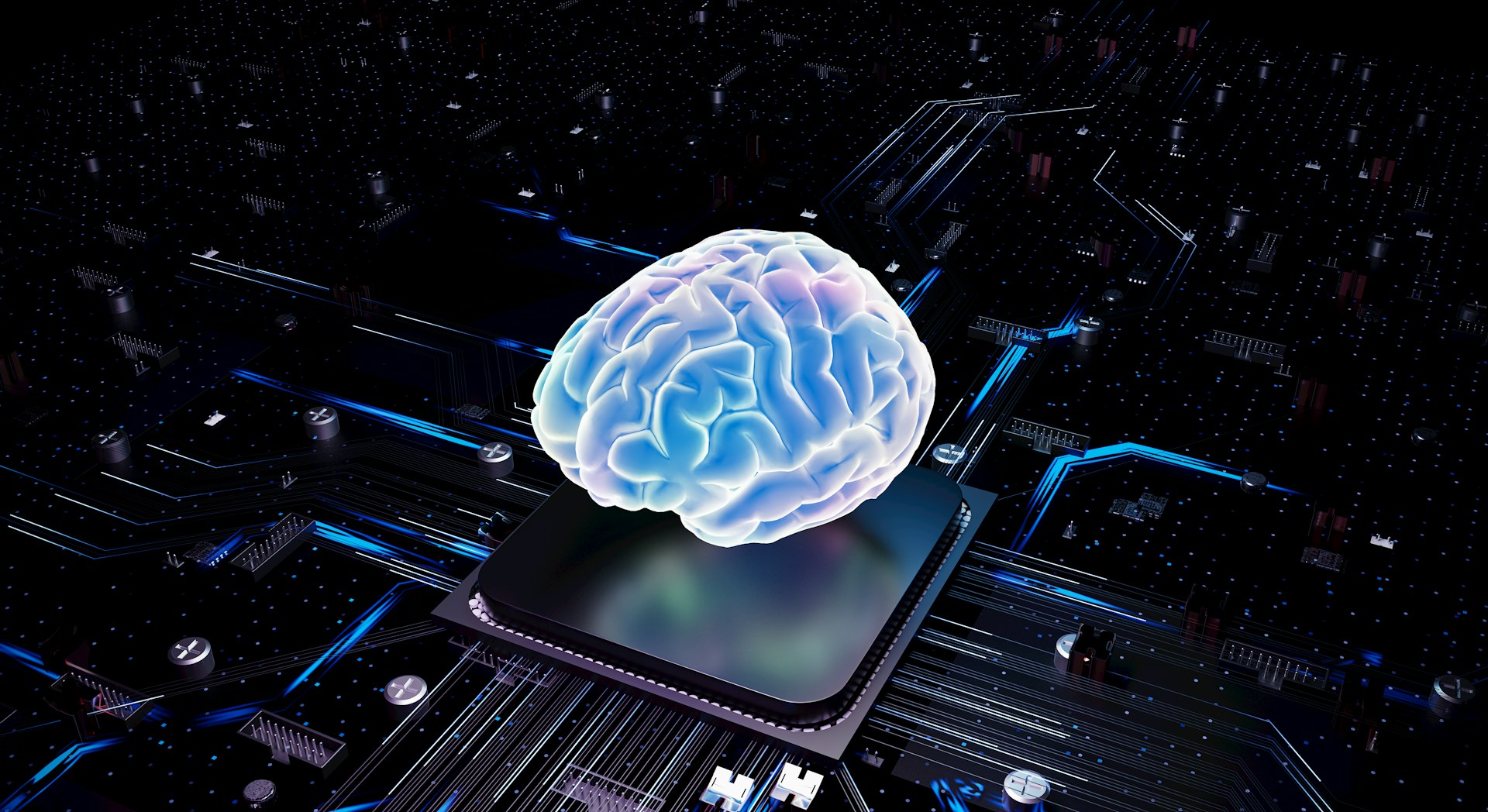
The Turing Test and the Intelligence Question
Alan Turing proposed a famous thought experiment in his 1950 paper Computing Machinery and Intelligence.
Instead of arguing over the philosophical meaning of machine thought, Turing proposed an imitation game. A human evaluator would communicate via text with a human and a machine. If the evaluator struggled to identify which participant was the machine, the machine would demonstrate behavior associated with human-like conversation.
The Turing Test became one of the best-known ideas in AI history.
Modern AI research uses many broader benchmarks, yet Turing’s proposal still matters because it shifted the debate toward observable behavior.
Can a machine respond in ways people interpret as intelligent?
That question still sits close to today’s generative AI conversation.
Expert Systems: Intelligence Through Rules
Expert systems became an important AI direction during the 1970s and 1980s.
They encoded specialist knowledge as explicit rules. A typical system might contain statements such as:
“If condition X appears and condition Y appears, recommend result Z.”
Medical diagnosis, engineering, finance, and industrial decision support became common research areas.
Systems such as MYCIN demonstrated how computers could use rule sets to reason within a narrow professional domain.
Expert systems offered real value because they transferred specialist logic into software. Their limits also became visible as rule bases grew. Human knowledge contains ambiguity, context, exceptions, and uncertain relationships. Maintaining enormous rule sets became expensive.
The lesson still feels relevant today: encoding knowledge and learning knowledge are very different approaches.
Symbolic AI: Intelligence as Logic
Early AI research leaned heavily on Symbolic AI.
Symbolic methods describe knowledge with explicit concepts, rules, and logical relationships. A system manipulates those representations according to programmed logic.
Think of it as intelligence through symbols and rules.
Researchers used symbolic AI for theorem proving, planning, language research, and expert systems. The approach worked well when a problem could be described through clear rules.
Real life brought greater uncertainty. Language has ambiguity. Images contain messy variation. Human decisions depend on context.
That challenge opened the door for statistical approaches.

Statistical AI: Learning From Probability
Statistical AI uses probability and data to estimate likely outcomes.
Instead of writing a rule for every possible case, researchers train models on examples. The model learns relationships inside the data.
Email spam filters provide a simple illustration. Programmers could try to write thousands of rules for suspicious emails. A statistical system can learn from large sets of messages labeled as spam or legitimate mail.
More data often gives the model a richer basis for estimation.
Machine learning grew rapidly as digital data expanded and computer hardware improved. Search engines, recommendation systems, speech recognition, fraud detection, and predictive analytics all benefited from statistical approaches.
Connectionism and the Idea Behind Neural Networks
Connectionism takes inspiration from networks of biological neurons.
The core idea is elegant: intelligence may arise from many simple computational units that interact through weighted connections.
Artificial neural networks use layers of such units. Data enters one side. Mathematical operations pass information through the network. The system adjusts numerical weights during training so future outputs move closer to desired results.
Connectionism became an alternative to rule-heavy symbolic systems because knowledge could be learned through distributed patterns.
The concept has existed for decades. Its modern success came after several technical and computational breakthroughs.
The Long History of Neural Networks
Neural network research began surprisingly early.
Warren McCulloch and Walter Pitts published a mathematical model of artificial neurons in 1943. Frank Rosenblatt introduced the perceptron during the 1950s. The perceptron could learn simple classification tasks.
Interest rose. Then limitations became apparent.
Research slowed for a period, yet neural network ideas survived.
The 1980s brought renewed interest, driven by advances in backpropagation, a method that enables multilayer neural networks to adjust internal weights based on prediction error.
More progress followed during the 1990s and early 2000s. Data volumes grew. Graphics processing units gave researchers enormous computational capacity. Better training methods made larger neural networks viable.
In 2012, AlexNet achieved a major result in the ImageNet image recognition competition. The success helped convince the wider technology sector that deep neural networks could produce major gains at scale.
The years after AlexNet saw rapid advances in speech, vision, translation, and language.
From Neural Networks to Modern Generative AI
Transformer architecture changed the direction of language AI after its introduction in 2017.
Transformers use an attention mechanism that lets models calculate relationships between elements in a sequence. That architecture proved highly effective for language and was later extended to images, audio, video, biology, and multimodal systems.
Large language models learn from enormous text collections. During training, the model develops numerical representations of language patterns and relationships.
When a user writes a prompt, the model uses the given context and learned statistical patterns to produce a response.
It feels conversational because language itself is conversational.
Behind the interface sits mathematics, training data, model architecture, computing infrastructure, and inference software.
AI Booms and AI Winters
AI history has moved through cycles of optimism and disappointment.
Periods of strong investment and rapid research progress became known as AI booms. Periods of reduced funding and lower interest became known as AI winters.
Early optimism during the 1950s and 1960s eventually met hardware limits and research barriers. Funding declined during the 1970s.
Expert systems created another period of enthusiasm during the 1980s. Commercial limitations and high maintenance costs later reduced interest again.
Machine learning, neural networks, large data sets, and GPU computing brought AI back with far greater force during the 2000s and 2010s.
Generative AI produced another major acceleration after 2022. Language models reached mass audiences because anyone could type a sentence and interact directly with advanced AI.
The pattern offers a useful lesson. Technology cycles respond to capability and economics. Progress becomes commercially meaningful when research, infrastructure, data, and usable products arrive together.
Where Operendia Places AI
Operendia sees AI as leverage for commercial systems.
Machines are exceptionally useful for repetition, data processing, research assistance, workflow automation, classification, content infrastructure, and large-scale operational mechanics.
Human judgment belongs in strategy, empathy, market interpretation, cultural reading, commercial choices, and decisions about what deserves repetition.
That distinction matters more as AI becomes easier to access.
Generating output is becoming cheap. Choosing valuable output remains difficult.
Companies, therefore, gain less from owning an AI subscription and far more from knowing where AI should sit inside the business.
Which task consumes unnecessary hours? Which customer conversation repeats hundreds of times? Which sales process loses data? Which report arrives too late? Which workflow contains predictable manual work?
Those are useful AI questions.
The Foundation Is Simpler Than the Hype
Artificial intelligence has changed enormously since Turing, early symbolic systems, and the first perceptrons. The current generation feels different because advanced AI now reaches ordinary people through familiar interfaces.
Still, the foundation remains understandable.
AI is a broad field concerned with machines' capabilities associated with intelligence.
Machine learning lets systems learn patterns from data.
Deep learning uses multilayer neural networks.
Symbolic AI relies on explicit logic.
Statistical AI relies on probability and learned patterns.
Connectionism inspired neural-network approaches.
Generative AI uses modern neural architectures to produce new text, images, audio, video, code, and other outputs.
The technology is powerful. The commercial question remains wonderfully human:
What useful work should we ask it to do?
 Make your brand matter.