Google AI Mode Ads in 2026: How Will They Change Digital Advertising
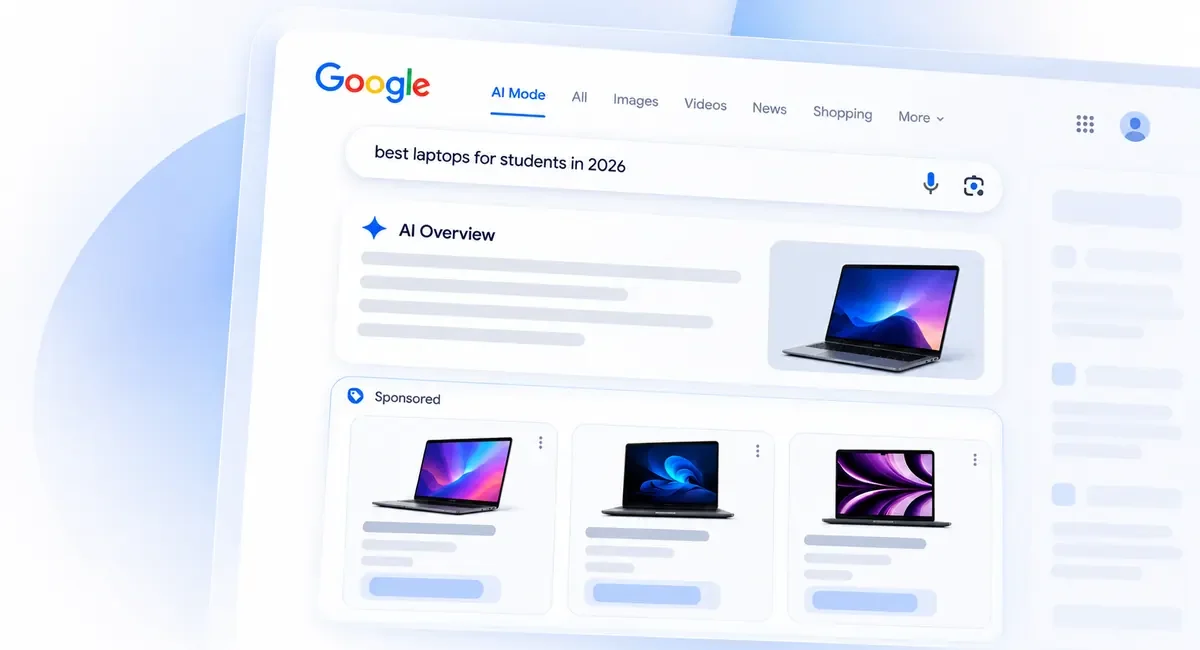
Search advertising used to feel relatively predictable. Someone typed a keyword into Google, saw a selection of results and ads, and decided which website to visit.
Google AI Mode changes how people can search. Someone can describe a problem in everyday language, ask follow-up questions, compare options, and receive an AI-generated response during the same conversation.
Advertising is entering those conversations.
Google began testing ads in AI Mode in 2025. During 2026, the company introduced new advertising formats and expanded the capabilities of AI Max. Advertisers now have to think further than keywords and traditional search results.
The commercial question remains familiar: Can an advertisement reach someone with a genuine need and help the business acquire a profitable customer?
Understanding Google AI Mode advertising starts with how the product works today and the changes Google has announced.
What Are Google AI Mode Ads?
Google AI Mode Ads are paid advertisements that can appear alongside or within AI-generated search responses.
Google AI Mode lets people ask complicated questions using natural language. Users can continue the conversation with follow-up questions and receive answers informed by Google's search systems.
Consider someone planning a home renovation.
Instead of searching for “kitchen renovation company,” the person might ask Google to compare kitchen materials for a family home in a humid climate. The conversation could continue with questions concerning installation costs and suitable contractors.
Google may identify an appropriate commercial opportunity during that discussion.
An eligible advertiser might appear as a sponsored recommendation relevant to the person's request.
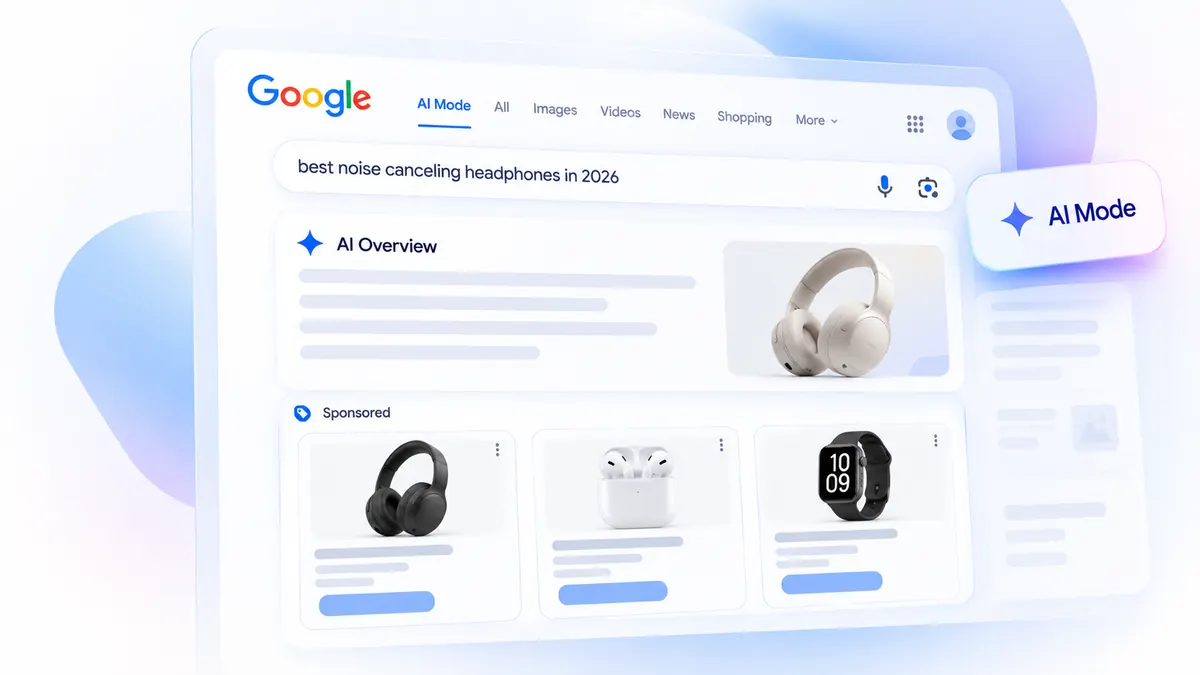
The important distinction is that an AI-generated recommendation and a paid advertisement are different forms of content. Google identifies advertisements with sponsored labeling.
AI Mode advertising extends the familiar concept of paid search into a conversational environment.
How Do Ads Work in Google AI Mode?
Traditional search advertising relies heavily on the relationship between a query, eligible keywords, bidding settings, and ad relevance.
AI-powered search advertising uses a wider understanding of the user's request.
Google can interpret the topic and surrounding context of a conversation to identify commercial interest. Eligible campaigns can then participate in an ad selection process.
Imagine someone asking:
“What equipment would I need to start a small podcast studio?”
The person might continue by asking for recommendations on microphones and suitable audio interfaces. A retailer selling recording equipment could have an opportunity to appear during the discussion.
The advertisement needs to relate to the person's current question and available product information.
Google has described placements below AI responses and within relevant portions of those responses. Availability varies by product and active tests.
Advertisers should treat Google AI Mode as an additional advertising environment within Google Search, rather than assume it operates as a completely separate campaign platform.

How Are Google AI Mode Ads Different from Traditional Search Ads?
The difference begins with how people communicate their needs.
Traditional search queries can be short and direct. Conversational search often contains context and multiple requirements.
Someone might search for “CRM software Dubai” in a conventional Search.
In AI Mode, the person might ask for software suitable for a twenty-person sales team that needs WhatsApp integration and regional customer support.
The second request contains useful commercial information.
AI systems may use that information to identify relevant advertisements and product options. Advertisers still need to meet campaign eligibility requirements and have competitive offers.
Another difference concerns placement.
Traditional Search ads appear in familiar search result positions. AI Mode can present sponsored content alongside explanations, product comparisons, and follow-up discussions.
Both environments rely on the same commercial fundamentals: relevance, bidding, website quality, and reliable conversion measurement.
Conversational advertising changes the context in which those fundamentals operate.
What Changed in Google AI Mode Advertising in 2026?
Google announced several developments during 2026.
In February, the company discussed new sponsored shopping options within AI Mode, including advertisements associated with products already appearing in organic AI recommendations.
During Google Marketing Live on May 20, Google presented further AI-powered advertising formats.
Conversational Discovery Ads were introduced to connect advertisers with people researching products through natural-language conversations.
Highlighted Answers were presented as another way for advertisements to appear alongside commercially relevant responses.
Google expanded its Direct Offers pilot, which allows eligible advertisers to present special offers during relevant shopping discussions. The company discussed applications involving travel offers and product promotions.
Google continued work on AI-powered Shopping ads that use product information to address conversational queries.
The announcement included testing and pilot initiatives. Availability should be checked against Google's current product documentation, account eligibility, and supported markets.
Google's May 2026 advertising announcement provides the original details.
How Does Google AI Decide When to Show Ads?
Google evaluates advertising eligibility based on the user's query and available commercial signals.
Relevant information can include the interpreted search request, product data, campaign settings, bidding signals, and available landing-page content.
Search intent remains central.
Someone asking about the history of photography may have little immediate interest in making a purchase. Someone comparing cameras within a specific budget expresses a different kind of need.
AI-powered systems can recognize the commercial context within complex questions.
The exact criteria and auction mechanics for individual AI Mode placements are not fully disclosed publicly. Advertisers should avoid assuming that an ordinary organic AI citation guarantees paid advertising exposure.
Good targeting still begins with understanding potential customers.
What Are the Benefits of AI Mode Ads for Advertisers?
One potential benefit is access to commercially relevant questions that conventional keyword lists may miss.
People describe problems in many different ways. A company may sell a suitable service even when the prospect uses unfamiliar terminology.
AI-powered search systems can identify relationships between those questions and relevant commercial offers.
Another opportunity concerns product evaluation.
People frequently need information before contacting a company or buying a product. A relevant sponsored result can appear during that research process.
AI Mode could help advertisers reach customers during the comparison and consideration stages.
Retailers may benefit from product-based formats. Service companies may benefit when conversational searches identify problems their services can solve.
The value still depends on customer quality and commercial outcomes.
More advertising exposure has limited value if the resulting visitors lack purchasing interest.

How Will Google AI Mode Impact PPC Campaign Performance?
PPC performance may change as search behavior develops.
Keyword-based reporting has traditionally helped advertisers understand which terms generated clicks and conversions. Conversational searches create more complicated combinations of needs and interests.
Advertisers may see additional opportunities from long-tail searches that conventional campaign structures previously missed.
Performance may vary depending on the industry and user behavior.
AI-powered PPC campaigns could produce additional qualified inquiries for some advertisers. Others may attract research-oriented traffic that generates relatively few immediate purchases.
Cost per click remains useful, yet businesses should evaluate cost per qualified lead and customer acquisition cost.
Google Ads ROI optimization needs evidence from actual transactions or accepted sales opportunities.
An advertising report showing additional conversion offers is useful information. A sales report showing new profitable customers provides stronger commercial evidence.
How Can Advertisers Prepare Their Google Ads Campaigns for AI Mode?
Preparation begins with the existing campaign setup.
Review Search campaigns and determine which products or services need stronger commercial coverage.
Improve landing pages so they answer the questions customers ask during evaluation. Service descriptions should explain the offer and provide credible evidence.
Retailers should maintain accurate Merchant Center data. Product titles, descriptions, availability, and prices contribute to advertising quality.
Review conversion tracking as well.
A submitted inquiry and a signed contract have different commercial values. Sending accurate outcomes from the CRM can help automated bidding understand the results the company values.
Advertisers using Smart Bidding should review their conversion goals and bidding strategy against actual commercial priorities.
Creative assets deserve attention, too. Headlines and descriptions need to clearly communicate the offer and remain suitable across different search contexts.
AI-generated ad creatives require review for accuracy and consistency with the company's products.
What Role Do Performance Max and AI Max Play in AI-Powered Search?
Google AI Max and Performance Max are related advertising products with different scopes.
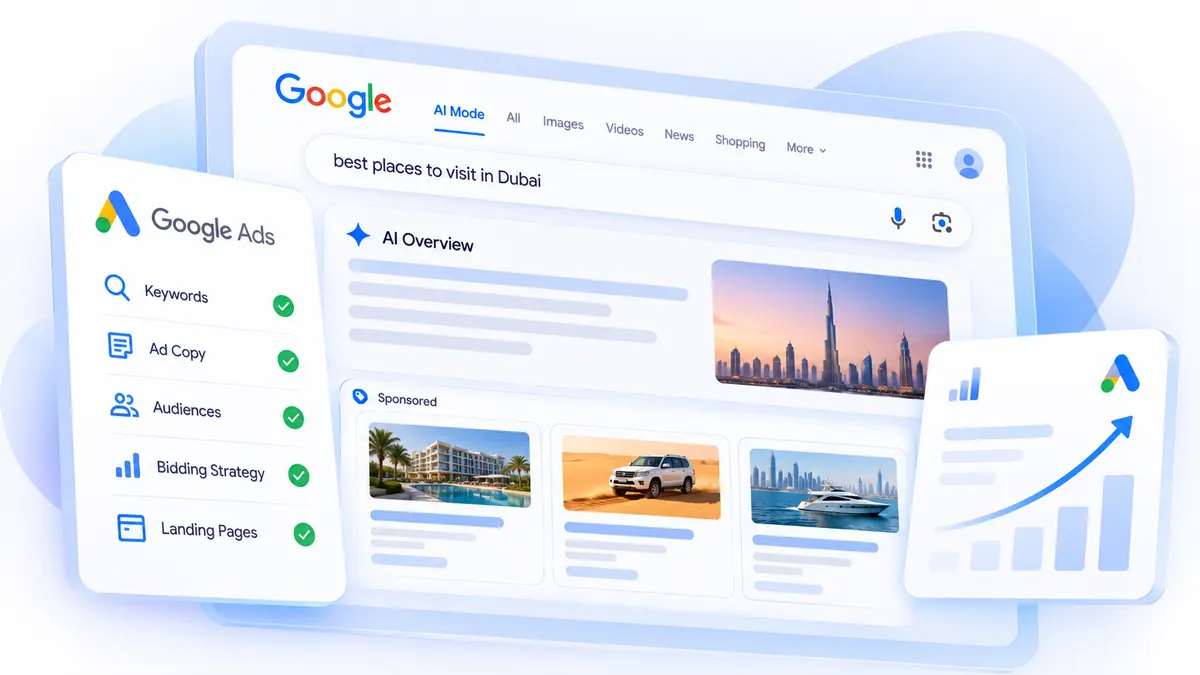
AI Max for Search expands the capabilities of eligible Search campaigns. Its features include search term expansion, text customization, and final URL expansion.
Search term expansion helps Google identify relevant queries outside the advertiser's existing keyword coverage.
Text customization can generate advertising language using campaign information and website content.
Final URL expansion can select relevant landing pages based on the searcher's request.
Performance Max works across multiple Google advertising channels, including Search, Shopping, YouTube, Display, Discover, Gmail, and Maps.
It uses Google AI to allocate advertising activity according to campaign goals and available signals.
Google extended AI Max capabilities during 2026. In April, it announced AI Max for Shopping and additional features for advertisers.
AI Max for Search moved out of beta in 2026. Google's revised migration schedule places automatic upgrades of legacy Dynamic Search Ads beginning in February 2027, whereas certain other legacy settings began migrating in September 2026.
Advertisers can consult Google's AI Max documentation to review available settings.
How Can Advertisers Measure AI Mode Ad Performance?
Measurement deserves particular care.
Advertisers can use Google Ads reporting to review campaign activity, conversion results, search terms, and landing-page performance.
AI Max reporting includes information on expanded search term eligibility and automatically generated creative assets.
Google announced further developments in AI Max, reporting on September 23, 2026. The proposed reporting view connects search terms with creative assets and destination pages. Google indicated that further availability details would follow.
An important limitation remains: AI Max performance reporting and AI Mode placement-specific reporting are different questions.
AI Max reports show the performance of campaign features. They do not automatically provide a fully isolated commercial performance report for AI Mode advertisements.
Advertisers should examine the reporting dimensions available in their accounts and avoid attributing conversions to AI Mode solely to AI Max activity.
Google Ads conversion tracking can be connected with CRM outcomes to distinguish inquiries from qualified opportunities.
The measurement objective is clear: determine which advertising investments contribute to valuable customer acquisition.
 Make your brand matter.