Replaceable AI Models and the Cost of Changing Providers
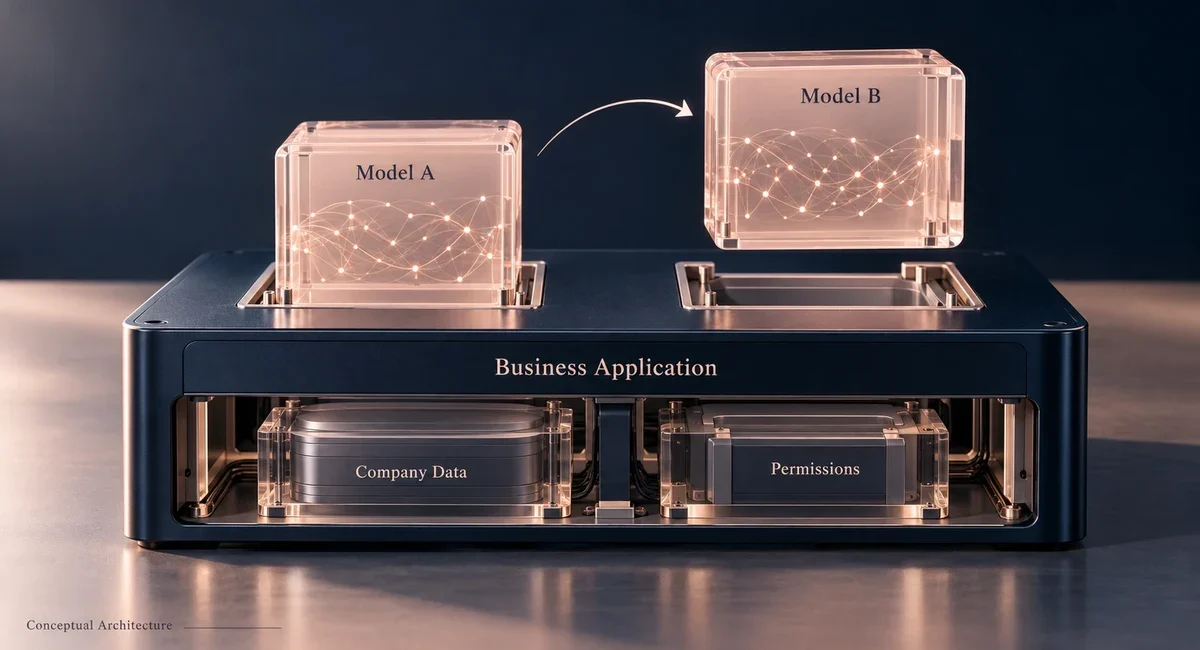
Replaceable AI models let a business assess a new supplier while retaining the application its employees already use, provided the replacement passes the operation's acceptance tests. The commercial benefit is an affordable choice when a supplier changes its offering. For a company commissioning an AI application, the purchasing brief needs to specify how engineers will demonstrate a provider change and which expenses remain attached to it.
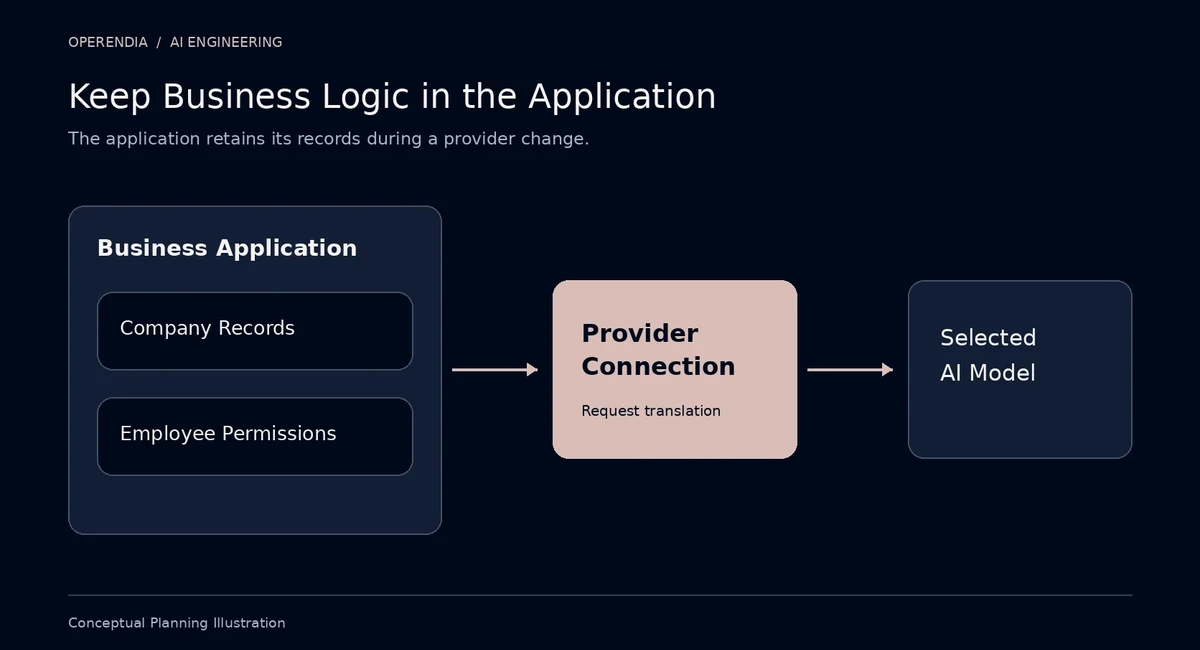
Model access is one dependency within a working product, with company records and employee permissions maintained elsewhere in the application. After model replacement, the business still needs its original customer history. If replacing the language model requires rebuilding the customer portal, the integration has tied two separate investment decisions together.
Keep the Business Application Separate
Engineers assessing a proposed migration need to identify where the application translates a business task into the selected provider's request format. Microsoft describes a translation boundary between software systems as a way to isolate differing data conventions. Applied to an AI application, the design places provider-specific request handling behind an interface owned by the business. The surrounding software continues to use its own records.
For an internal policy assistant, an employee's question passes through permission checks prior to retrieval from approved company documents. The model receives selected evidence and prepares an answer. Engineers can change the component handling model communication while preserving the document repository. To retain the existing employee interface, engineers must test how the replacement answer appears in its screen.
The translation component carries a maintenance cost, particularly when a provider introduces a response format requiring additional handling inside the application. Microsoft's architecture guidance identifies additional latency and maintenance as trade-offs. Purchase the separation needed for the intended workload. For a small text-only assistant, compare an elaborate routing service with a simpler integration against the actual workload.
Test Compatibility Against the Actual Task
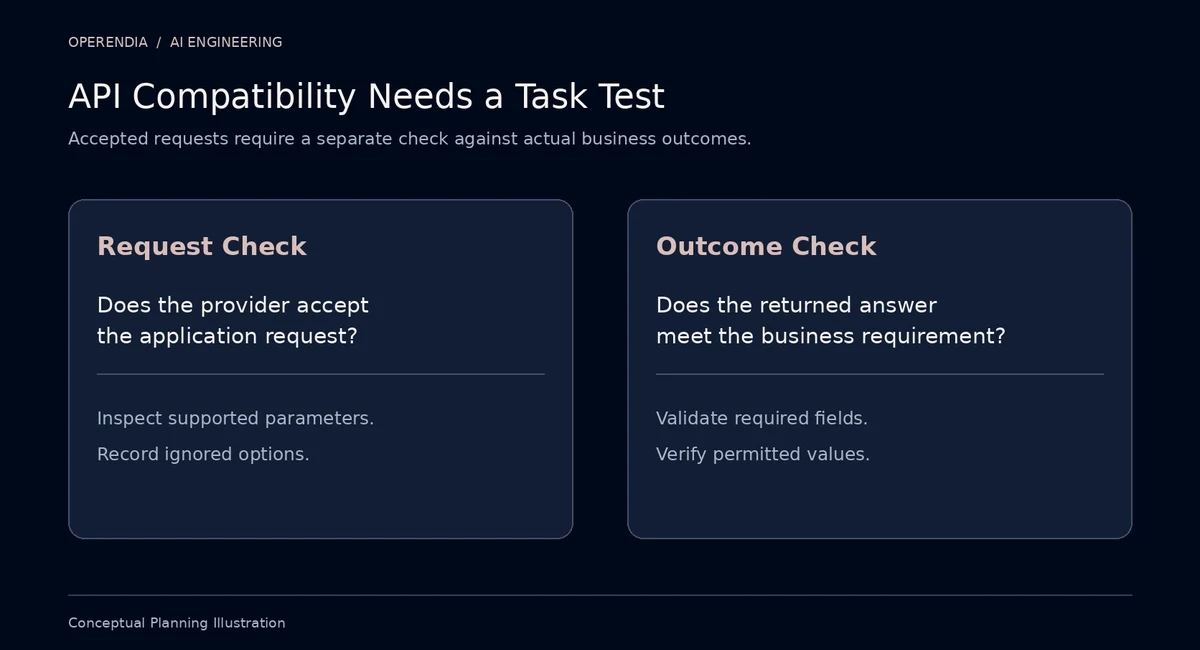
Suppliers advertising compatible APIs usually describe a shared request convention, so procurement teams need a separate assessment covering the features their application actually uses. Anthropic's SDK compatibility documentation illustrates the distinction through specific limitations. Its compatibility layer ignores the strict setting attached to tool definitions. The documentation identifies unsupported fields which the compatibility layer silently ignores.
For a model preparing data for another application, accepted request syntax leaves a further question concerning the returned data's suitability for the receiving software. The engineering test needs to inspect required fields and permitted values. If an answer requires a customer identifier, the application must validate the identifier against the authorized record. Approval to process a request remains an application decision after the model changes.
Prompts tuned for the incumbent model deserve their own revision allowance during migration, since the replacement may produce a different interpretation. Anthropic recommends reassessing prompts during compatibility testing. Record prompt revisions beside the candidate model's version so a later investigation can reproduce the tested configuration. The purchasing comparison needs the incumbent prompt kept current alongside the revised candidate.
Distinguish a Model Change from a Provider Change
OpenRouter's provider selection documentation describes routing requests among providers offering a selected model, with settings governing permitted routes. Its separate model fallback mechanism tries another model after specified errors. Procurement needs to identify which substitution the proposed service permits. For the same model, another host changes the processing destination; a model replacement changes the system generating the answer.
For an enterprise assistant handling approved documents, a fallback route needs the same data-handling review as the primary route prior to receiving company material. Technical availability supplies only part of the approval. The business needs the permitted processing destination recorded in its configuration, with restrictions maintained when routing changes. Review current provider terms against the intended material through the company's established approval procedure.
OpenRouter documents a setting requiring providers to support all requested parameters, which is useful when an application depends on a particular response option. Enable the relevant restriction only after testing the eligible routes. If the permitted route becomes unavailable, the product needs an explicit recovery path for the waiting employee. Acknowledgment of the unfinished request lets the employee decide whether to wait or use the existing manual method.
Price the Change Using Accepted Work
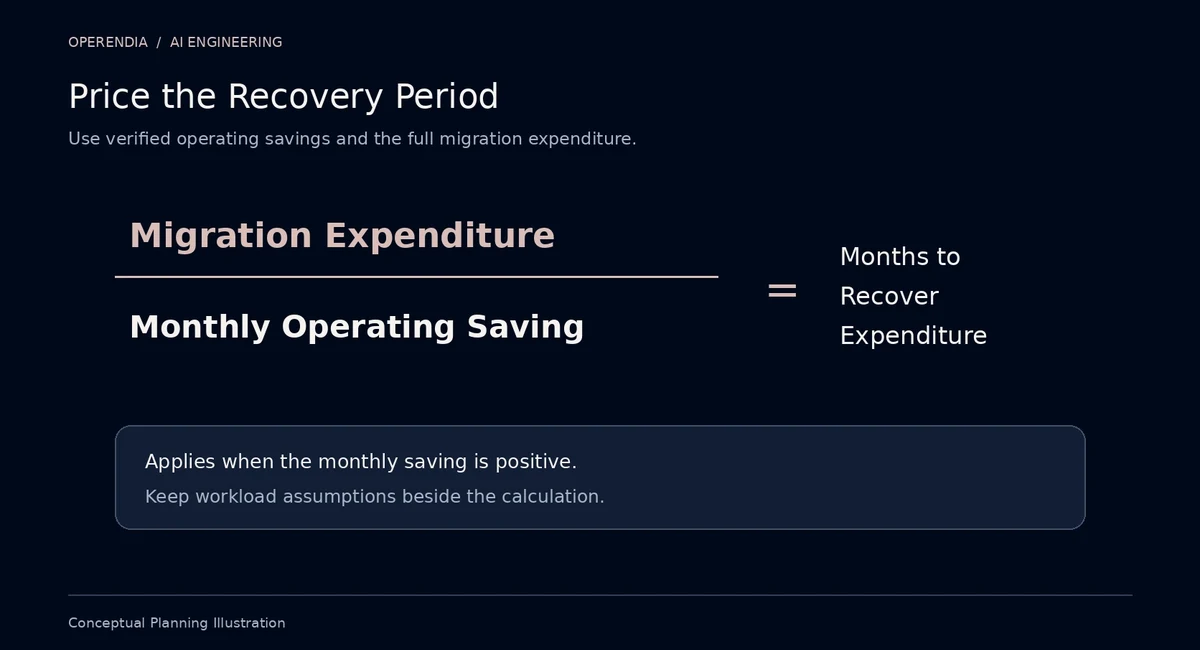
Finance teams assessing a replacement need the proposed operating expense and the engineering expenditure required to move the existing workload. Separate the migration allowance from the recurring comparison. The initial expense covers implementation and testing; ongoing maintenance belongs in the annual operating budget. Model charges enter the calculation through the quantities actually billed during comparable tasks.
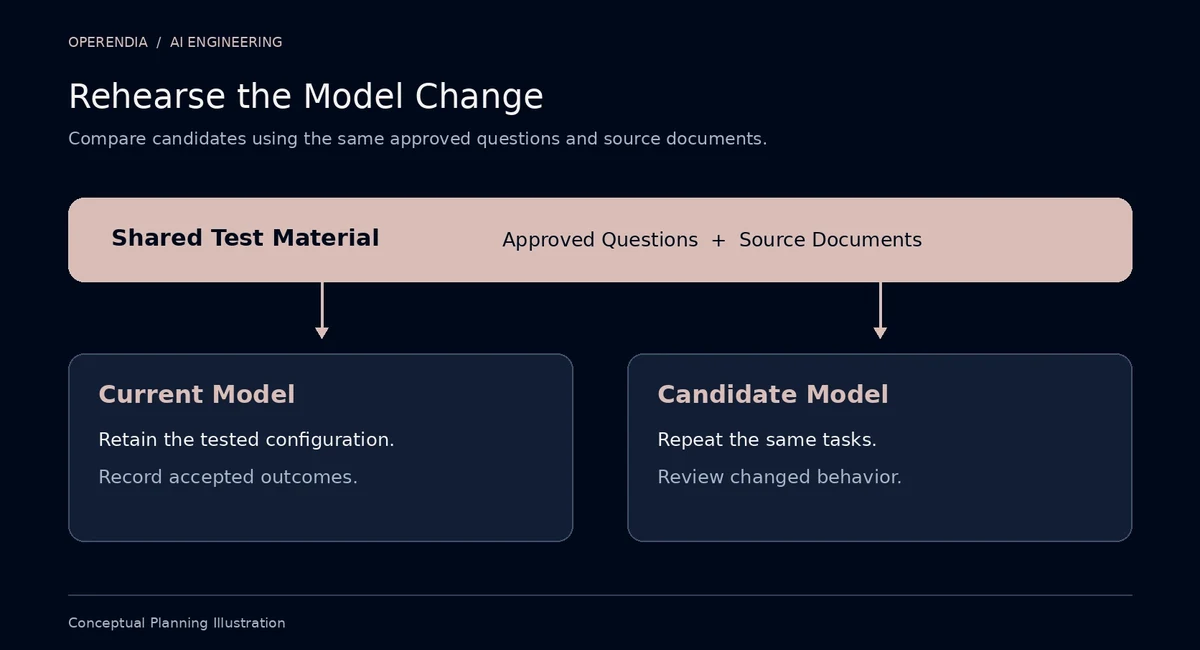
For the policy assistant, compare answers using the same approved question set and the same source documents available to both candidates. Record the employee time required to correct an answer after model processing. If a candidate returns incomplete evidence, the time spent obtaining the missing passage belongs in its task cost. OPERENDIA's earlier article on AI token costs examines usage expense within a paid product; the present purchasing decision includes the additional migration investment.
The commercial calculation needs a realistic period during which the business expects to use the replacement and recover the initial expense. Divide migration expenditure by the verified monthly operating saving to estimate a simple recovery period, provided the saving is positive. Treat the resulting period as a planning estimate. If workload changes, the calculation needs revision against actual invoices and the original budget assumptions.
Prove the Replacement in a Rehearsal
The most persuasive evidence for model portability is a completed replacement rehearsal using the buyer's application and actual work, with the engineering effort recorded during execution. Anthropic's January 2026 evaluation guidance recommends repeated trials to account for variation. The vendor distinguishes an agent's reported success from the actual resulting state. Affected business operations need checks at their own completion point.
In the policy assistant's rehearsal, ordinary questions establish whether the replacement retrieves usable evidence and answers within the agreed response time. Difficult questions need separate inspection, particularly when two source passages conflict. Reviewers should verify the response's treatment of uncertainty against the company's approved policy. Include questions in the languages employees actually use, with qualified reviewers assessing the answer in those languages.
After offline testing, an approved limited rollout permits comparison against live operational requirements while retaining a tested route back to the prior configuration. Save the model configuration alongside the prompt version used for the release. Engineers need to demonstrate how unfinished requests are handled during reversal. The business owner decides which recorded failures require suspension and who can authorize wider use.
Retain the Information Needed for Another Move
Employees returning to an earlier conversation need the relevant history after a provider change, so the migration plan must address how the application retains usable business context. Exported text requires inspection for the source relationships needed by the replacement. If the current service holds references to uploaded documents, engineers need to test how those references will resolve after migration. Acknowledged document access in the new application supplies stronger evidence than a successful file transfer alone.
The same procurement discussion should identify who maintains the replacement connection when a supplier revises its API or retires a selected model. Include a review arrangement tied to documented provider changes. Maintenance estimates need named responsibilities for compatibility checks, with the resulting test record available to the business owner.
Commission a Demonstrable Exit Option
The procurement specification needs a replacement exercise with an agreed scope, so suppliers can price the work and the buyer can inspect what was delivered. Request an account of the application components changed during the exercise. The accompanying test results should identify the remaining differences relevant to employees. Document ownership and access arrangements belong in the engagement terms so the company retains the materials needed for future maintenance.
OPERENDIA's backend development work includes application interfaces and business permissions, which remain relevant when a company changes its AI supplier. Discuss the proposed replacement exercise with OPERENDIA using the application's actual tasks and the operating budget available for maintenance. The agreed deliverable should include a tested candidate configuration and the evidence supporting its permitted use.
 Make your brand matter.