AI Token Costs in a Commercial Product
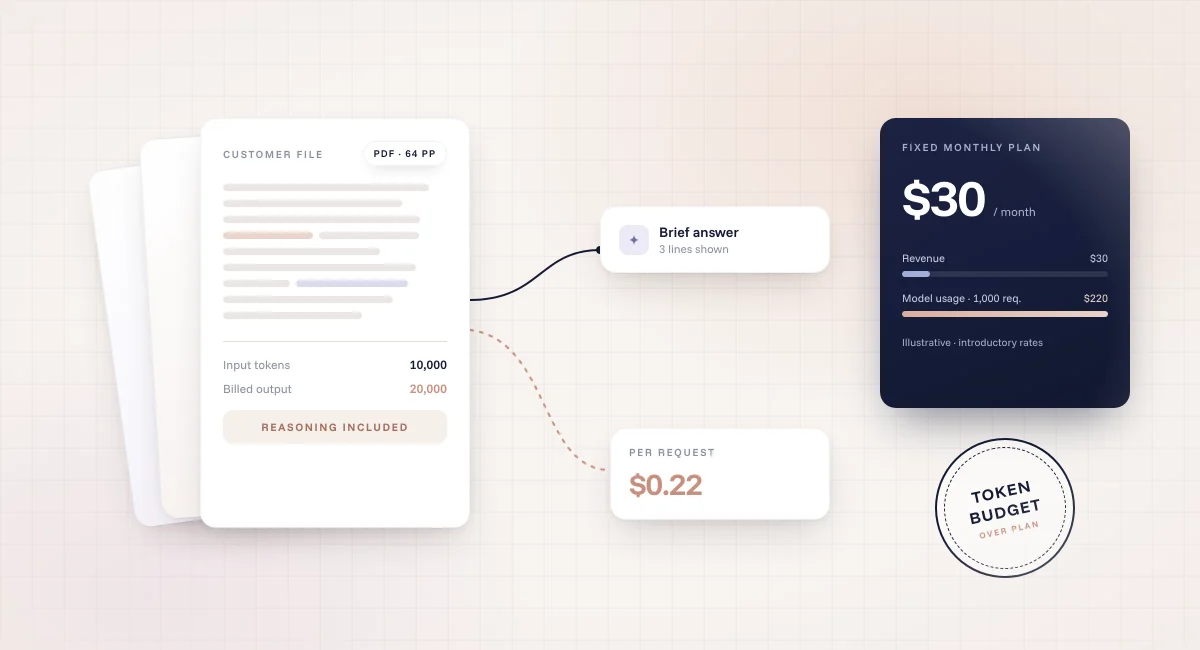
For a company selling an AI feature at a fixed monthly price, heavy customer use can consume the revenue intended to pay for the remaining product expenses. AI token costs rise as a model processes more input or generates a longer response during reasoning. After the application has incurred a substantial processing charge, customers may receive a brief response with little indication of the cost.
In a document-analysis subscription sold at a fixed fee, the amount customers upload affects the expense attached to their accounts. Long answers add further charges after the model reads the file. If the subscription price is based on a few short demonstrations, a customer uploading a much larger working file can incur an expense that the forecast omitted.
Read the Rates Against the Work
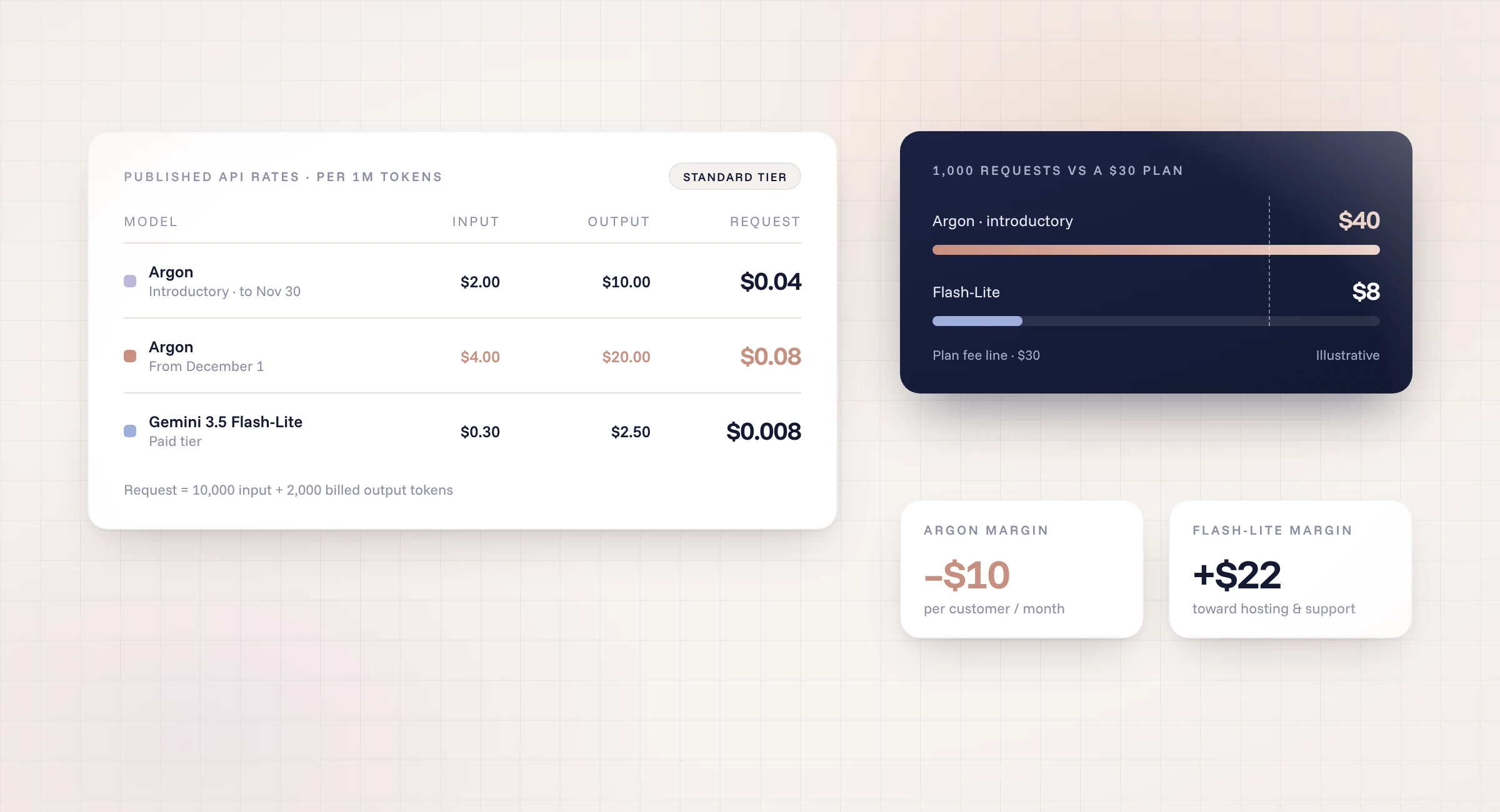
Google's current Argon documentation lists introductory API rates through November 30, 2026: $2 per million input tokens and $10 per million output tokens. On December 1, the stated rates double. For Gemini 3.5 Flash-Lite, the published paid rates are $0.30 per million input tokens and $2.50 per million output tokens. Both examples concern ordinary API processing at the listed tier; optional paid tools carry separate charges.
In an illustrative pricing calculation, a request consumes 10,000 uncached input tokens and 2,000 billed output tokens, inclusive of any reasoning allocation. The introductory Argon charge reaches $0.04, compared with $0.008 for Flash-Lite. Once the Argon discount expires, the same assumed usage costs $0.08. Actual models may consume different quantities to complete the same assignment; the example uses equal quantities to isolate the price difference.
For 1,000 requests with those assumed quantities, the token expense is $40 under introductory Argon pricing and $8 under Flash-Lite. At a hypothetical $30 monthly fee, introductory Argon processing already costs the customer $10 more than it does. Flash-Lite leaves $22 toward hosting and customer support expenses in the same arithmetic example.
Compare the Same Customer Files
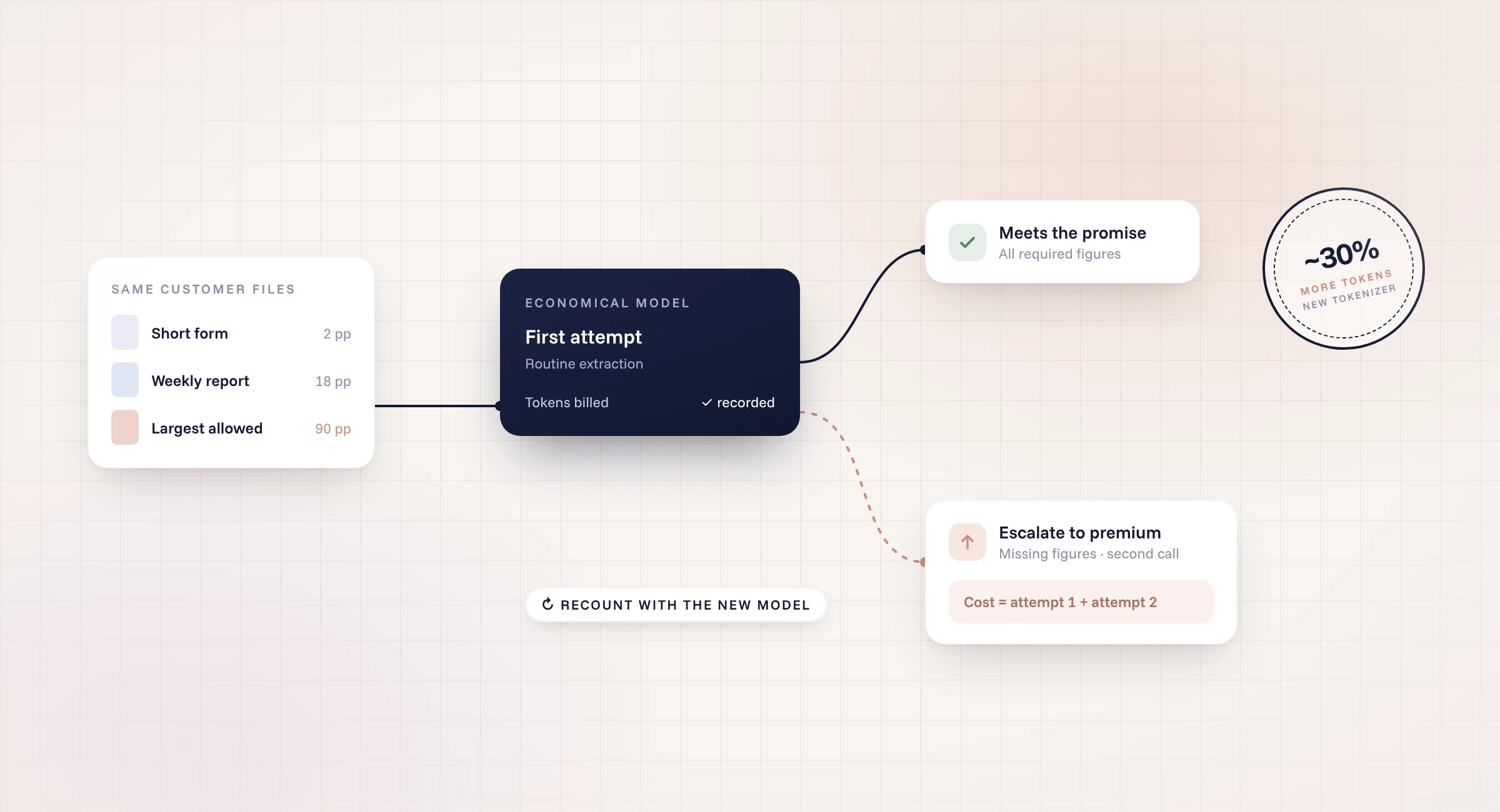
When developers compare models for a commercial application, the input should be the same actual customer assignment, with confidential material handled in accordance with the company's approved data policy. Token counts can change even when the text remains identical. For Claude 4.7 and later models, Anthropic's pricing documentation reports approximately 30% more tokens from the newer tokenizer for the same text; the actual increase varies by workload. Recount the input using the proposed replacement model when the earlier estimate used a different tokenizer.
Use a sample that includes the longer files customers are permitted to submit, along with the ordinary requests expected during a typical week. Engineers can record the billed quantities returned by the provider for both models. For commercial reviewers, the accompanying answers must satisfy the paid feature's promise. If a cheaper model repeatedly omits figures the buyer needs, it's a lower invoice that buys an incomplete product.
Some assignments may justify a more expensive model when its answers meet requirements that the economical candidate fails to satisfy. Specify the paid feature that requires additional expenditure, along with the associated revenue attached to the model budget. For a supplier-comparison product, a difficult reconciliation between conflicting documents might qualify. Routine extraction from a short approved form warrants its own test against the economic candidate.
If the application sends routine requests to an economical model, developers need a tested rule for sending difficult cases to the more expensive alternative. Automatic escalation carries an additional charge after the first attempt has already consumed tokens. For example, a failed extraction followed by a second model call costs the sum of both attempts. The forecast should use the escalation frequency observed on the actual file sample, with sufficient allowance for unusually difficult submissions.
Reasoning Expense Can Exceed the Visible Answer
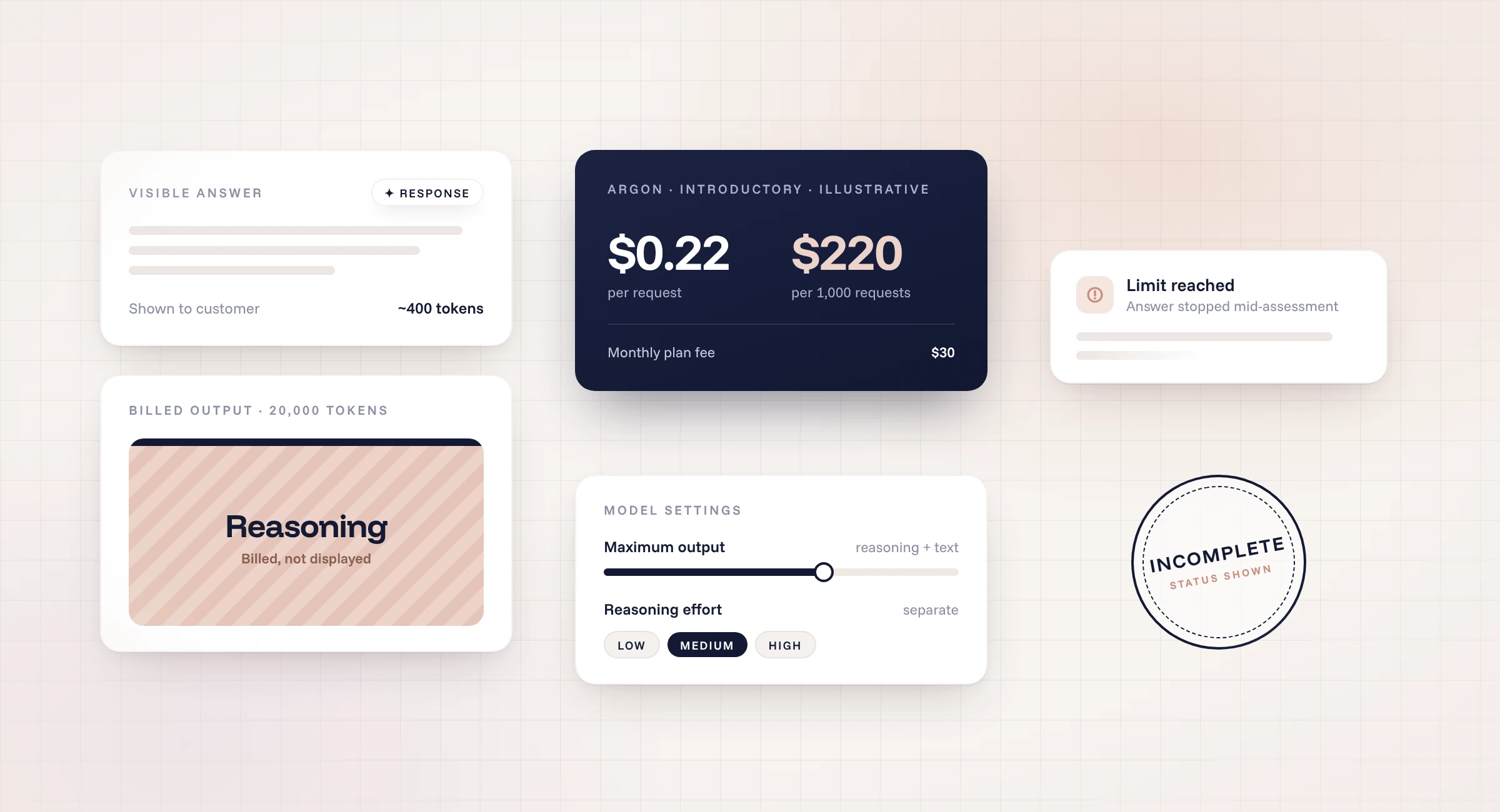
Google's token accounting documentation exposes separate usage quantities for reasoning and visible output, so engineers can examine the processing behind a concise response. To calculate expenses, finance needs the total billed output. When the estimate counts only the displayed words, part of the charge is excluded from the calculation.
If the illustrative request expands to 20,000 billed output tokens, the introductory Argon charge remains $0.22, with the same 10,000 input tokens. One thousand such requests would cost $220 for model usage. The customer's monthly price remains $30 in this example. If customers can request this analysis throughout the month, the offer needs a corresponding allowance or a higher fee.
For Argon, Google documents a maximum-output setting that covers both reasoning and response text, plus a separate setting for reasoning effort. Excessively tight output allowances can interrupt the answer. If testing finds an answer ends partway through an assessment, the product needs a larger allowance or a narrower promised assessment. Customers should receive an explicit "incomplete" status when the application reaches its limit.
Sell an Allowance that the Product Can Explain
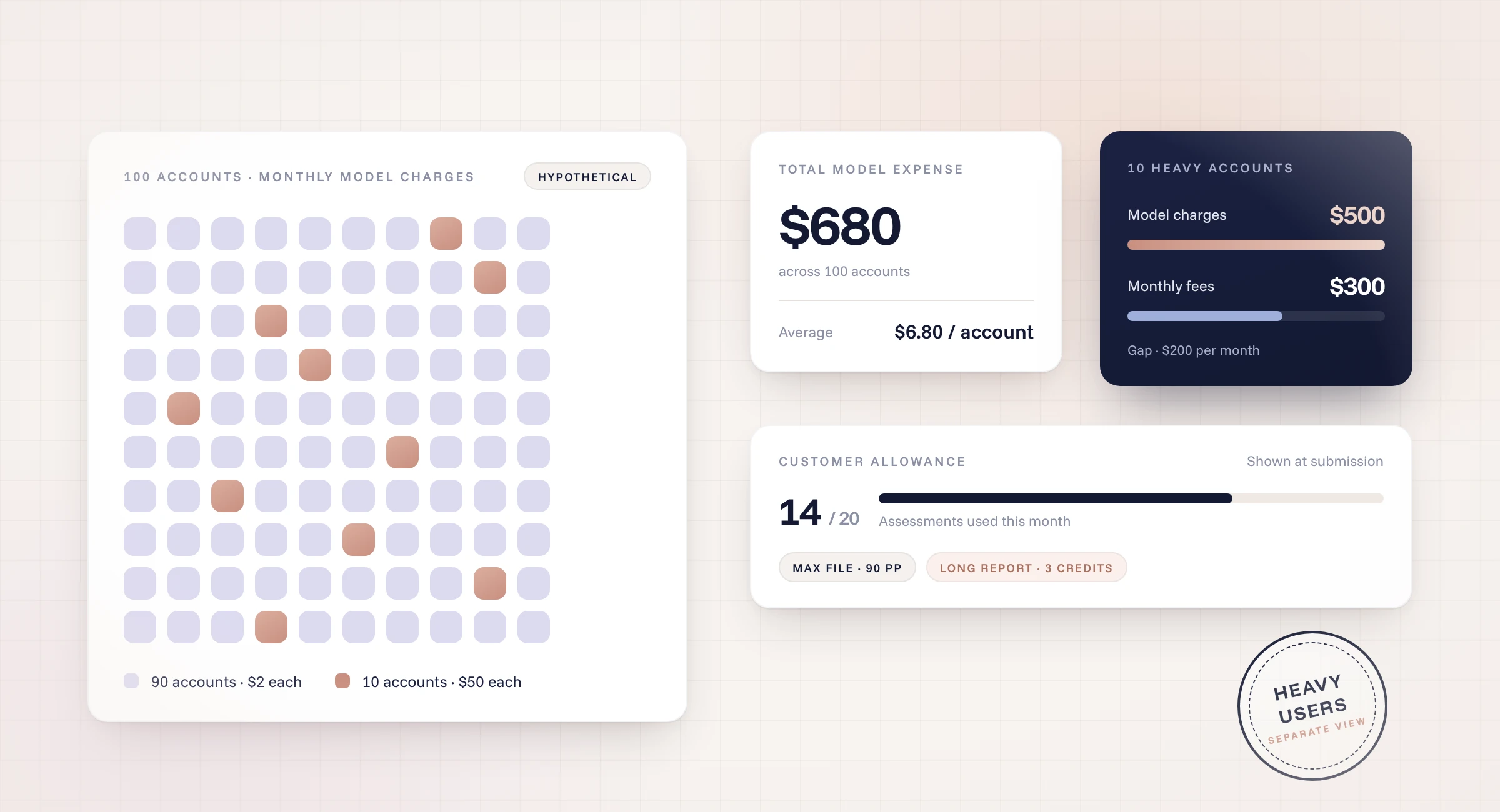
For buyers comparing monthly plans, completed document assessments provide a usable allowance when the offer states the eligible file size and analysis depth. Internally, the company can translate the allowance into expected API expense. Lengthy reports may consume several credits if the commercial terms explain the charge at submission. Display the remaining allowance where the customer decides to request more work.
Revenue estimates need a separate view of heavy users, since a low average can conceal a small group consuming much larger quantities. In a hypothetical customer sample, ninety accounts incur $2 apiece in monthly model charges, and ten accounts incur $50 apiece. Total model expense is $680 across 100 accounts, or $6.80 per account. Among the ten heavy accounts, $500 in model charges exceeds their combined $300 in monthly fees. Plan changes can address the file sizes responsible for the difference, subject to the customer's existing agreement.
Commercial staff should distinguish a paid overage from an application failure when explaining additional charges to a customer. If an internal error results in a duplicate request, the expense is the company's unless the agreed-upon terms provide otherwise. Usage records need enough detail to associate the charge with the submitted work. When a customer disputes a charge, the retained record should connect the billed request to its file and completion status.
Discounts Have Operating Conditions
Google's batch processing documentation states a 50% reduction against ordinary processing rates, with a target turnaround of 24 hours. Overnight document assessments can fit the batch delivery model. For an interactive feature that promises an immediate answer, developers need a different operating model. Price an overnight option against its own delivery promise if the product supports both modes.
Repeated input may incur reduced charges due to Google's implicit cache, and the response records the number of cached tokens. If a pilot repeatedly submits identical files in a short period, its cache savings may exceed those available after customers submit files at irregular intervals. Treat the ordinary input rate as the exposure for requests the cache misses, with the discount calculated from actual usage.
When a supplier announces the end date for an introductory rate, the sales proposal needs a calculation covering the period after the discount expires. Annual customer contracts may carry a fixed fee throughout several supplier price periods. For the annual proposal, finance can calculate the full contractual allowance at the announced future rate and compare the expense with contracted revenue. Any option to revise customer pricing must comply with the existing commercial agreement.
Set the Model Budget Alongside the Offer
OPERENDIA's custom AI development work includes model selection based on task requirements and token planning based on expected usage. For a commercial product, the working brief should state the customer-facing allowance alongside the maximum model expense the business can carry. Include the number of permitted assessments and the largest eligible file in the engineering specification.
Discuss the proposed workload with OPERENDIA using sample customer files and the intended commercial offer while the monthly usage allowance remains open for revision.
 Make your brand matter.