Claude Fable 5.2 and Mythos 5.2: Capabilities and Pricing

Anthropic released Claude Fable 5.2 and Claude Mythos 5.2 on November 9, 2026, with lower API prices and a stronger emphasis on difficult technical work. Both products use the same underlying model. Fable applies additional safeguards to high-risk cybersecurity work and research biology; Mythos access requires verification for eligible organizations.
Anthropic’s launch announcement reports output speeds up to 30% faster than the previous generation, alongside improvements in software engineering. The measurements come from the developer’s testing. Anthropic reports that agents using an earlier version of Fable 5.2 migrated a production service from Python to Rust, after which the service ran approximately 26 times faster. The claim concerns that particular service.
Anthropic’s FrontierCode 2.0 results put Fable 5.2 at 49.1%, compared with Fable 5.1’s 32.4%, with both evaluated at xhigh effort. The gain is 16.7 percentage points. FrontierCode assesses proposed code changes against repository-maintainer acceptance. The results are based on a developer-reported evaluation, so commercial teams should reproduce the relevant comparison in their own repositories. Anthropic recommends Opus 5.5 as the starting model for most coding and knowledge tasks, with Fable reserved for harder assignments.

What the Models Can Process
The published model specification lists a one-million-token context window and a maximum output length reaching 128,000 tokens for Fable 5.2. Text and image inputs produce text output. Developers can submit substantial document collections or use screenshots as task material, subject to their application’s input handling. Context capacity describes how much material a request can hold; answer accuracy still requires checking against the source documents.
API developers address Fable with the identifier claude-fable-5-2, which identifies the version when a deployment must target the exact release. Reasoning remains active throughout model use, and the API’s default effort setting is high. Anthropic lists November 9, 2027 as the earliest retirement date. Organizations considering a migration can use that published minimum lifespan when budgeting integration work, then monitor later lifecycle notices for changes.
Standard Prices Fall by 20%
Anthropic’s release documentation lists standard input pricing at $8 per million tokens and output pricing at $40 per million tokens for both models. The previous generation’s corresponding rates were $10 and $50. Both rates fall by 20%, a direct arithmetic comparison between the published prices. Actual bills depend on usage volumes and the request configuration.
Batch processing costs $4 per million input tokens and $20 per million output tokens, per the same documentation. Asynchronous jobs suit work that can tolerate delayed completion. Teams evaluating a batch migration should compare the service’s processing terms with their delivery deadlines, especially for customer-facing work that requires an immediate answer.
Prompt caching has its own published rates in the model specification: five-minute cache writes cost $10 per million tokens, and one-hour cache writes cost $16 per million tokens. Cache reads cost $0.20 per million tokens. Frequently reused prefixes may reduce input spending, but the initial write still incurs its applicable charge. Financial forecasts should separate those operations so the expected reuse rate remains visible.
Fast Mode Costs More
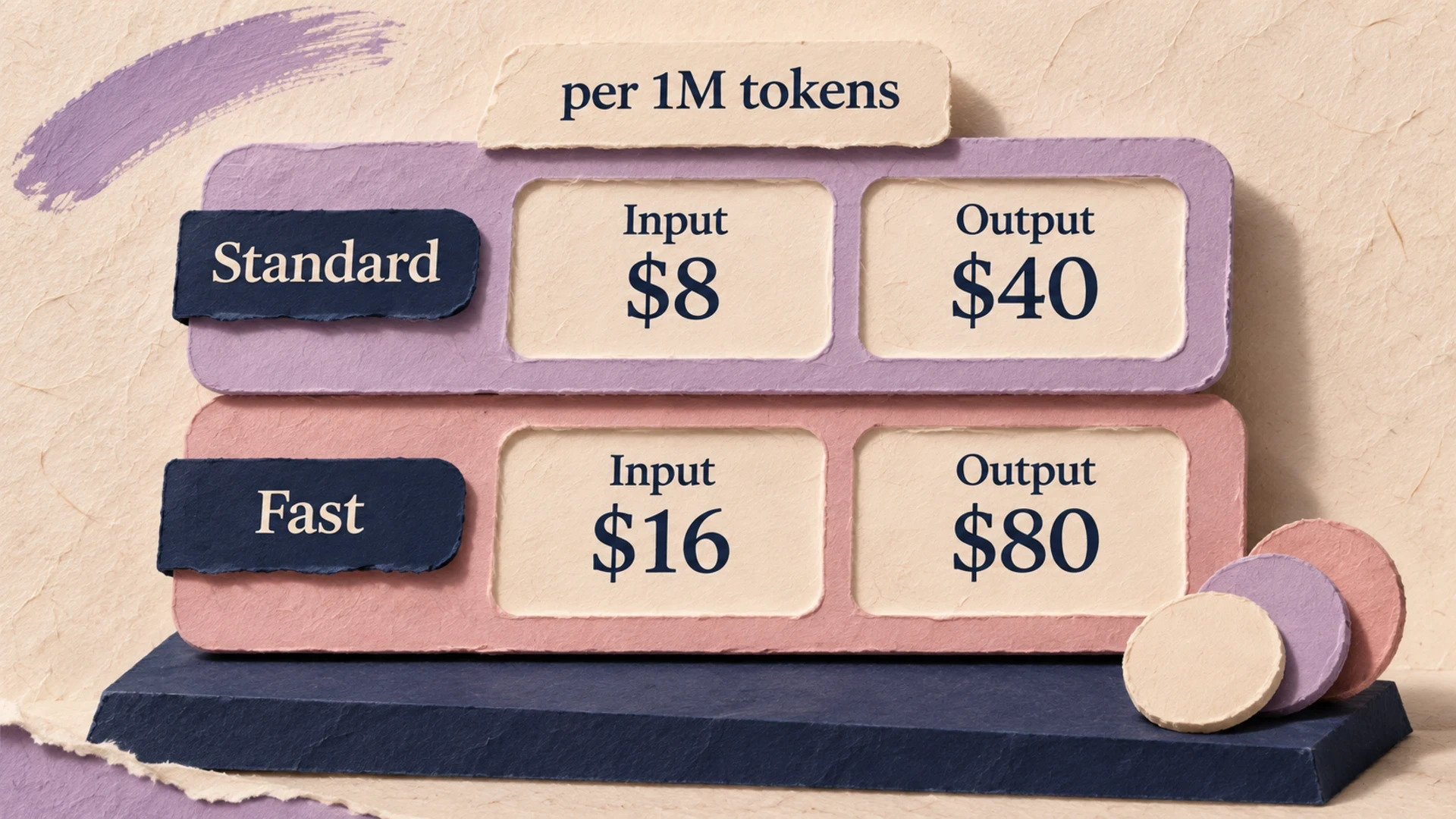
Fast mode’s documentation prices Fable 5.2 and Mythos 5.2 at $16 per million input tokens and $80 per million output tokens. Both rates are double standard pricing. Anthropic describes faster output generation, but the actual elapsed task time is still influenced by external tools and the model’s reasoning. Browser activity or a database response may remain the slowest part even when token generation accelerates.
The fast-mode documentation excludes batch processing and Priority Tier commitments from the combinations supported by that mode. Cache multipliers remain applicable, and data-residency multipliers can affect the invoice. Google sets pricing for its managed offering, so a comparison should use the selected provider’s current rates. Microsoft Foundry uses a separate, fast-deployment identifier for its Anthropic-hosted route. Developers should verify the exact platform configuration when estimating speed-related spending.
Effort Settings Change the Comparison
Anthropic’s effort documentation describes high as the API default, with additional reasoning available at xhigh or max for demanding tasks. Max can consume more tokens and take longer than xhigh, sometimes for limited additional improvement. Benchmark results measured at an expensive setting require a matching configuration when a team attempts to reproduce it.
Output budgets require similar care when engineers configure requests that involve extensive reasoning before the visible answer. The maximum-token setting covers reasoning tokens together with the response. Tight caps may constrain a difficult task even when the final answer is brief. Higher allowances permit greater consumption. Teams can record the selected effort level beside task accuracy, then compare cost per accepted result across repeated runs.
Completion Still Needs Inspection
Anthropic’s prompting guidance documents situations in which Fable 5.2 may stop after partial progress, particularly at low or medium effort. Engineers should specify completion criteria in the task itself and inspect the resulting work against those criteria. The agent’s final message provides a useful account, but a software change still needs tests that exercise the requested behavior.
Long tool sequences can produce extended periods with little visible commentary as Fable 5.2 works through a substantial assignment. The guidance explains that reasoning content may contain progress updates that the application omits. Product teams should test what customers actually see during a prolonged task. Delegation requires similar scrutiny: extra agents can increase consumption, so the permitted work and spending limits deserve explicit treatment in the application.
The guidance warns that prompts assigning broad code ownership may encourage additional modifications, even when the developer has stated a narrower scope. Repository permissions and human review should match the intended assignment. Commercial application teams should inspect the complete change set prior to release, especially edits outside the feature’s immediate implementation.
Migration Includes Conversation History
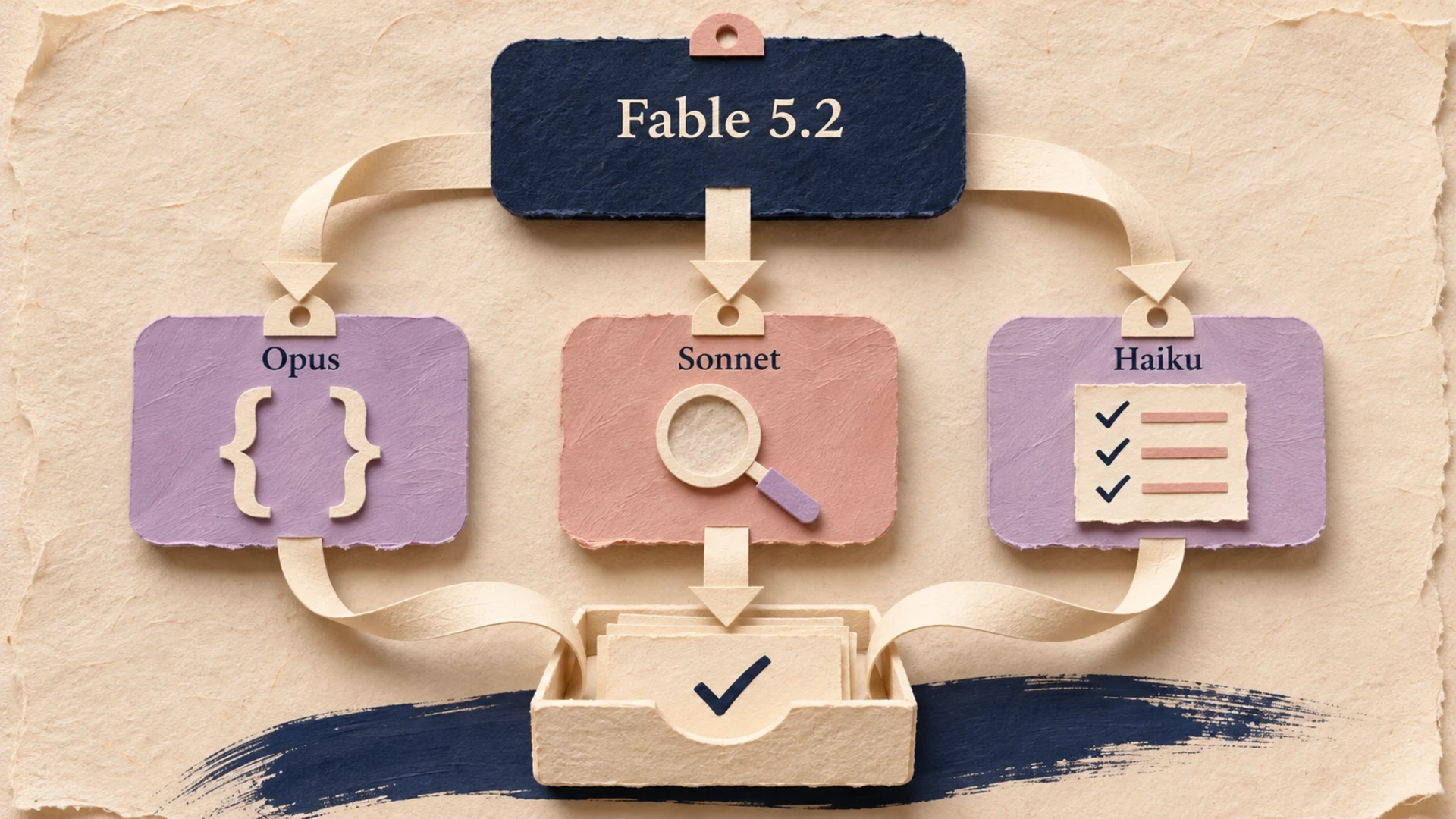
The migration guide distinguishes the executor’s model identifier from an advisor’s identifier, which developers configure separately when using that arrangement. Teams should check both fields during a version change. Saved conversations deserve regression tests too: an integration may send earlier reasoning content back to the model alongside new instructions.
Anthropic’s release documentation states that prefix validation now applies to all accounts, so edits to earlier context that are followed by reused reasoning can trigger an HTTP 400 error. Changes to system instructions or tool definitions require particular care. Migration tests should exercise conversation continuation after application updates and fresh sessions to find failures that a basic model-ID replacement would miss.
OPERENDIA’s earlier analysis of replaceable AI models examines the integration work required when changing providers, and this release provides a concrete reason to revisit that work. Teams maintaining a provider-neutral interface still need version-specific tests for conversation state. Portability depends on the surrounding application’s behavior. Engineers must examine how it stores prior exchanges and constructs the next request.
Data Retention Affects Eligibility
Anthropic’s API retention documentation applies a 30-day safety-monitoring requirement to the covered models, with zero-data-retention exceptions requiring express authorization. Organizations handling confidential material should verify their contractual eligibility prior to submitting that material. Existing privacy documentation for another model may cover different terms, so the selected model deserves its own review.
The documentation distinguishes hosting arrangements: Anthropic retains relevant data for its API, whereas retained data stays within the provider environment for the specified Bedrock and Google Cloud arrangements. Procurement teams should confirm the applicable deployment’s terms with their technical owner. The model’s commercial availability alone does not constitute sufficient evidence for a particular organization’s privacy approval.
Where the Release Fits
Fable 5.2 merits evaluation for complex technical assignments where the previous model’s errors or incomplete work create substantial review effort. Its lower standard rates improve the starting economics, yet a longer reasoning run can still cost more than a shorter run on the previous release. Evaluations should compare accepted results and total consumption using the same task set.
Mythos requires a separate access decision for eligible cybersecurity or life sciences work, while ordinary Fable integrations require close attention to their implementation details. The immediate deployment priorities are a repeatable task evaluation and a verified data-handling arrangement. Wider rollout can follow successful tests, with the chosen effort setting and provider recorded beside the measured results.

 Make your brand matter.