Brand Archetypes: The Hidden Grammar of Memorable Brands

The Buyer Mind Wants a Character
People choose a brand via numbers, feelings, and memory. Price matters. Features matter. Access matters. Yet memory often picks a brand via character. Brand aura can read as wise, brave, playful, elite, warm, or rebellious. The buyer gives it a role in daily life.
Brand archetypes give this role a name. They help teams decide how a company speaks, sells, hires, designs, and behaves. Real business grammar.
Operendia treats archetypes as commercial psychology. Strong character can raise recall, simplify choice, and create a sharper reason to choose. Feels obvious, yes? Many teams still skip it and wonder why their copy sounds like wet cardboard.
Archetypes Give Brands Familiar Human Roles
The human brain sorts complex signals fast. Faces, voices, social cues, tone, status, warmth, risk. Archetypes condense those signals into a familiar pattern. Ruler brands feel disciplined and premium. Sage brands feel rational and expert. Jester brands feel loose and witty.
Customers use the same pattern with people. One friend gives advice. Another starts chaos at dinner. Another fixes the plan. Brands enter the same mental cabinet.
Archetype work gives teams a shared lens. Sales, copy, service, and product teams gain one shared lane. The brand begins to sound like one person with one firm temperament.
The Main Archetype Families
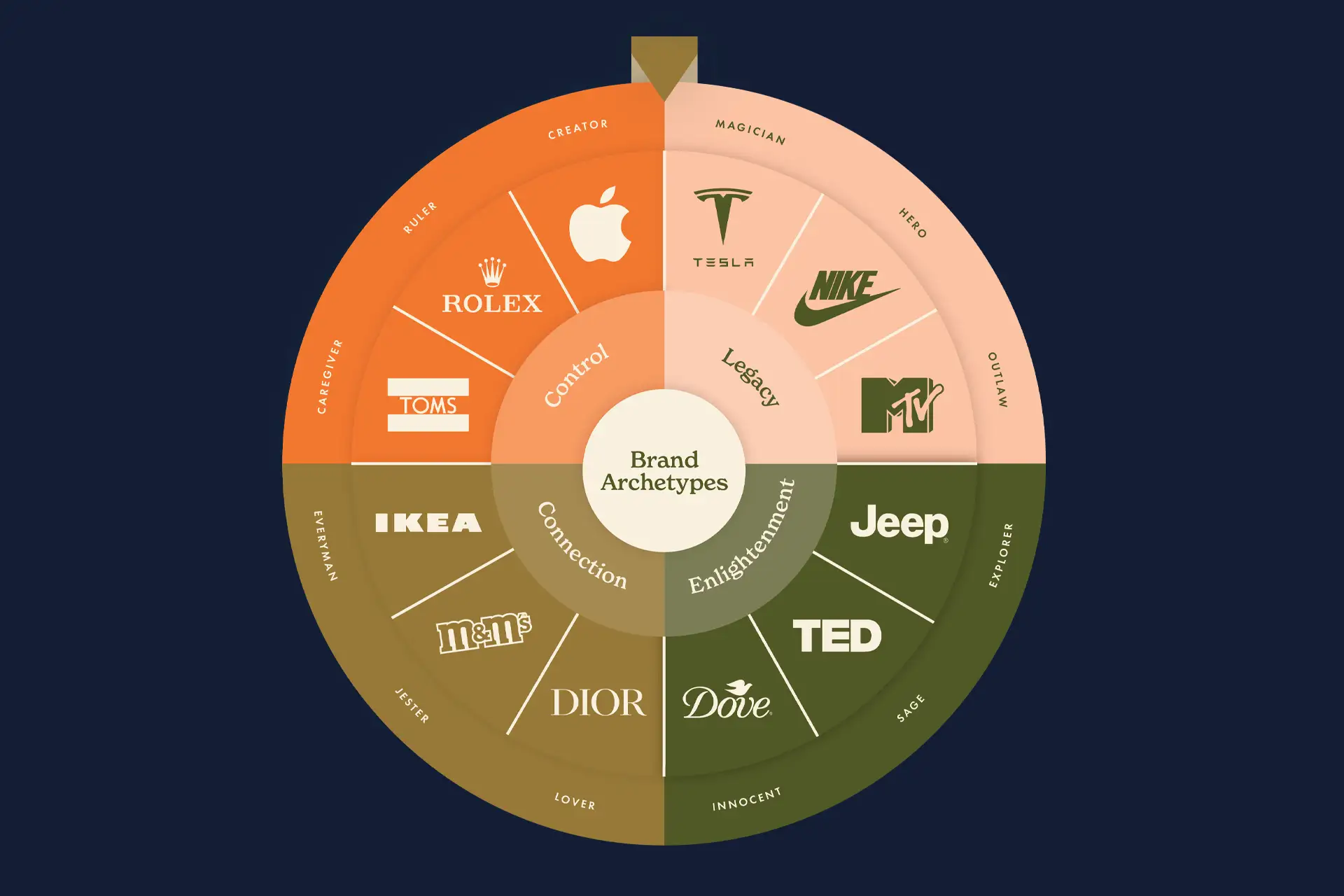
Classic brand archetype work often uses twelve character types. Names may shift across agencies, yet the psychology stays stable.
- The Innocent seeks safety, ease, and a clean promise. Soft colors, plain language, and calm service fit this path.
- The Sage values truth, proof, and expert thought. White papers, research pages, and direct comparison pages fit this path.
- The Wanderer wants freedom and discovery. Travel firms, gear brands, and solo-work tools often use this driver.
- The Rebel breaks category habits. Sharp claims, hard opinions, and outsider energy fit this path.
- The Magician sells change, wonder, and a leap toward a better state. Tech, wellness, and beauty brands often borrow this code.
- The Hero aims for effort, victory, and grit. Sports, fitness, and performance brands live here.
- The Lover seeks beauty, closeness, taste, and desire. Fragrance, fashion, restaurants, and hospitality brands often use this driver.
- The Jester uses humor and surprise. Snack brands, entertainment apps, and playful retail concepts gain from this route.
- The Neighbor values community, honesty, and everyday access. Banks, supermarkets, and community apps often fit this character.
- The Guardian protects, supports, and reassures. Health, family, insurance, and care brands rely on this role.
- The Ruler seeks authority, hierarchy, and high standards. Real estate, premium finance, private clubs, and leadership brands use this code.
- The Artist values originality, taste, and personal expression. Design firms, studios, and culture brands often choose this path.

Pick the Archetype Your Buyer Needs
Strong archetype work starts with desire. Buyers want safety, status, freedom, comfort, mastery, joy, or beauty. The brand's character must address the category's strongest desire.
Cybersecurity firms can choose Sage, Guardian, or Ruler. Same sector, different psychology. Sage says, "We know." Guardian says, "We protect." Ruler says, "We control the risk." Same product area. Very different market energy.
Private members' clubs often lean Ruler plus Lover. The Ruler side gives status and hierarchy. The Lover side adds taste and sensory pull. The mix works when the venue, staff, price, and language support it.
Voice Rules Come Next
Archetype choice must reach actual words. Sage brands use evidence and calm logic. Hero brands use short, forceful lines. Lover brands use texture, taste, and closeness. Ruler brands use authority, standards, and selection.
Voice rules should list preferred words and caution words. They should set sentence length, pace, humor, and proof level. They should help a junior copywriter write a homepage at 11 p.m. with fewer panic tabs open. Practical. Useful.
One note: a brand can sound human and still feel premium. Warmth and authority can sit at the same table when the rules feel sane.
Visual Codes Follow the Same Character
Color, typography, layout, photography, and motion must support the chosen character. Ruler systems often use symmetry, dark palettes, and spacious layouts. Jester brands may use odd crops, bright contrast, and wink-level copy. Sage brands prefer charts, white space, and calm hierarchy.
Consistent visual cues raise memory. Rebel tone paired with polite corporate stock photos feels fake. Guardian voice paired with aggressive red pop-ups feels anxious. Buyer trust rises when the senses receive the same message.
Product and Service Must Back the Persona
Archetypes succeed when the company's behavior confirms the character. Ruler brands need tight access, premium service, and strong standards. Guardian brands need fast support and a gentle client start. Jester brands need wit in refunds, boxes, emails, and app copy.
Brand character lives inside operations. The words matter, but the system proves them. People believe what the company repeats through action.
Practical Archetype Audit
Start with five questions:
- What does the buyer secretly want from this category?
- Which fear lies beneath the purchase?
- Which brand in the market already owns a strong character?
- Which behavior can the company prove day after day?
- Which tone would feel natural for the team?
Answers usually expose the right direction. If buyers want control, Ruler may be a good fit. If they want relief, Guardian may win. If they want self-expression, the Artist may lead the way.
Common Errors Teams Can Fix
Some teams pick an archetype for surface appeal. Such a choice creates theater and shallow strategy. The buyer's desire should lead.
Other teams use too many archetypes at once. Brand systems can use a primary and a secondary, yet five characters create fog. Two roles usually give enough range.
Many teams write the archetype deck and then bury it in a folder. Better practice: use it in headlines, service scripts, photo rules, offer names, and sales replies. Put the character to work.
Final Word for Brand Teams
Brand archetypes matter because people remember character. They buy from brands with a firm role in their head. They return when the role proves useful again and again.
Operendia builds archetype systems for brands with sharper identity goals, stronger recall targets, and better commercial language needs. The method starts with psychology, then reaches voice, visuals, offers, and daily behavior.
Pick the role. Prove the role. Repeat the role.

 Make your brand matter.