UAE Brand Trust and the International Company's Local Offer
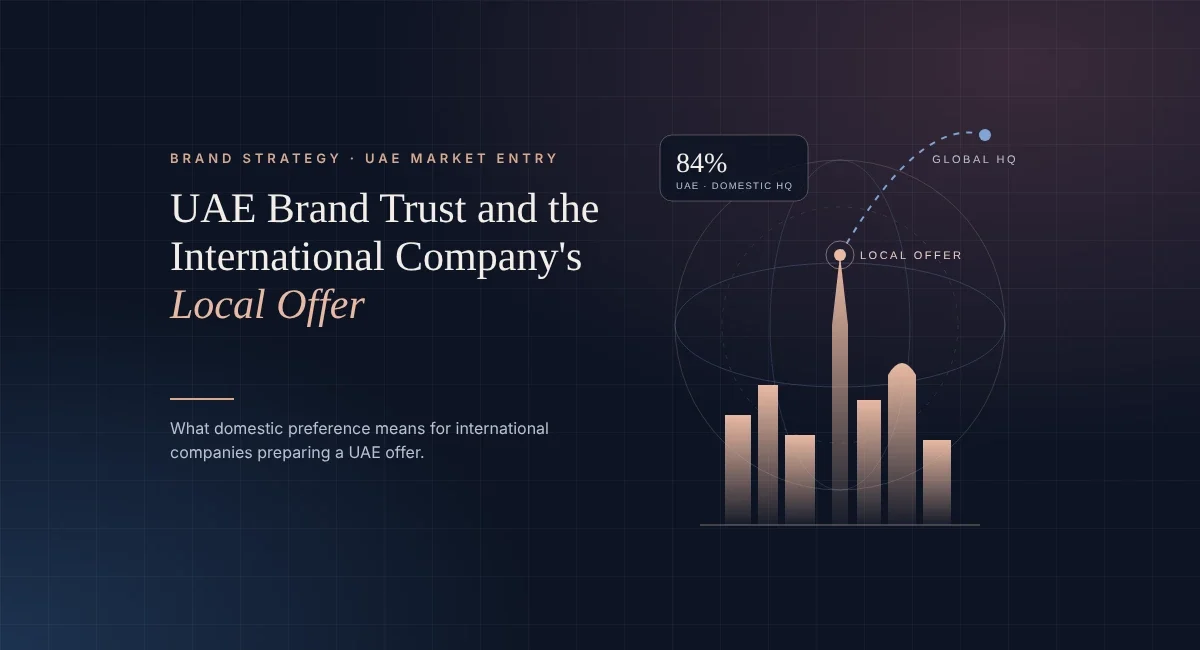
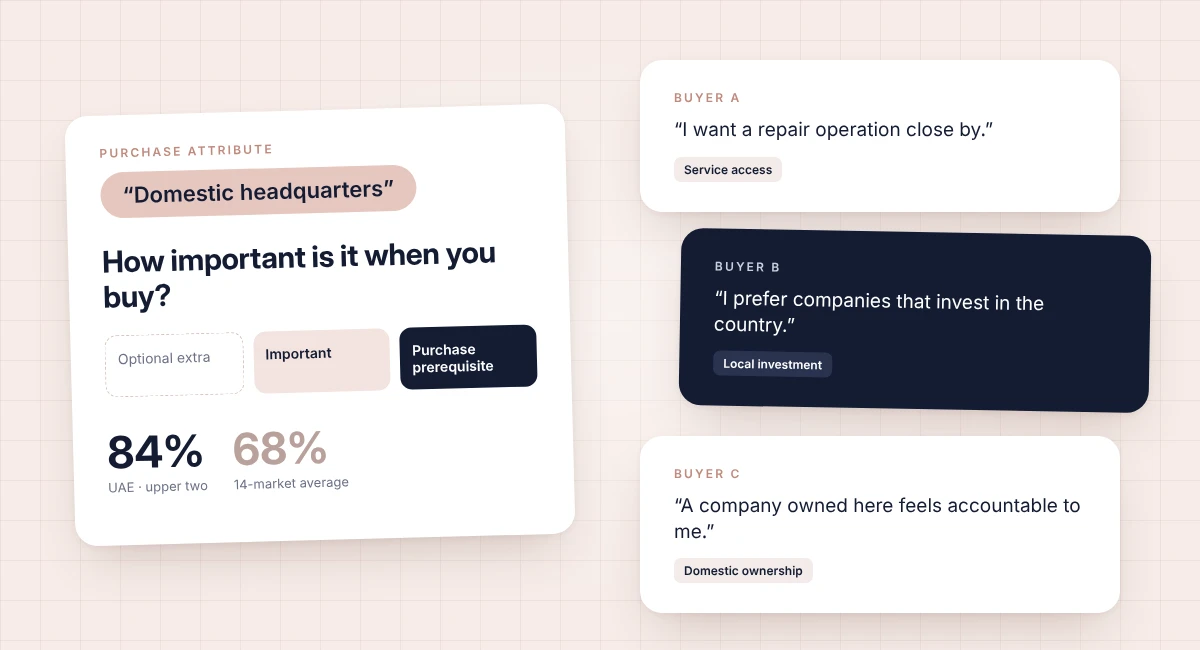
Edelman's 2026 brand research found 84% of UAE respondents placed domestic headquarters in the upper two categories on a three-category purchase scale, compared with 68% across 14 markets excluding Indonesia. For an international company preparing a UAE offer, the finding deserves a place in the entry discussion alongside its product research. If the company operates from a foreign headquarters, its local campaign needs to explain the business available to the buyer.
Published as an October UAE edition, the report examines attitudes collected between April 23 and May 11, 2026. For the domestic-headquarters item, respondents assessed a domestic brand based in their own country. The appendix publishes nationality quotas alongside the domestic-headquarters wording; respondents' interpretation concerning their own country remains unspecified. What does a prospective customer expect a local company to provide?
Domestic Preference Needs a Commercial Explanation
Edelman reports an 18-percentage-point increase in the UAE headquarters finding since 2023, which makes the change relevant to companies revisiting an older entry plan. Within the current survey, respondents assessed purchase attributes according to their actual buying behavior, and the questionnaire asked them to set aside idealized replies concerning brands they might choose in perfect circumstances. The scale's endpoints distinguished an optional extra from a purchase prerequisite. Since both upper response categories enter the total, the 84% figure groups buyers who attach different weights to headquarters. Actual spending on domestic products remains a separate measure, as does the price a customer would accept for a foreign alternative.
For management, a preference expressed through corporate origin leaves several possible commercial explanations open until customer research identifies the reason behind it. Perhaps a buyer expects a nearby repair operation or prefers investment in the domestic economy. If the explanation concerns repair access, research needs to examine the proposed support arrangement. Domestic investment requires a separate account concerning the company's actual activities. Until buyers explain their preference, both motives remain hypotheses for investigation.
Regional repair access raises a specific operating question for an international supplier once research establishes its influence among prospective buyers. Who supplies replacement parts, and which costs belong to the customer? In local advertising, an accurate explanation concerning regional support belongs beside the supplier's actual corporate identity. If buyers prefer domestic ownership itself, a nearby repair operation answers a different concern.
Openness Has a Specific Meaning in the Survey
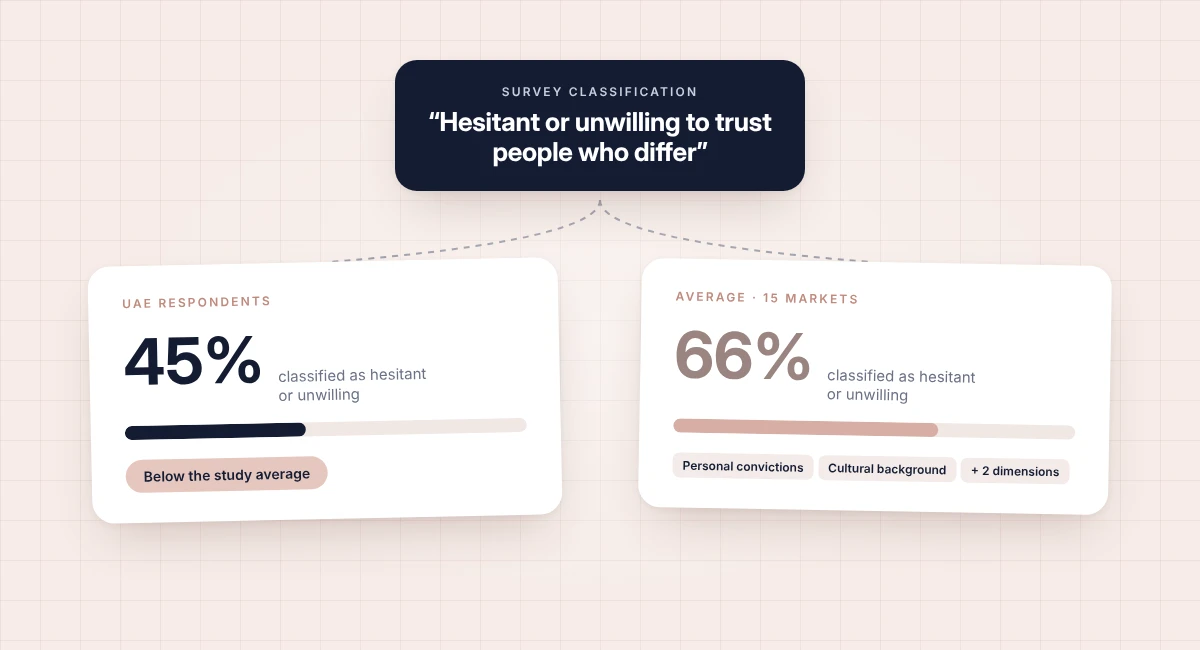
The same brand study classifies 45% of UAE respondents as hesitant or unwilling to trust people who differ from them, against a 66% average across 15 markets. Across four dimensions, Edelman calculates this classification using responses concerning personal convictions and cultural background, among other differences. To interpret the country comparison, the reader needs to retain the interpersonal trust question. Nationality alone supplies an incomplete account concerning the differences respondents assessed.
For an international campaign brief built around widespread resistance to unfamiliar people, the UAE's comparatively open survey pattern warrants a fresh audience assessment. Attitudes within the UAE sample still vary enough to warrant research among prospective buyers. Since the published average concerns interpersonal trust, commercial planning still needs the prospective audience's category preferences.
Edelman's separate question concerning trust in brands supplies another comparison relevant to companies preparing communication for several markets at the same time. In the UAE, 85% trusted brands generally, and 81% trusted brands sell to people with different personal convictions. The 15-market averages were 73% and 58%. For a global campaign brief, the smaller UAE gap warrants investigation when managers expect audience expansion to provoke resistance.
Personal Fit Changes the Local Brief
UAE respondents placed fit with their own identity in the upper two purchase-attribute categories at 88%, compared with an 80% average across the study's 15 markets; both percentages describe reported purchase criteria. For an international brand, the useful question concerns the identity buyers associate with its name. Does a customer regard it as appropriate for someone entering a profession, or for an established expert?
OPERENDIA's public market-entry work includes audience research and local communication, which places the proposed customer inside the commercial brief. In local audience interviews, researchers need to distinguish how buyers describe themselves from what they need a product to do. If a foreign name suggests a desired professional identity, its origin belongs inside the positioning discussion. Acknowledgment of domestic preference alone leaves this possible appeal uncertain. Preserve the buyer's actual explanation when deciding which identity the campaign will address.
Select the Messenger for the Prospective Audience
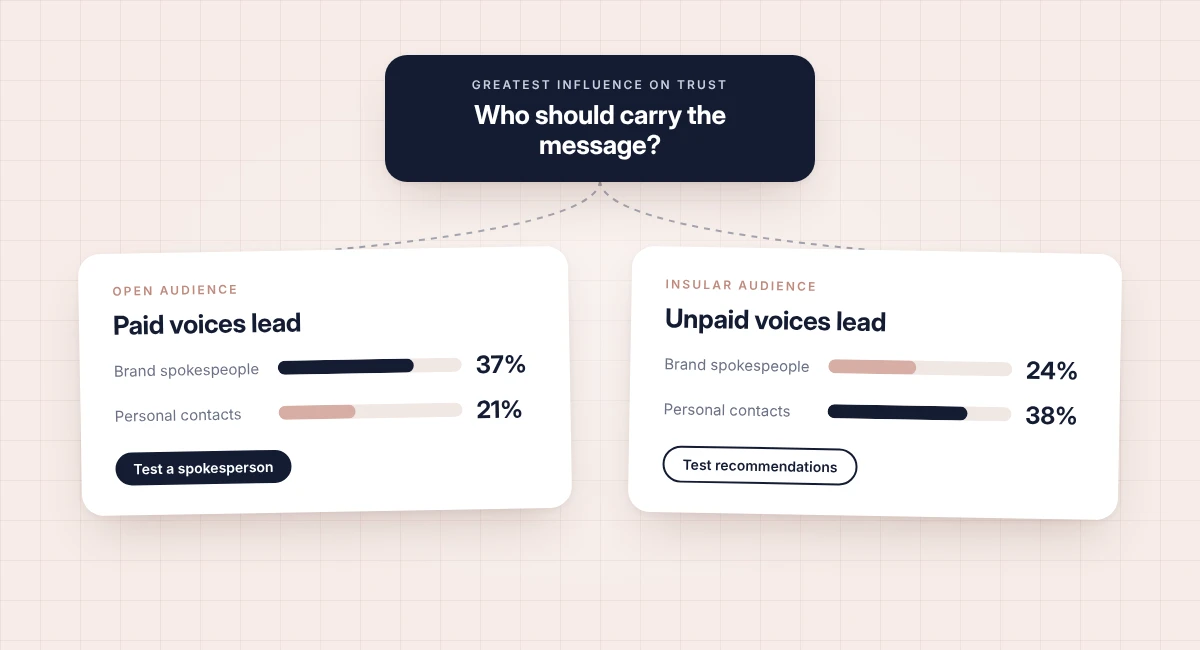
Edelman's UAE results distinguish between groups when respondents identify the source with the greatest influence on their willingness to trust a brand. Among respondents classified as open, paid voices such as brand spokespeople received 37%, compared with 21% for unpaid voices such as personal contacts. The insular group's corresponding figures were 24% and 38%. In response to this question, participants nominated an influence source; actual campaign performance remains outside its scope.
When a global instruction automatically favors unpaid recommendations, an international campaign's media plan deserves a local audience check against this evidence. The local team needs evidence concerning whom prospective buyers regard as credible prior to selecting a spokesperson. To investigate response within a prospective customer group, a permitted campaign test could present identical offers through different messengers. Random assignment to comparable audience groups would help separate the messenger's effect from differences in who receives the advertisement.
Local Communication Includes the Purchase Terms
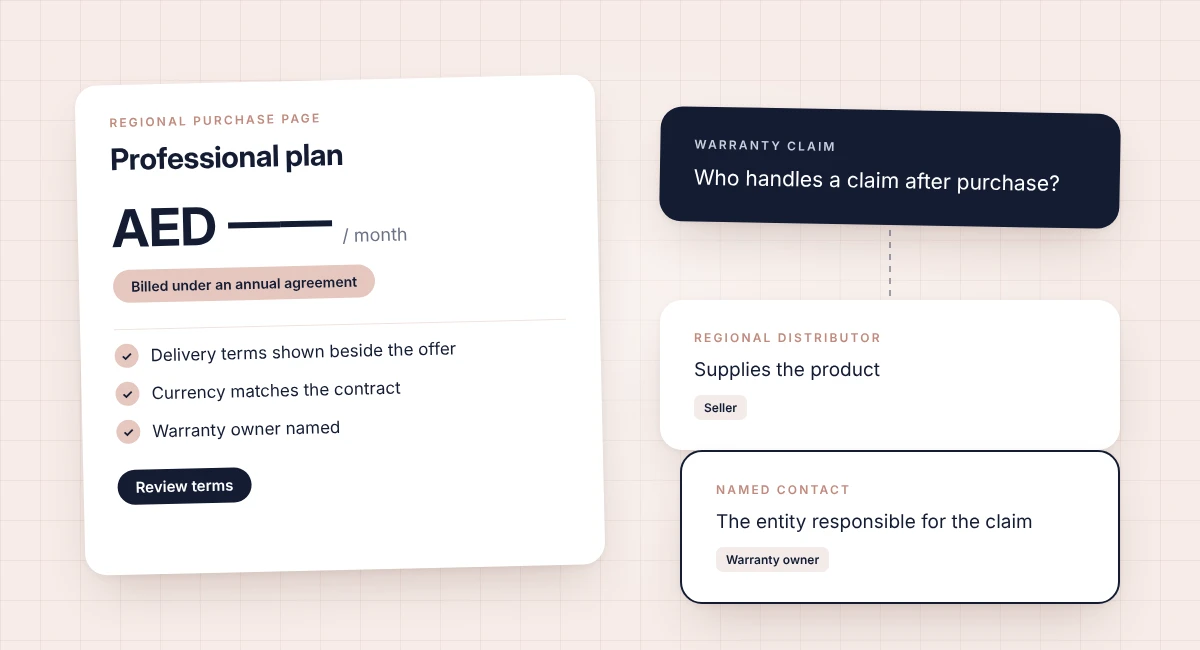
Price presentation creates another concrete localization decision when the public offer and the actual contract describe different currencies or billing periods. If a monthly figure requires an annual agreement, the period belongs beside the figure that customers compare. On a regional purchase page, the applicable delivery terms belong beside the offer. Research on identity fit supports investigating relevance; the commercial terms explain what a customer would actually buy.
Regional Responsibility
When a regional distributor supplies a product whose warranty belongs to another organization, the purchase terms need to identify the entity responsible for a claim. In the proposed purchase process, the named contact must correspond to the entity handling the claim. Corporate origin alone leaves these responsibilities open. To assess the local offer, management can follow a permitted test inquiry through the actual support arrangement prior to a launch decision.
Read the Sample Behind the Country Comparison
The brand report draws on 17,688 online respondents across 15 countries, with 1,199 respondents in the UAE's full sample. Alongside demographic quotas, the UAE sample used a nationality quota. To calculate global averages, Edelman assigned equal weight to participating countries.
Purchase-attribute questions went to part of the sample, with country bases between 280 and 300 for the 15-market comparison. In the appendix, this range appears in place of an exact UAE subset count. Edelman's separate annual Trust Barometer used fieldwork from late 2025 and covered 28 countries; its institutional-trust results answer a different research question.
Budget for the Local Offer Customers Can Actually Buy
Once customer research identifies which local arrangements influence consideration, an international launch budget needs an estimate for providing the proposed offer. Management needs the proposed price beside the expected regional repair expense, when the offer requires local repair capacity; the subsequent advertisement test must use an offer that the company has agreed to deliver. To estimate sales, the business needs evidence concerning actual purchase opportunities and the prices available to buyers.
Corporate relocation would be a costly response to a survey item whose national reference remains ambiguous in the published report. For a foreign business, the immediate research question concerns the prospective buyer's reason for preferring domestic headquarters. Does the company's existing regional operation address the reason, or would the proposed launch require additional capacity?
 Make your brand matter.