Transformer Technology Explained From First Principles
Modern generative AI rests heavily on one architectural idea: attention.
ChatGPT, Claude, Gemini, Llama, and many current language models rely on Transformer-based systems. The same architectural family also appears in computer vision, audio, multimodal AI, biology, and scientific computing.
The basic insight is surprisingly human.
When you read a sentence, some words matter more than others for understanding a particular word. Your mind relates ideas across the sentence. Context changes meaning.
Consider:
“Sarah gave Emma the laptop because she needed it for work.”
Understanding “she” requires context. Understanding “it” requires another relationship. Language contains thousands of such dependencies.
The Transformer architecture gives a neural network a mathematical way to compute them.

How Does a Transformer Work?
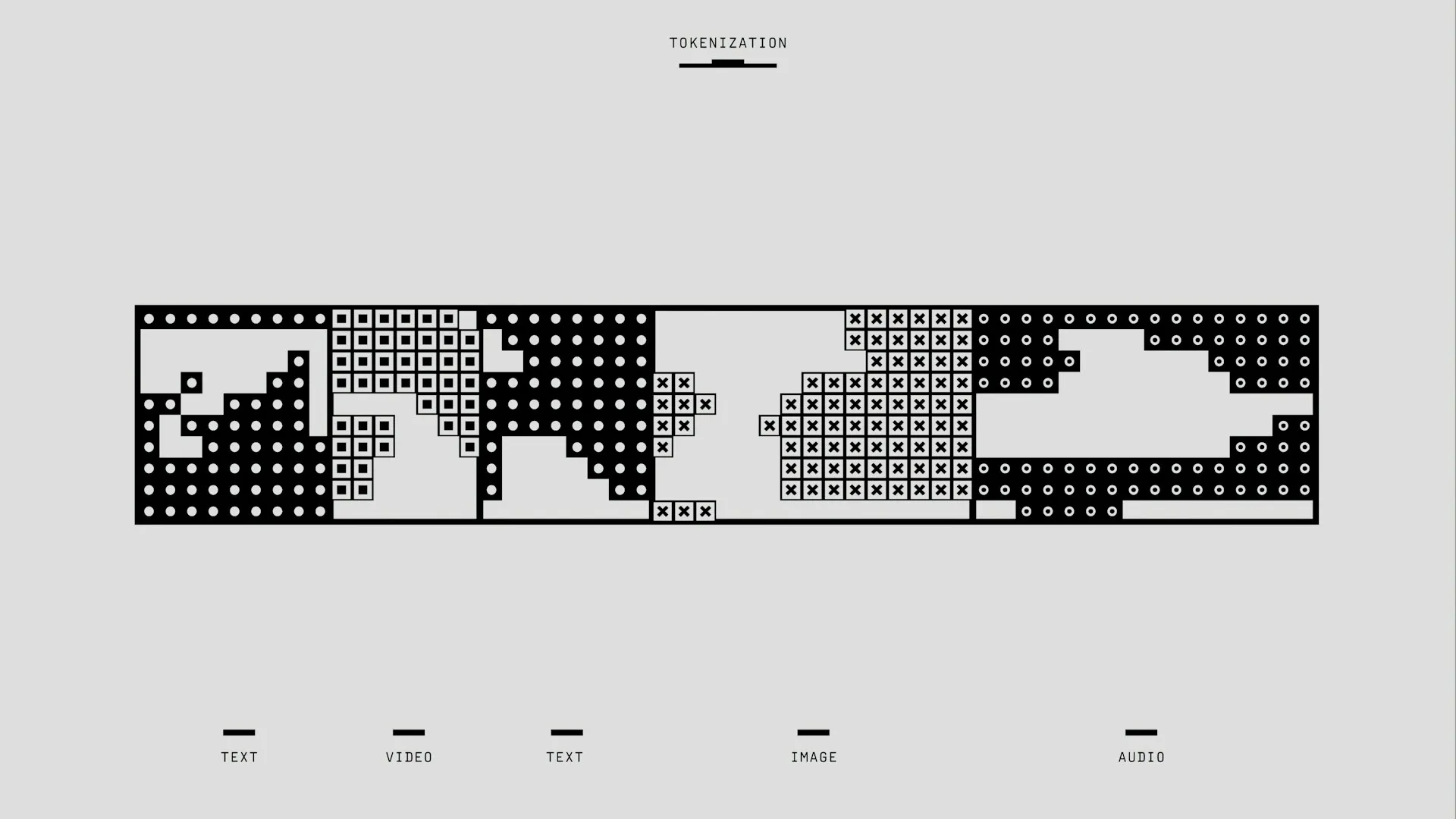
A Transformer receives tokens and converts them into numerical vectors.
Tokens can be full words, word fragments, punctuation, or other text units, depending on the tokenizer.
The network then processes those vectors through repeated Transformer blocks.
Inside each block, attention mechanisms calculate relationships between tokens. Feed-forward networks further process each token representation. Normalization and residual connections help information travel through many layers.
After enough layers, token representations contain rich contextual information.
A word near the beginning can influence a word far later in the sequence.
That ability became one major reason Transformers surpassed earlier recurrent architectures for many language tasks.
What Is Attention?
Attention calculates which parts of an input deserve greater influence during a particular computation.
Imagine the sentence:
“The cat climbed onto the table because it wanted the food.”
When processing “it,” the model needs information connected to “cat.”
Attention assigns numerical scores between token pairs.
Higher scores indicate stronger relevance for the current calculation.
The model then uses those scores to combine information from other tokens.
Attention, therefore, gives context a numerical form.
Different layers can learn different relationships. Some may respond to grammatical structure. Others may respond to names, topics, references, or semantic relationships.
Self-Attention
Self-attention means tokens within the same sequence attend to one another.
Suppose a sentence contains twelve tokens.
Each token can calculate relationships with other permitted tokens in the sequence.
The word “bank” may connect strongly with “money” in one sentence.
In another sentence, “bank” may connect with “river.”
The token itself stays the same. Context changes its internal representation.
That is one reason self-attention became so powerful for language.
Meaning can depend on surrounding words, distant words, or the entire passage.
Self-attention gives the network access to those relationships during computation.

Cross-Attention
Cross-attention connects information from two different sequences or sources.
Encoder-decoder architectures offer a classic example.
An encoder processes one sequence, such as an English sentence.
A decoder creates another sequence, such as a French translation.
Cross-attention allows decoder tokens to access representations produced by the encoder.
Multimodal systems can use a similar principle.
Text tokens may attend to visual representations. A question about an uploaded image can use cross-attention or related multimodal mechanisms to connect language with visual information.
The central idea stays simple: one source reads useful information from another source.
Query, Key, and Value
Attention relies on three important concepts:
Query – Key - Value
Each token representation is projected into Query, Key, and Value vectors.
A Query describes what the current token seeks.
A Key describes what another token offers for comparison.
A Value contains information that may contribute to the result.
The model compares Queries with Keys.
Strong compatibility produces a higher attention score.
Those scores determine how much each Value contributes to the new token representation.
Think of a search system.
The Query is the request.
Keys help identify relevant entries.
Values contain the useful information returned.
The actual neural network operation uses matrix multiplication and learned parameters, yet the search analogy provides a useful mental model.
The Attention Matrix
Attention scores for many token pairs form an attention matrix.
Suppose a sequence has five tokens.
The matrix can contain relationships between token 1 and token 1, token 1 and token 2, token 1 and token 3, and so forth.
Rows commonly correspond to Queries.
Columns commonly correspond to Keys.
After scaling and Softmax, each row yields a probability-like distribution over the permitted positions.
The model then uses those values to combine Value vectors.
For long sequences, this matrix can become expensive.
A sequence with twice as many tokens can require roughly four times as many pairwise attention relationships in standard attention.
That quadratic behavior motivated many later optimization methods.

Multi-Head Attention
One attention calculation can learn one set of relationships.
Multi-head attention runs several attention operations in parallel.
Each head has separate learned projections.
One head may respond to short-range grammar.
Another may detect long-range references.
Another may respond to semantic similarity.
Another may learn a completely different statistical relationship.
Outputs from the heads are combined and projected back into the model’s internal dimension.
Multi-head attention lets one layer examine several relationship types at once.
The heads rarely correspond cleanly to human linguistic labels, yet specialization often appears in analysis.
Why Position Matters
Self-attention compares tokens based on content.
Pure attention has no natural concept of token order.
Consider:
“Dog bites man.”
“Man bites dog.”
The same words appear in both sentences. Their order changes the meaning completely.
Transformer systems, therefore, need positional information.
Several methods exist.
Classic positional encoding uses mathematical patterns added to token vectors.
Newer models frequently use alternatives such as Rotary Position Embedding.
Positional Encoding
The original Transformer architecture used sinusoidal positional encoding.
Different positions receive different numerical patterns based on sine and cosine functions.
Those patterns are added to token embeddings.
The model can then learn relationships involving relative and absolute position.
Position 3 receives a different pattern from position 30.
The method requires no learned position table for each location.
Modern systems often use other position methods, yet sinusoidal encoding remains historically important because it demonstrated a practical way to give attention-based models sequence awareness.
Rotary Position Embedding and RoPE
Rotary Position Embedding, commonly called RoPE, encodes positional information by rotating portions of the Query and Key vectors.
The method helps attention calculations contain relative positional information.
RoPE became popular in modern language-model architectures.
Llama-family models and many other systems use it or related variants.
Its appeal stems from a useful mathematical property: relative position can naturally influence attention scores through rotation.
RoPE also supports several extensions used to increase practical context lengths.
Long-context research often involves modifications to positional scaling, as models trained on one context size may require careful treatment when applied to much longer sequences.
ALiBi
ALiBi means Attention with Linear Biases.
Instead of adding positional vectors to token representations, ALiBi adds position-dependent biases directly to attention scores.
Tokens farther apart receive different penalties based on distance.
Different attention heads can use different slopes.
The method gives the model information about relative distance while keeping the mechanism simple.
ALiBi gained attention partly because it can generalize to sequence lengths beyond those seen during training in some settings.
RoPE and ALiBi solve similar positional problems through different mathematical ideas.
The Transformer Block
A Transformer model stacks many Transformer blocks.
A typical block contains attention computation and a feed-forward network.
Normalization and residual connections support both.
The exact order varies by architecture.
One common flow looks conceptually like:
Input representations
→ normalization
→ attention
→ residual addition
→ normalization
→ feed-forward network
→ residual addition
Then the next block receives the result.
A large model can repeat this pattern dozens or even hundreds of times.
Each layer changes token representations.
Early layers may encode relatively local patterns. Later layers can develop richer contextual and conceptual relationships.
Feed-Forward Networks
Attention, let's exchange information.
The feed-forward network processes each token representation after that exchange.
A typical feed-forward network contains two linear projections with a non-linear activation between them.
Modern architectures may use GELU, SiLU, or gated variants such as SwiGLU.
The hidden dimension inside the feed-forward section is often much larger than the model’s main embedding dimension.
A large share of language model parameters can reside within these feed-forward layers.
Attention answers:
“Which information from other tokens matters here?”
The feed-forward network helps process the resulting representation.
Layer Normalization
Layer normalization helps stabilize neural-network computation.
Values inside large neural networks can vary considerably across layers.
Layer normalization rescales activations based on statistics computed across features for a token representation.
Modern Transformer architectures commonly use LayerNorm or RMSNorm.
Normalization helps optimization and keeps numerical behavior manageable across many stacked blocks.
Placement also matters.
Earlier architectures often used post-normalization.
Many modern language models use pre-normalization, in which normalization occurs before attention or feed-forward computation.
Residual Connections
Residual connections provide a direct path for information to propagate within a sublayer.
Suppose an attention layer produces an update.
Instead of replacing the prior representation completely, the model adds the update to the earlier representation.
Conceptually:
New State = Previous State + Update
This helps information travel across very deep networks.
Residual connections also help gradients move through many layers during training.
They became an important idea in neural network architecture, well beyond Transformers.
Encoder-Only Models
Encoder-only Transformers process an input sequence and create contextual representations.
BERT is the classic example.
Encoder-only models work well for tasks such as:
Classification
Semantic similarity
Named entity recognition
Search embeddings
Document analysis
They can read context from both directions during encoding.
For many language-understanding tasks, this ability gives the model a rich view of the complete input.
Decoder-Only Models
Decoder-only architectures became central to large generative language models.
GPT-family systems use this general design.
During text generation, the model predicts the next token based on tokens already available.
Causal masking prevents each token from reading future tokens during training.
The model therefore learns:
Given everything so far, which token is most likely to come next?
Then:
Given everything so far, plus the new token, what comes next?
Generation repeats this process, token after token.
Decoder-only models can perform question answering, code generation, summarization, reasoning tasks, tool use, and many other language operations.
Encoder-Decoder Models
Encoder-decoder Transformers use separate encoder and decoder sections.
The encoder processes the source input.
The decoder generates the output.
Cross-attention connects them.
Translation provides a natural use case.
The encoder reads the source sentence. The decoder generates the target language while consulting encoded source information.
T5 is a well-known encoder-decoder architecture.
Speech recognition, summarization, translation, and other sequence-to-sequence tasks can use this family of architectures.
Autoregressive Models
Autoregressive models generate one token based on earlier tokens.
A causal language model predicts:
P(token n | tokens 1 ... n-1)
Then it adds the selected token to the context and repeats the process.
This process makes interactive generation possible.
The model can produce paragraphs, code, dialogue, and other sequential output.
Autoregressive generation also creates a computational challenge because previous context must be consulted repeatedly.
KV Cache helps reduce repeated work.
Bidirectional Models
Bidirectional models can use context from both earlier and later positions during representation learning.
BERT provides the familiar example.
Suppose the model processes:
“The physician prescribed medicine after reviewing the patient.”
The representation for “medicine” can use words on both sides.
Bidirectional processing works well for understanding and representation tasks.
Autoregressive systems use causal direction for generation.
The architecture choice follows the task.
Why Attention Needs Optimization
Standard attention becomes expensive as context length grows.
If a model reads 100 tokens, the attention matrix contains relationships across that sequence.
If it reads 100,000 tokens, computational and memory requirements become dramatically larger.
Modern AI, therefore, relies on several techniques that reduce memory use, improve GPU efficiency, or limit which tokens interact.
Some optimize the same mathematical result.
Others change the attention pattern.
FlashAttention
FlashAttention improves the implementation of exact attention on GPUs.
The key insight concerns memory movement.
Traditional attention implementations can write large intermediate matrices to slower GPU memory.
FlashAttention reorganizes the computation so that more work can happen faster in on-chip memory.
The mathematical attention result remains exact while memory traffic falls substantially.
The benefit can include faster training and lower memory use.
That matters greatly for long sequences.
FlashAttention 2
FlashAttention 2 improves workload distribution and GPU utilization.
It reduces some non-matrix operations and partitions computation more effectively across GPU resources.
The underlying attention equation stays the same.
Engineering becomes better.
That distinction is important.
Many AI advances come from new mathematical models. Others come from computing the same mathematics far more efficiently.
FlashAttention 2 strongly belongs to the second category.
FlashAttention 3
FlashAttention 3 targets newer GPU hardware and adds further optimization for modern accelerator features.
Its design pays special attention to Hopper-generation NVIDIA GPUs and hardware capabilities such as asynchronous execution and lower-precision computation.
The goal remains familiar:
Compute exact attention while using expensive hardware resources more efficiently.
As the model context grows, implementation details at this level can substantially affect training economics.
Sliding Window Attention
Sliding Window Attention limits attention to nearby tokens.
Instead of one token attending to an entire long sequence, it reads a local window.
Suppose the window covers several thousand tokens.
A token can use information within that region, while distant positions remain outside the immediate attention calculation.
This reduces computation.
Local context often carries a large amount of useful information, especially across many language tasks.
Some architectures combine local attention with other mechanisms to capture long-range information.
Sparse Attention
Sparse Attention uses relationships among selected tokens instead of a fully dense attention matrix.
Patterns can include local windows, global tokens, block structures, or task-specific connections.
The idea is economical:
Many token pairs may contribute very little useful information.
Computing all pair relationships can therefore waste resources.
Sparse methods aim to preserve valuable connections while reducing overall computation.
Different sparse designs make different assumptions about which relationships matter.
Multi-Query Attention
Traditional multi-head attention can assign separate Query, Key, and Value projections to each head.
Multi-Query Attention changes that arrangement.
Many Query heads share one set of Key and Value heads.
This can reduce KV Cache memory during inference.
The reduction matters because generation repeatedly stores Keys and Values for earlier tokens.
Large models serving many concurrent users can consume enormous amounts of memory in those caches.
Multi-Query Attention helps reduce that burden.
Grouped Query Attention and GQA
Grouped Query Attention sits between traditional multi-head attention and Multi-Query Attention.
Query heads are divided into groups.
Several Query heads share one Key-Value head within each group.
The method aims to preserve model quality while lowering memory and inference cost.
GQA became popular in modern large language models because it offers a useful compromise.
More Key-Value heads than Multi-Query Attention can preserve richer behavior.
Fewer Key-Value heads than traditional multi-head attention reduce cache requirements.
KV Cache
KV Cache is one of the most important concepts in efficient language-model inference.
During autoregressive generation, earlier tokens remain unchanged.
Recalculating their Key and Value representations for each new token would waste computing resources.
KV Cache stores those earlier representations.
When the next token arrives, the model calculates new Query, Key, and Value information for the new position and reuses cached Keys and Values from previous positions.
Generation becomes much cheaper.
The trade-off is memory.
Long prompts, large batch sizes, many layers, and many concurrent users can make KV Cache extremely large.
That memory pressure motivated techniques such as MQA, GQA, quantized caches, and Paged Attention.
Paged Attention
Paged Attention manages KV Cache memory using an idea similar to virtual-memory paging in operating systems.
Instead of requiring a single large contiguous block for each sequence, cache data can reside in smaller memory blocks.
Those blocks can be allocated and reused more flexibly.
The method reduces wasted GPU memory and helps inference engines handle many concurrent sequences.
Paged Attention became widely associated with high-throughput LLM serving through systems such as vLLM.
The benefit becomes obvious in production.
Model quality may remain identical while serving efficiency improves.
Why All of This Matters
Transformer architecture started with a clean idea: let tokens calculate which other tokens matter.
Then the engineering world began solving everything around it.
How should the position be entered into the model?
How should attention work across many heads?
How can long contexts fit inside GPU memory?
How can the generation reuse earlier computation?
How can many users share the same inference hardware?
RoPE helps with position.
GQA reduces Key-Value overhead.
KV Cache avoids repeated computation.
Paged Attention improves cache allocation.
FlashAttention reduces memory traffic.
Sliding Window and Sparse Attention reduce the number of relationships the model needs to calculate.
One architectural idea gave rise to an entire field of optimization.
That is what makes Transformer technology so interesting.
The breakthrough was attention.
The next breakthroughs came from learning how to make attention practical at an extraordinary scale.
 Make your brand matter.