Stripe Opens Revenue Analytics to AI Agents

Stripe announced on November 5, 2026, that all Stripe users can access its Queries API and Reports API through compatible AI agents or direct integrations. Claude and Cursor are among the examples in Stripe’s announcement. Someone examining a revenue change can ask a question in ordinary language, then inspect the calculation behind the answer. Stripe’s data becomes available within the software where that investigation is already happening.
For a business reviewing subscription revenue, the attraction is the ability to investigate a result after the first answer raises another question. Finance staff still need to judge the calculation, especially when a report informs an investor update. SQL access creates an opportunity for that review, provided the analyst has the expertise to evaluate the statement and the data it selects.
What the New Access Includes
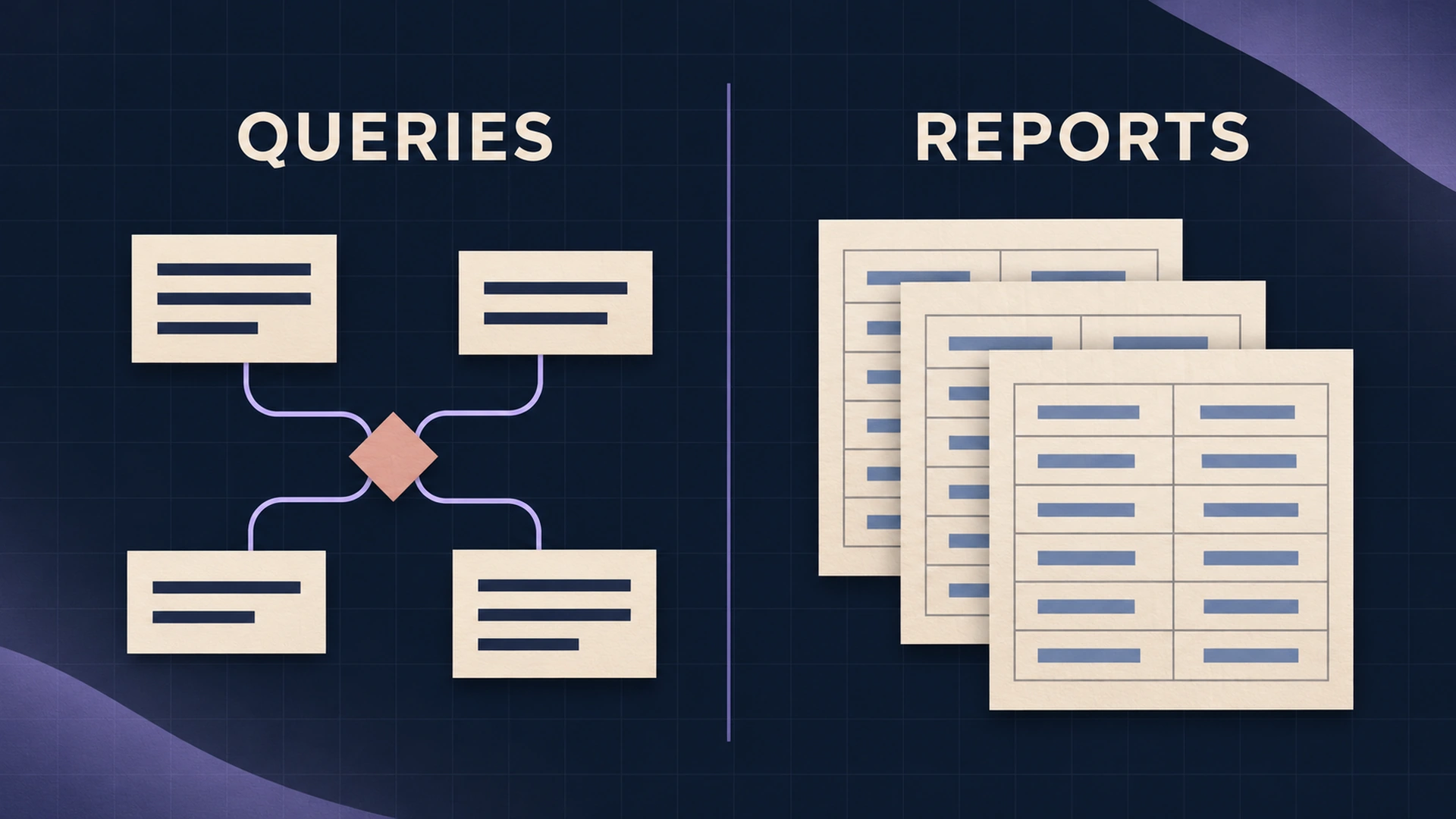
Stripe’s current data API documentation describes tools for reading analytical data, with separate routes for SQL queries and prebuilt reports. Developers can retrieve table descriptions before submitting a query. Report templates supply established calculations for recurring questions. The agent must choose an appropriate route for the question and return evidence the reader can inspect.
Stripe’s Queries API accepts SQL against Stripe’s analytical tables and runs the request asynchronously, so the application retrieves results after processing finishes. For a custom calculation, the SQL states the conditions applied to the records. Engineers can retain that statement with the output for a later review. Results arrive as CSV files or paginated inline rows, so the application must retrieve the complete requested result. Pagination should be checked during integration testing: the first response page may contain only part of the dataset. Stripe directs new integrations to its v2 data query interface; the older Sigma query-run documentation describes a different access arrangement.
Prebuilt reports follow a template whose parameters specify the requested period and available options, as explained in the Reports API guide. The application requests a report run and retrieves its result after completion. Templates suit recurring calculations with consistent parameters, which helps reviewers compare successive results using the same methodology. Custom SQL becomes useful when the business question requires a different selection or grouping.
A Revenue Question Still Needs a Meaning
Monthly recurring revenue may look like a familiar label, but a finance team needs to explain which subscription changes belong in the calculation for a particular period. Stripe supplies metric guidance to help agents interpret its records. For the reader, the useful output includes the calculation’s scope, along with the figure. Subscription measures and cash receipts answer different questions, so an agent needs to establish which question the business asked.
For a month-to-month investigation, a finance reviewer can request the largest subscription changes and the records responsible for those changes. Further investigation may examine a particular product’s cancellations. Any claim about why customers left requires evidence of their behavior or stated reasons.
Customer activity in another application adds a separate analytical task when a team wants to compare website behavior with later subscription cancellations. Stripe’s announcement describes the use of connected tools for that work. Record matching requires a reliable customer identifier shared between the sources. Correlations between website visits and cancellations require further investigation prior to attributing those cancellations to a particular customer encounter.
Inspect the Calculation Behind the Answer
Agent-written explanations become easier to evaluate when the reviewer can inspect the SQL and compare the returned records with an established financial report. Queries deserve scrutiny at the point where a join changes the row count. Customers may have several related records, so an unsuitable join can repeat a payment in the result. For payment-level calculations, reviewers need to verify that joins preserve the intended payment count.
Stripe’s report documentation makes an important qualification to the announcement’s broad statement concerning SQL inspection: a report run can return its exact SQL when requested. Some report runs return an explanatory message in place of SQL. The template’s example SQL is a separate reference and may differ from the executed statement. Report readers need to know which evidence accompanies the output they receive. Engineers can retrieve the saved ReportRun ID to inspect that execution’s result and requested SQL.
Currency treatment warrants its own review when revenue records span multiple settlement currencies or the report presents a converted total in a management discussion. The requested output needs an explicit currency basis. Finance staff can compare the result with an approved report covering the same period. Differences deserve investigation through the calculation’s filters and the source records, with the original output retained during revisions.

Read Permissions Set the Boundary
The Stripe MCP documentation explains how compatible agents connect to Stripe and describes the permissions associated with the tools they can use. Analytics reads require the relevant data permissions. Other Stripe tools have different capabilities, so a reporting assignment needs its own restricted access. Permission to examine revenue supports an analytical job; a subsequent business action requires separate authority within the implementation.
Access review extends to the destination that receives financial records when an organization authorizes an agent to read them via a third-party application. The technical owner needs to examine that application’s data terms and approved users. Reports shared internally need an audience appropriate to their contents. Someone permitted to ask a question may still require a narrower output than an account-wide export.
Availability labels need attention during implementation, since Stripe’s announcement states access for all users and current MCP documentation still describes analytics tools as Preview. The separately documented Analytics API has its own preview-access process. Buyers should verify the exact interface their proposed integration uses.

Data Timing Affects the Conclusion
Stripe’s analytical tables follow refresh cycles, so a question asked immediately after a transaction may encounter data whose latest refresh precedes that transaction. The schema documentation provides refresh information to assess table freshness. Reports comparing periods need a recorded data cutoff. Otherwise, a partially populated recent period can produce a misleading comparison against an older complete period.
The Sigma data documentation describes different update timing across source tables, which makes a blanket real-time claim inappropriate for this release. Agents should state the applicable timing with their results. Query caching introduces another detail for developers: a matching request may return a completed job tied to the dataset’s refresh state. The query’s execution time alone indicates when the job ran; table refresh metadata indicates the recency of the analytical records. Operations staff then know whether the answer supports a retrospective review or requires a later refresh. Time-sensitive transaction decisions need a data source suited to their required timing.

Free Access Has a Published End Date
Stripe says Queries API usage remains free through January 31, 2027, and credit-based usage charges begin on February 1, 2027. Reports API access remains free. Agent-provider fees remain a separate consideration for an organization planning the complete operating budget.
Teams evaluating the API need to measure query usage during the actual investigation, since follow-up questions and revised calculations create additional work for the connected tools. The useful cost comparison includes human review time as well as software usage. Teams can record how long a reviewer needs to accept a result and which errors require correction. Stripe’s announcement states the billing model; the per-credit rate remains a separate item for procurement verification.
Start with a Report Someone Already Checks
Revenue analysis is a sensible first assignment when an organization already has a trusted report against which an agent’s results can be compared. OPERENDIA’s custom AI development includes integrations with approved business systems and permission-based workflows. For this release, a bounded initial scope would pair a recurring revenue question with an existing review procedure. The next investment decision can be informed by evidence regarding calculation accuracy and the time required to resolve discrepancies.
 Make your brand matter.