How Large Language Models Learn

Large language models feel surprisingly natural when we use them.
We ask a question. The model replies. We give it a document. It summarizes the material. We ask for code, analysis, translation, or planning help. The interaction feels simple.
The training process underneath it is far less simple.
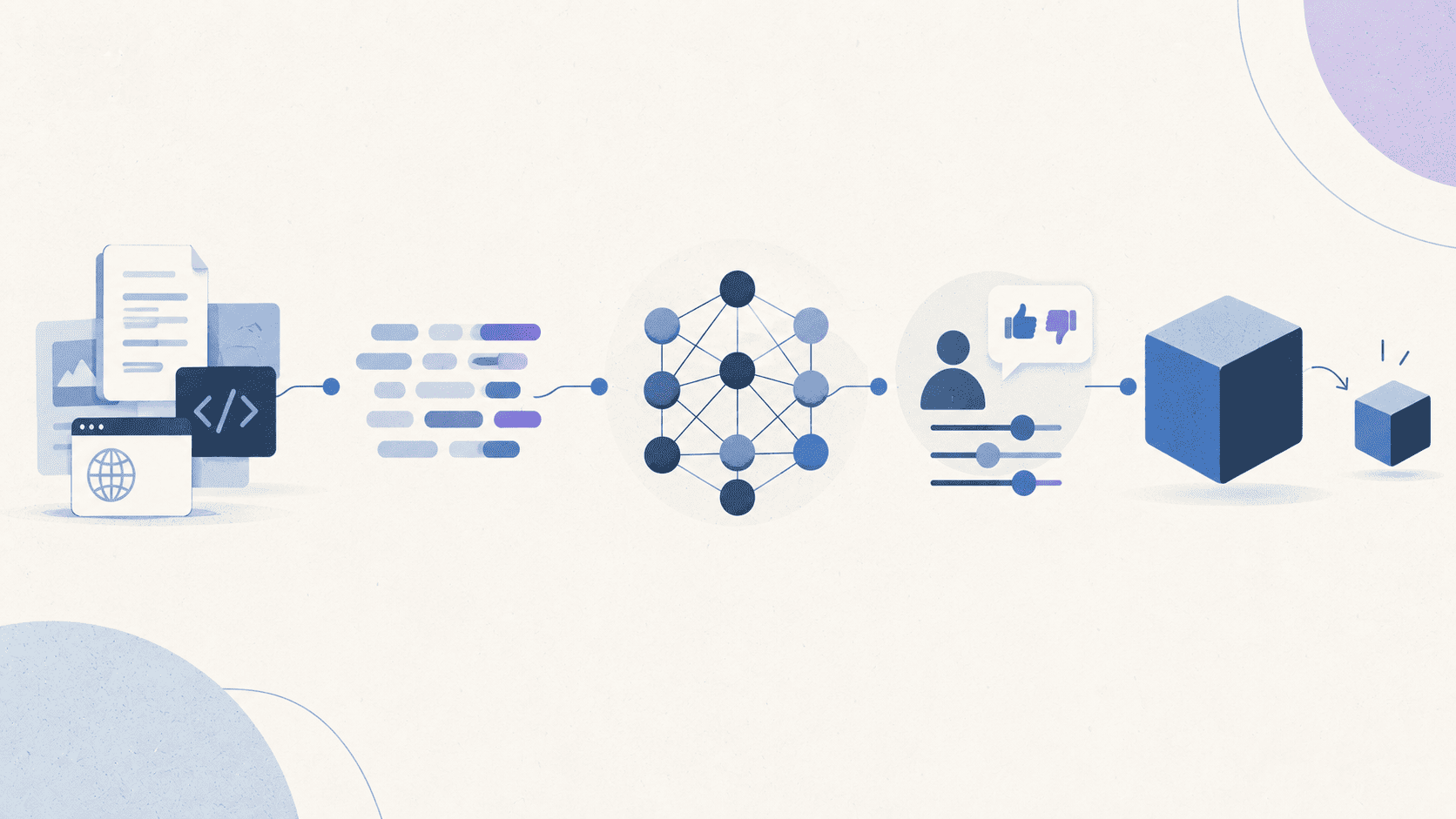
Modern LLMs usually pass through several distinct phases. Pretraining gives the model broad language knowledge. Fine-tuning helps it perform selected tasks more effectively. Alignment methods guide behavior toward human preferences. Distillation can transfer useful capability from a larger model to a smaller one.
Once those phases make sense, the rest of the LLM world becomes much easier to understand.
Pretraining: Where the Model Learns Language
Pretraining is the large initial training phase.
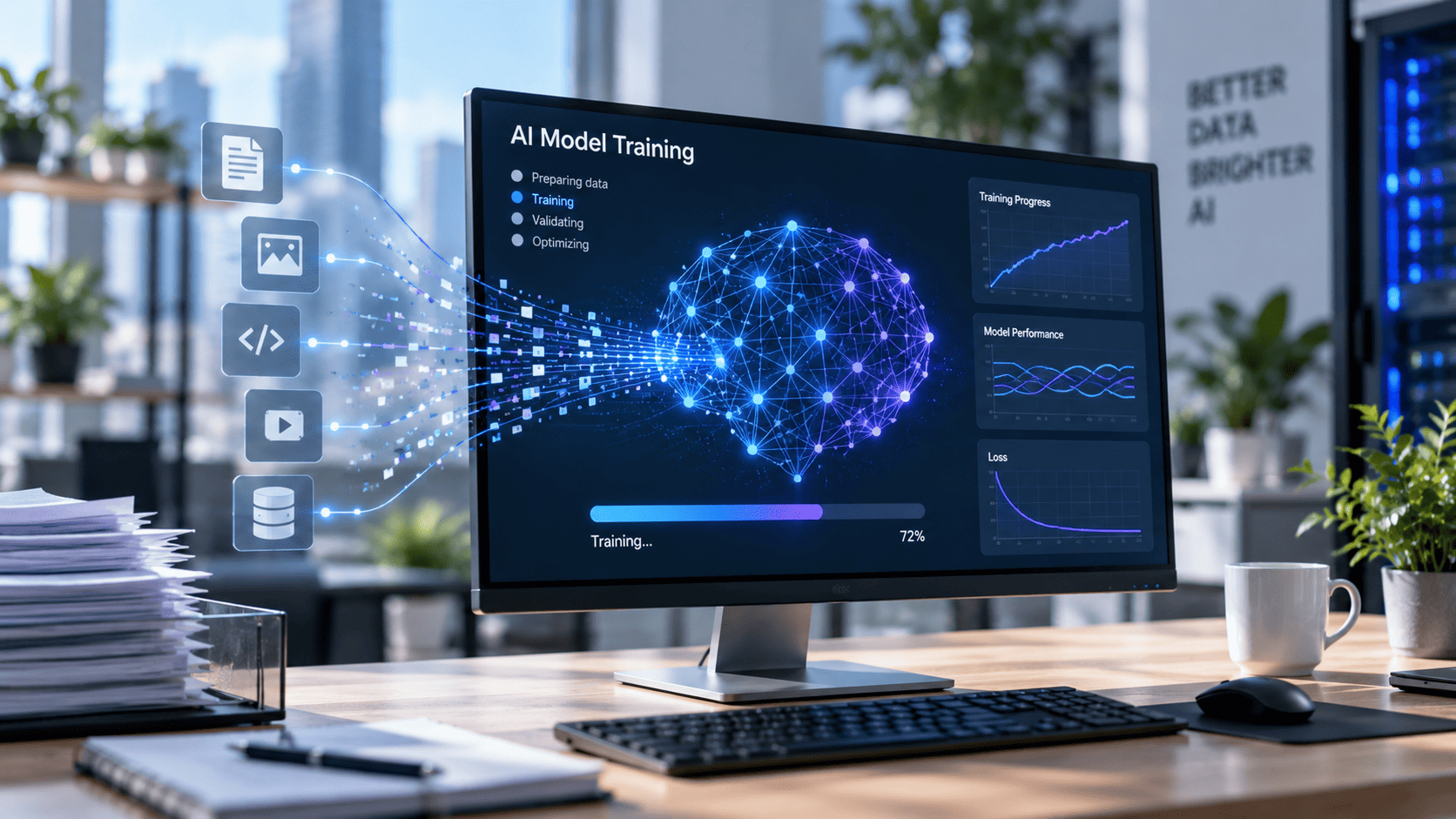
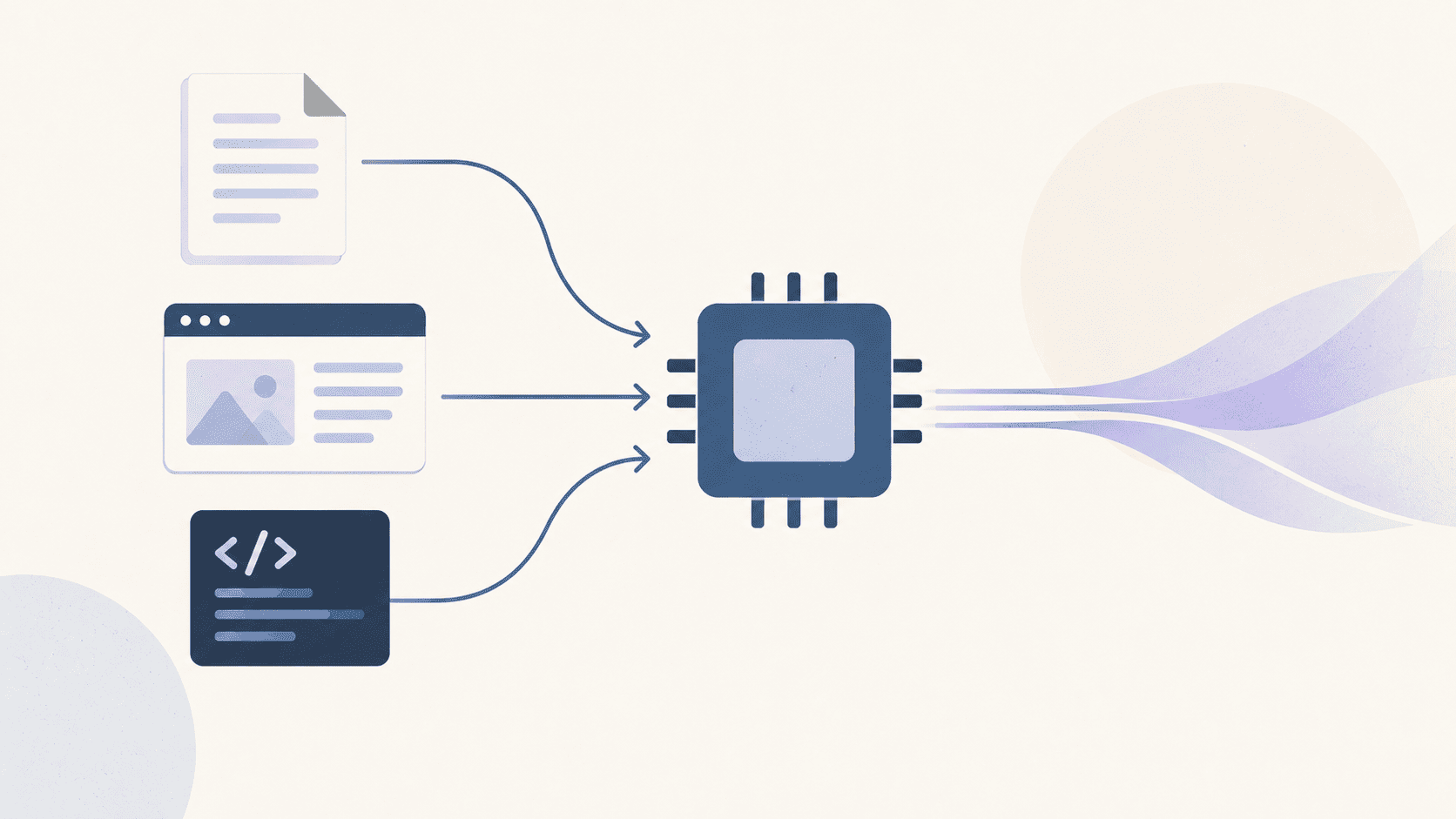
The model receives a huge training corpus that may contain books, websites, articles, code, reference material, forums, research papers, public datasets, and licensed sources.
The goal is usually simple in concept.
Predict the next token.
Imagine the sentence:
“Dubai has become a major center for…”
The model receives the earlier tokens and estimates which token should follow.
One training example teaches very little.
Billions or trillions of examples teach statistical relationships across language.
During pretraining, the model learns grammar, facts, syntax, associations, writing patterns, coding conventions, reasoning patterns, and relationships between concepts.
The model learns these patterns through parameter updates.
Pretraining gives an LLM its broad foundation.
Dataset Preparation
Training data quality matters enormously.
A massive dataset can still produce poor results if the source material contains excessive duplication, spam, corrupted text, low-quality pages, or irrelevant content.
Dataset preparation usually includes source selection and filtering.
Teams decide which domains deserve inclusion. They may use quality scores, language filters, source reputation, licensing rules, or topic relevance.
Balance also matters.
Too much code may influence language behavior. Too much content from one region may affect cultural coverage. Too much duplicated text may cause memorization problems.
Dataset work influences the model long before training begins.
Web Crawling
Web crawling collects public web pages through automated software.
A crawler visits pages, follows links, and saves selected content.
Large-scale LLM projects may use existing web archives or custom crawling systems.
Raw web data is messy.
Pages contain menus, advertisements, navigation text, duplicate content, scripts, broken markup, spam, and machine-generated material.
Crawling, therefore, supplies raw material.
Later stages decide what deserves a place in the training corpus.
Data Cleaning
Data cleaning removes unwanted material and improves text quality.
Common tasks include language detection, HTML removal, spam filtering, document quality scoring, profanity filtering, malformed text removal, and metadata extraction.
Cleaning can also detect content with unusual repetition or machine-generated noise.
A cleaner dataset gives training a better statistical foundation.
Model capability depends partly on architecture and compute.
Data quality carries equal importance.

Deduplication
The internet contains enormous repetition.
News articles get copied. Product descriptions appear on many stores. Quotes circulate across thousands of pages. Code repositories contain copied files.
Deduplication identifies repeated or highly similar content.
Exact duplicates are relatively easy to detect.
Near-duplicates require similarity methods.
Removing repeated text reduces wasted computation and lowers memorization risk.
A training corpus is more valuable when it contains broader information rather than the same document repeated many times.
Tokenization
Language models do not process sentences as human-readable words.
They process tokens.
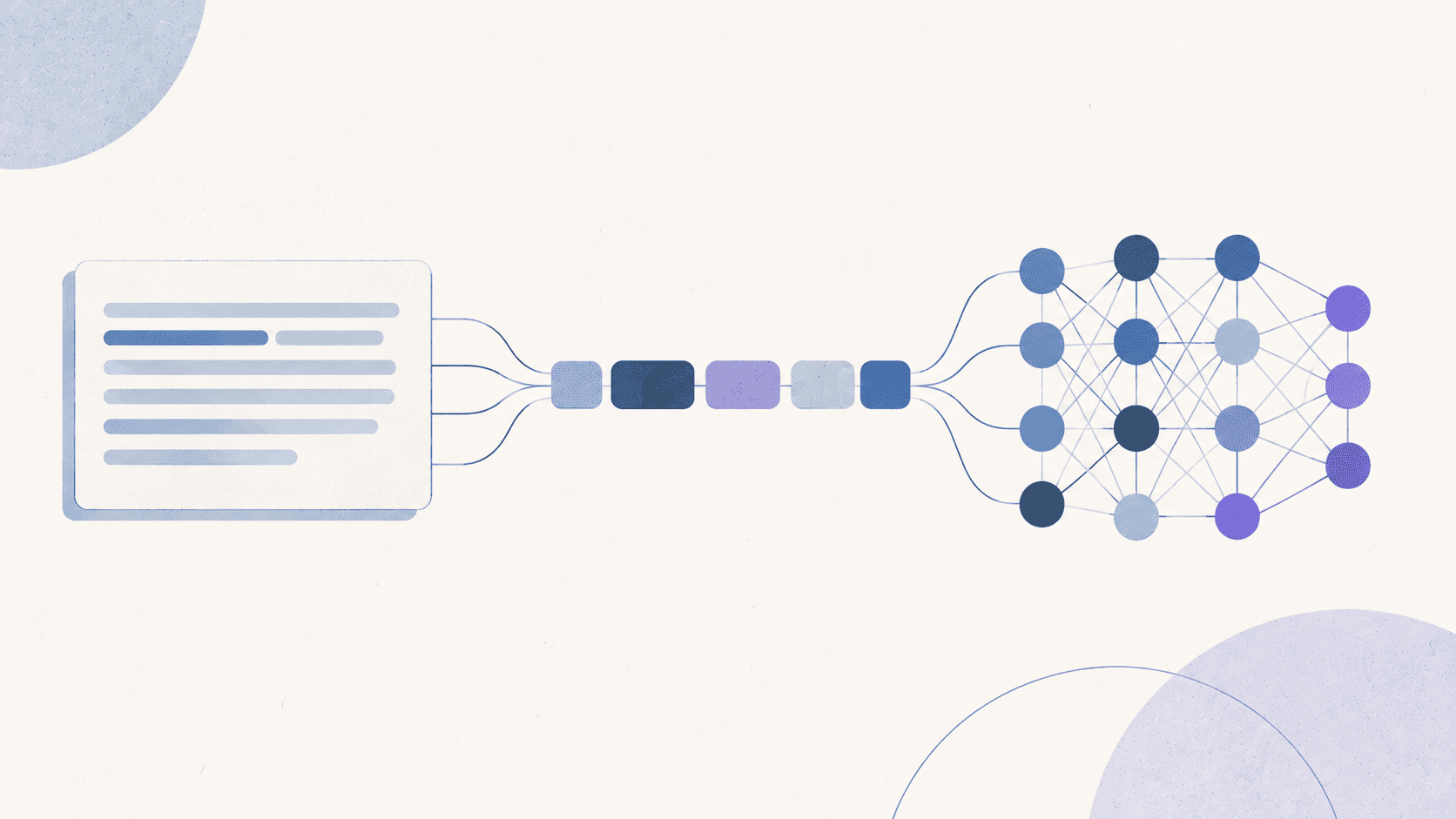
A token may be a whole word, part of a word, punctuation, or another text unit.
For example, a word such as “unbelievable” may appear as a single token in one tokenizer and as several smaller pieces in another.
Tokenization creates the vocabulary that the model uses during training and inference.
Tokenizer design affects efficiency.
Common words often receive compact token forms. Rare terms may split across several pieces.
Multilingual models need tokenizers that handle many scripts and languages efficiently.
The Training Corpus
The training corpus is the full text collection used during pretraining.
Its scale can reach hundreds of billions or trillions of tokens.
A strong corpus includes broad subject coverage and diverse writing forms.
Code, literature, science, business texts, conversations, documentation, educational material, and many other sources may contribute.
Corpus composition influences later behavior.
A model trained heavily on technical documentation may develop stronger technical patterns. Another model with wider multilingual data may perform better across languages.
The corpus becomes part of the model’s statistical education.
Synthetic Data
Synthetic data is generated by software or AI systems rather than collected directly from human-created sources.
LLMs can create question-answer pairs, reasoning examples, coding tasks, summaries, dialogues, and instruction-response datasets.
Synthetic data has become increasingly useful because high-quality human-created training material is finite and expensive.
A stronger model can generate examples for another model.
Human reviewers can also score or filter synthetic samples.
Quality control matters.
Weak synthetic data can introduce errors. Strong synthetic datasets can improve task coverage and provide examples that are difficult to collect manually.
Fine-Tuning: Teaching the Model a More Specific Job
Pretraining creates broad capability.
Fine-tuning adjusts a pretrained model using a smaller dataset tied to selected behavior or tasks.
Imagine a general language model that knows medical terminology.
Fine-tuning could teach it how to format clinical summaries.
A financial model could learn report formats.
A support model could learn company-specific response patterns.
Fine-tuning usually requires far less compute than pretraining because the model already has broad language knowledge.
Full Fine-Tuning
Full fine-tuning updates most or all model parameters.
That method gives developers substantial control over model behavior.
The cost can also be high because large models contain billions of parameters.
Memory requirements grow quickly.
Storage becomes another factor because each fine-tuned version may require a full model copy.
Full fine-tuning makes sense when the training objective is substantial, and enough compute is available.
Instruction Tuning
Instruction tuning teaches a model how to follow user requests.
Pretrained models mainly learn next-token prediction.
Instruction datasets show a different pattern:
Instruction: Explain gravity to a child.
Response: Gravity is the force that pulls things toward Earth.
Thousands or millions of similar examples teach the model how instructions map to useful responses.
Instruction tuning helped move language models from text completion systems toward conversational assistants.
Supervised Fine-Tuning
Supervised Fine-Tuning, usually called SFT, uses labeled instruction-response examples.
Human writers may create high-quality answers.
Experts may contribute domain-specific examples.
Synthetic responses can also become part of the dataset after quality filtering.
SFT teaches desired response behavior directly.
It is one of the most common stages after pretraining.
PEFT: Training Fewer Parameters
PEFT means Parameter-Efficient Fine-Tuning.
Large models contain too many parameters for inexpensive full fine-tuning.
PEFT methods update a smaller parameter subset while keeping most base-model parameters fixed.
The result reduces memory requirements and training cost.
Several popular methods follow this idea.
LoRA
LoRA means Low-Rank Adaptation.
Instead of changing the entire model weight matrix, LoRA adds small trainable matrices.
The base weights remain fixed.
Training updates only the added low-rank components.
That design reduces memory use and storage needs.
One base model can support many LoRA adapters for different tasks.
LoRA became extremely popular for language models and image-generation models.
QLoRA
QLoRA combines quantization with LoRA.
The base model is stored at lower numerical precision.
LoRA adapters remain trainable.
This approach can reduce GPU memory requirements dramatically.
Developers can fine-tune models on hardware that would struggle with full-precision training.
QLoRA made large-model customization far more accessible.
AdaLoRA
AdaLoRA changes how low-rank capacity gets assigned during training.
Instead of using the same rank everywhere, it allocates capacity based on parameter importance.
Useful areas receive more adaptation capacity.
Less useful areas receive less.
The goal is better parameter efficiency.
DoRA
DoRA means Weight-Decomposed Low-Rank Adaptation.
The method separates weight magnitude from weight direction.
LoRA-style updates then handle directional change more effectively.
Research has shown that DoRA can improve adaptation quality in several settings.
It keeps the efficiency advantages associated with parameter-efficient tuning.
Adapter Layers
Adapter Layers insert small trainable modules between existing network layers.
The main model remains largely fixed.
Only the adapters learn task-specific behavior.
Different adapters can support different domains or tasks.
That makes model management easier for organizations that need many specialized versions.
Alignment: Teaching Preferred Behavior
Alignment methods guide model behavior toward human or policy preferences.
Pretraining teaches language patterns.
Fine-tuning teaches task behavior.
Alignment helps determine which responses are preferable.
The training signal may come from humans, AI systems, reward models, or preference pairs.
RLHF
RLHF means Reinforcement Learning From Human Feedback.
Human reviewers compare model responses.
Their preferences train a reward model.
The language model then learns to produce responses that receive higher reward scores.
RLHF became a major technique for conversational LLMs.
Human preference data can improve usefulness, tone, and instruction compliance.
RLAIF
RLAIF means Reinforcement Learning From AI Feedback.
An AI evaluator provides preference signals instead of relying entirely on human reviewers.
The approach can reduce annotation cost and expand the dataset size.
Human guidance can still define evaluation principles.
AI then applies those principles across larger volumes.
DPO
DPO means Direct Preference Optimization.
DPO learns directly from preferred and rejected response pairs.
It avoids a separate reinforcement-learning phase.
Suppose a dataset contains two answers to the same prompt.
One answer receives a preferred label.
The other receives a rejected label.
DPO adjusts the model, so preferred answers gain a higher probability.
The method became popular because the training process is relatively simple.
PPO
PPO means Proximal Policy Optimization.
PPO is a reinforcement-learning algorithm often associated with RLHF.
The method updates the model while limiting how far each update moves the policy.
Large updates can destabilize training.
PPO constrains those changes.
That stability helped make it useful for preference-based language-model training.
ORPO
ORPO means Odds Ratio Preference Optimization.
ORPO combines supervised instruction learning with preference optimization inside one training objective.
The method encourages preferred responses while reducing the probability of rejected alternatives.
It offers a simpler route compared with multi-stage reinforcement pipelines.
KTO
KTO means Kahneman-Tversky Optimization.
KTO can learn from examples labeled as desirable or undesirable.
Preference pairs are not always required.
That can make dataset collection easier.
Teams may have many rated responses without having direct pairwise comparisons.
KTO gives those labels practical training value.
Reward Models
Reward models learn to score model outputs.
Human reviewers usually provide preference examples.
The reward model studies those judgments and predicts which answer humans would prefer.
RLHF systems can then use the reward score during optimization.
Reward-model quality matters because the language model learns toward its signal.
Poor reward signals can teach poor behavior.
Preference Datasets
Preference datasets contain human or AI judgments about model responses.
A dataset may contain:
Prompt
Preferred response
Rejected response
Another dataset may contain individual response ratings.
Preference data helps alignment methods learn qualities such as usefulness, relevance, safety, and instruction compliance.
Dataset design has an enormous influence on final behavior.
Constitutional AI
Constitutional AI uses written principles to guide model evaluation and revision.
An AI system can critique its own response according to a set of rules.
It can then generate an improved answer based on those principles.
AI feedback can also train preference models.
The method reduces reliance on direct human annotation for every sample.
Human judgment still enters through the principles chosen for the system.
Knowledge Distillation
Knowledge Distillation transfers useful behavior from a larger model to a smaller model.
The larger model is called the teacher.
The smaller model is called the student.
The student learns from the teacher's outputs.
Teacher predictions can contain richer information than simple labels.
Distillation can produce smaller models with lower inference cost and faster response times.
Teacher and Student Models
The teacher model usually has greater capacity.
The student has fewer parameters.
Training encourages the student to reproduce useful teacher behavior.
A strong teacher may generate answers, probability distributions, reasoning examples, or intermediate training signals.
The student learns from those examples.
Companies can gain faster deployment and lower compute cost while retaining a large share of teacher capability.
Reasoning Distillation
Reasoning distillation uses teacher-generated reasoning examples to teach smaller models problem-solving patterns.
The teacher may produce worked examples for mathematics, code, planning, or logical tasks.
The student trains on those outputs.
Careful dataset preparation matters because reasoning examples can contain errors.
Strong filtering improves the value of the final dataset.
Synthetic Dataset Generation
Large models can generate training datasets for smaller or specialist models.
A teacher can create instructions, answers, classification examples, code tasks, dialogues, or domain scenarios.
Developers can then filter the samples and use them for fine-tuning.
Synthetic generation makes dataset creation much faster.
Human experts remain valuable for evaluation and domain review.
How the Full LLM Training Process Fits Together
Pretraining gives the model broad language knowledge.
Fine-tuning teaches selected tasks.
Alignment teaches preference.
Distillation transfers capability to smaller models.
Several methods can sit inside each stage.
One project may use QLoRA for a domain-specific model.
Another may use SFT followed by DPO.
A larger research lab may pretrain a foundation model and later use RLHF.
A company may skip pretraining entirely and fine-tune an existing open model.
The right path depends on data, hardware, cost, latency, privacy, and business goals.
LLM training is rarely one technique.
It is a series of choices.
Good choices begin with one very human question:
What do we actually need the model to learn?
 Make your brand matter.