Google Gemini 4 Argon: What It Can Do, How It Works, and What People Think
Google has released Gemini 4 Argon, and the early conversation is about far more than a smarter chatbot. People are testing it on entire software projects and lengthy research assignments. Others are asking it to develop business ideas, read complex documents, and write stories that sound like something a real person would write.
The model was released to a wider audience on October 13, 2026. Google describes it as its flagship reasoning model, built for demanding work in engineering, science, finance, and legal analysis. Initial reactions suggest a substantial improvement over earlier Gemini releases. They raise some familiar questions, too. How reliable is it over a long project? Can its writing retain personality? And how much useful work can someone complete within a paid plan's limits?
What Is Google Gemini 4 Argon?
Gemini 4 Argon is part of Google's latest generation of multimodal AI models. It can work with text, images, audio, video, and PDF files as input. Its direct model output is text, which can include explanations, plans, software code, or data suitable for other applications.
Google introduced Argon to selected cybersecurity partners in early October and expanded public access on October 13. Google AI Pro and Ultra subscribers can access it in the Gemini app. Developers can use its API through Google AI Studio, and supported enterprise deployments run through Google Cloud. Google Antigravity offers eligible users another avenue for software development.
Argon's biggest ambition concerns sustained reasoning. Many requests involve connected tasks that require reading source material and weighing several options. The model can use tools to check results and refine an answer. Google designed the model to stay useful throughout longer projects.
How Does Gemini 4 Argon Work?
The Mixture-of-Experts Architecture
Google's published model card identifies Argon as a large, sparse Mixture-of-Experts neural network. In a Mixture-of-Experts design, a routing mechanism selects specialist neural network components for portions of the work. The model can draw on extensive learned capacity and activate only a subset of its expert components for a particular token.
Its architecture is natively multimodal. Text can sit alongside visual and audio information within a task. For example, a developer might submit a video and ask for a detailed timeline of events. An analyst might supply financial tables and a collection of PDFs for comparison.
Google's documentation describes the architecture at a high level. Exact parameter counts and detailed expert-routing configurations remain private.
Google TPUs, JAX, and ML Pathways
Argon's training ran on Google's Tensor Processing Units, commonly called TPUs. Google used JAX and ML Pathways as part of the training software infrastructure. Large TPU clusters give the company the computing capacity required for complex model development.
The training material included text and code, as well as images, audio, and video. Google describes a mixture of web sources, licensed material, user feedback, and synthetic data. Reinforcement learning helped develop its ability to work through difficult reasoning and problem-solving tasks.
Google's ownership of its chip infrastructure offers an interesting competitive advantage. The company can develop AI hardware and model software within the same organization. Performance still comes down to the workload and the software system used to deliver it.
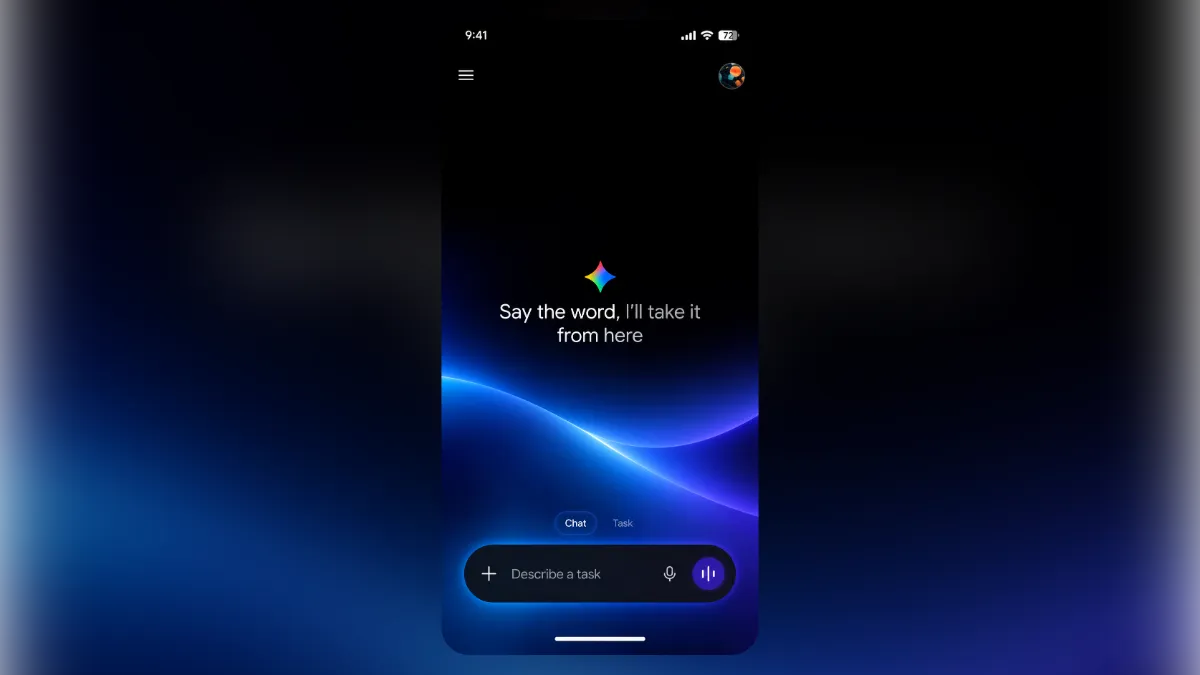
One Million Tokens of Context
Google's developer documentation confirms that Argon supports a shared context budget of 1,048,576 tokens for all tokens consumed during input processing and response generation. The default synchronous response limit is 65,536 tokens. Developers can use long-decode background execution for outputs that go beyond that limit, subject to the shared token budget.
Think about what that means for a research project. Large collections of notes and lengthy software repositories can fit inside a request. Teams can supply historical documents and ask the model to trace connections across them.
Long context remains a matter of quality as much as capacity. Even a model that accepts a million tokens can still miss a detail near the middle of a large source. Independent long-context tests provide useful evidence beyond the size printed on a specification page.
Reasoning Levels and Connected Tools
Developers can select Low, Medium, or High reasoning levels. Medium is the default API setting. More reasoning gives Argon additional opportunity to examine a complex request, although the extra computation can raise latency and token consumption.
The Gemini API supports code execution and file search. Search grounding, Google Maps grounding, and machine-readable JSON responses extend the range of applications. Computer use is available in preview. Video comprehension has agent-oriented capabilities for tasks that call for close inspection of footage.
Argon's direct API output is text. Image creation and audio generation require other compatible models or connected tools. The distinction matters when people see an impressive visual result inside a larger Google application.
What Can You Do with Gemini 4 Argon?
Software Engineering and App Development
Argon can examine repositories and propose changes across multiple files. It can write tests, debug software, and assist with large migrations. Google Antigravity adds an agent environment for planning and executing development tasks.
Google reports that its internal teams increased agent-generated code submissions by more than 35% and achieved a nearly one-third reduction in rollbacks. The company describes work on Chrome's large codebase and performance improvements to its Agent Development Kit. Google reports a 40% reduction in session preparation time for certain long-session operations.
The most useful question for developers concerns the complete outcome. Did the resulting code pass tests? Did it respect the existing architecture? And how much review was needed after the model completed its work?

Research, Documents, and Business Analysis
Argon can compare contracts and summarize extensive research material. It can examine financial reports and explain a complex technical subject in plain English. Its multimodal inputs help when relevant evidence appears in charts or scanned documents.
Business teams can use it for competitor research and proposals. Researchers can ask it to compare papers and trace competing explanations. Legal and financial professionals can use its output as a starting draft for expert review.
Google has described early work with Isomorphic Labs in research documents and patents. The examples offer a glimpse of advanced use cases, although specialist review remains part of responsible decision-making.
Creative Writing, Story Development, and New Ideas
Argon's creative side may be its most pleasant surprise. Reddit users have praised its ability to suggest less predictable ideas and give stories a more natural voice. One creative-writing comparison found a clear improvement against Gemini 3.1 Pro Preview across 50 paired stories.
The comparison still identified repeated names and overly tidy emotional resolutions. Greater coherence does little for fiction when characters speak in the same voice or resolve conflicts too easily.
For writers, the productive use goes beyond requesting a finished story. Argon can develop character motivations and test alternate endings. Brand teams can ask for fresh campaign directions and then apply their own editorial judgment. Its ability to follow a detailed brief may prove just as useful as its raw imagination.

Cybersecurity, Science, and Robotics
Google initially provided Argon to trusted cybersecurity defenders through its Fairwind Program. The company reports successful investigations of software vulnerabilities and defensive fixes. Its safety work includes monitoring for harmful requests and unusual agent behavior.
Scientific examples are unusually broad. Google describes progress in quantum computing and enzyme research. In robotics research, Argon analyzed video of a person playing cornhole and helped construct a simulation for a robot. Google reports that the robot completed seven consecutive successful throws in a demonstration.
Google's published demonstrations are promising examples. Wider independent replication will help establish how consistently these outcomes carry over to new settings.
What Does Google Say About Gemini 4 Argon's Performance?
Google's benchmark results put Argon near the leading group of frontier models. It's published comparison gives it 68.9% on the Vals Index for professional knowledge work. Vals independently lists Argon at the top of its overall index as of this review.
The coding results tell a richer story. Google reports 77.9% on DeepSWE v1.1 for Argon and 74.2% for Claude Opus 5.5. The same published comparison puts Argon at 55.0% on FrontierSWE v2, compared with 62.3% for Opus 5.5. Terminal-bench 4.0 also favors Opus, at 66.4% against Argon's 57.4%.
Benchmarks measure particular abilities in particular test environments. Different tasks can produce different winners. Someone selecting a model for a production project should pay attention to tests that resemble the actual work.
What Are People Saying About Gemini 4 Argon?
Early community reactions have been excited in some areas and critical in others. Reddit discussions describe strong research performance and useful explanations of complex subjects. Several users appreciate its creativity and its ability to handle large amounts of information.
One user discussing contract analysis praised the model's work with business documents. Another reported stronger source selection and practical answers than a competing GPT model. Creative writing discussions explore interesting ideas and more coherent storytelling.
Coding opinions are less settled. An Antigravity user compared plans for a real Python backend project and preferred Claude Opus 5.5. Another discussion found that certain development tasks benefited from Argon's reasoning. Both accounts come from individual tests, which makes them useful as feedback rather than comprehensive verdicts.
Usage quotas are the clearest source of frustration. Several Pro subscribers reported exhausting short-term access after roughly ten prompts. Other users reported different consumption rates. Limits can change with subscription level and product access, so the latest account-specific terms matter when planning a demanding project.
How Is Gemini 4 Argon Different from ChatGPT and Claude?
Argon competes directly with current GPT and Claude reasoning models, yet its appeal reaches beyond ordinary chat. Google places it inside Search and the Gemini app. Its API connections and Antigravity workflow create further paths between research and action.
Compared with Claude Opus 5.5, Argon looks particularly competitive in broad knowledge work and selected engineering benchmarks. Opus retains an edge in some terminal-based development tasks. Compared with GPT-6 Astra, Argon leads on certain published knowledge-work measures, and Astra leads on selected engineering or computer-use tests.
The broader difference concerns Google's products. Search and Maps can supply useful tools when available. Google Cloud gives businesses infrastructure for deploying model-based services. Consumer and developer access can support very different applications using the same core model.
For creative professionals, model choice remains personal. One writer might prefer Argon's unusual ideas. Another might value Claude's editorial judgment or the workflow of a GPT-based assistant. Repeated tests on the same briefs give a more useful answer than a leaderboard alone.
Where Could Gemini 4 Argon Improve?
More Predictable Usage Limits
The first public feedback points strongly toward quota transparency. People working on long projects need to know how many meaningful requests their plan supports. Clearer usage information and capacity options would help subscribers plan their work.
Stronger Reliability in Long Agent Tasks
Complex software work demands careful verification. Argon would benefit from consistent tool use and reliable status reporting throughout extensive projects. Better recovery after a failed action could make agent workflows more dependable.
More Natural Creative Writing
Creative-writing evaluations suggest opportunities for stronger character voices and subtler emotional development. Writers value fresh observations and compelling contradictions. Repeated expressions and overly tidy endings can weaken an otherwise good story.
Better Communication of Sources and Uncertainty
Research assistants earn trust when people can inspect their evidence. Clear citations and accurate reporting of tool results help readers verify conclusions. Argon's own model card acknowledges the possibility of factual errors and periodic timeouts.
Continued Safety and User Choice
Google has described extensive testing of harmful-request safeguards and agent monitoring. Creative users may encounter constraints on fictional material, and professionals need dependable permissions for connected services. Future improvements can refine these controls and give users clearer explanations when a request needs review.
How Much Does Gemini 4 Argon Cost?
Google launched the API with introductory pricing of $2 per million input tokens and $10 per million output tokens through November 30, 2026. Published pricing moves to $4 and $20 per million tokens after that period. Actual cost depends on output length and reasoning consumption. Other product features may have separate terms.
Google AI Pro and Ultra subscribers can access Argon through eligible Gemini products. Antigravity availability and usage allowances vary by subscription. For developers, an API pilot using typical prompts is a practical way to estimate monthly costs.
Is Gemini 4 Argon Worth Trying in 2026?
Yes, particularly for people working with long documents and complicated research. Software teams can test it on real code changes. Writers can try it as a partner for ideas and revisions. Businesses can evaluate their reasoning on the kinds of decisions and documents they already handle.
The strongest early impression is an AI model that can connect several demanding tasks and carry a project further than a conventional question-and-answer exchange. Google has backed the release with substantial technical work and compelling internal examples. Community feedback indicates meaningful gains in creativity and research, alongside mixed coding reports and frustration with usage limits.
Argon deserves a place in thoughtful model comparisons. The best test is a real assignment with clear success criteria, familiar source material, and time set aside to review the result. People will learn its strengths fastest by giving it genuine work.
 Make your brand matter.