Enterprise API Integration for Connected Business Applications
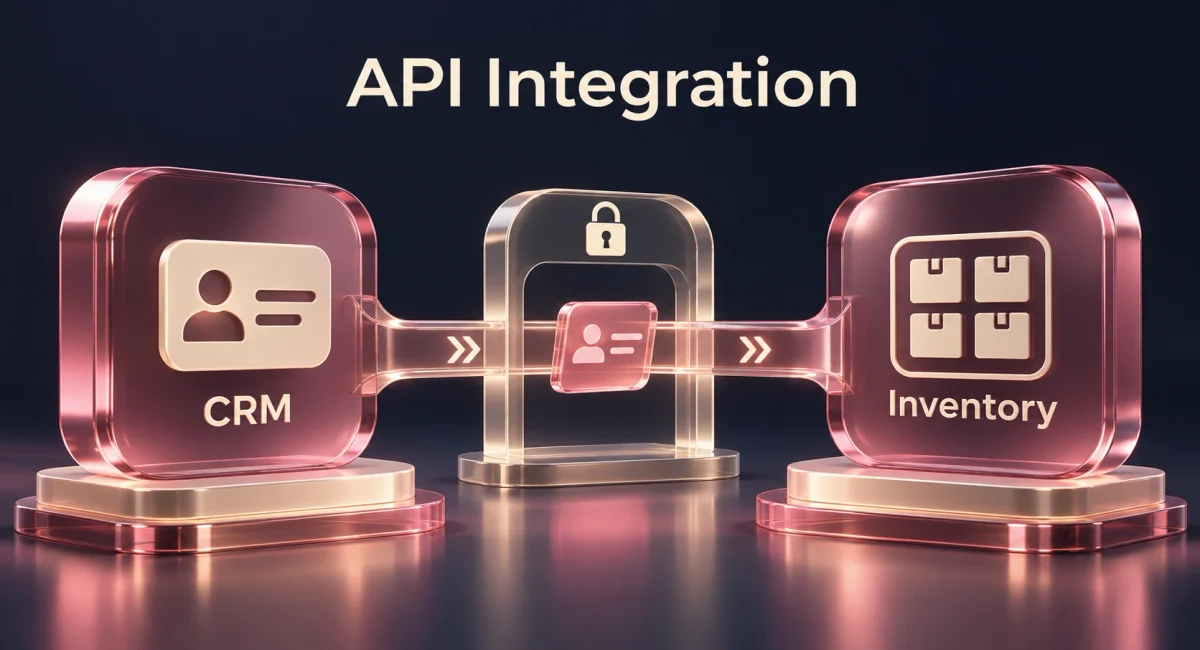
Enterprise API integration starts with a business decision: which application owns a record when several departments need to use its data? Consider a customer whose billing address changes in a CRM while a support team works from an older copy. Successful data transfer requires an agreed authority for that address. Engineers then need a reliable way to carry the change into the support application and establish whether the destination accepted it.
Commercial teams often evaluate integrations through a sales demonstration where information appears in a second application after somebody clicks Save on a customer record. Production requires a longer test. Customer records change during outages, and employees sometimes edit related fields in both systems. Integration design must account for that activity throughout the connection’s lifetime. Buyers can assess a proposed implementation through its record rules and recovery procedures. The agreement between the connected applications provides the starting point.
Specify Data Authority and API Contracts
Sales and support leaders need to agree which application supplies the authoritative customer address, then record the permitted direction for updates between their systems. Field-level ownership allows a support team to maintain its case notes while the CRM supplies commercial contact details. If both applications permit address changes, the specification needs a conflict policy. The policy can route competing edits to an employee for review, with the original values retained for comparison.
Developers can describe an HTTP interface through the OpenAPI Specification, which documents operations and the data exchanged with them in a machine-readable description. Contract examples explain the expected response when an application accepts an address change. Error responses need enough detail for the receiving program to distinguish invalid input from a temporary interruption. Separate acceptance tests establish the business rules behind that interface. Tests should establish which application wins a disputed update.
API revisions deserve a written compatibility plan that accounts for existing consumers and the supplier’s published schedule for retiring an older interface. Removal of a required response field can break a connection that passed its original acceptance test. Engineers can test proposed changes against recorded request examples and maintain an inventory linking deployed integrations to supported API versions. Someone then owns the work when a supplier announces a change.
Authenticate the Application
Background synchronization usually needs an application identity that remains accountable when the employee who commissioned the connection changes roles or leaves the company. Microsoft’s OAuth client credentials documentation describes a machine-to-machine flow in which an application obtains access using its own credentials. Application permissions determine its permitted work. The implementation should request permissions that match the required records and operations, with an administrator responsible for approval.
Authentication establishes who is calling, while authorization determines which customer records the caller can read or change within the destination application. OWASP’s object-level authorization guidance explains the need to check permissions when an endpoint receives a record identifier. Tenant boundaries belong in those checks. Security tests should include an authenticated application attempting to access a customer assigned to another tenant, with the expected denial recorded in the acceptance evidence.

Preserve Record Identity During Synchronization
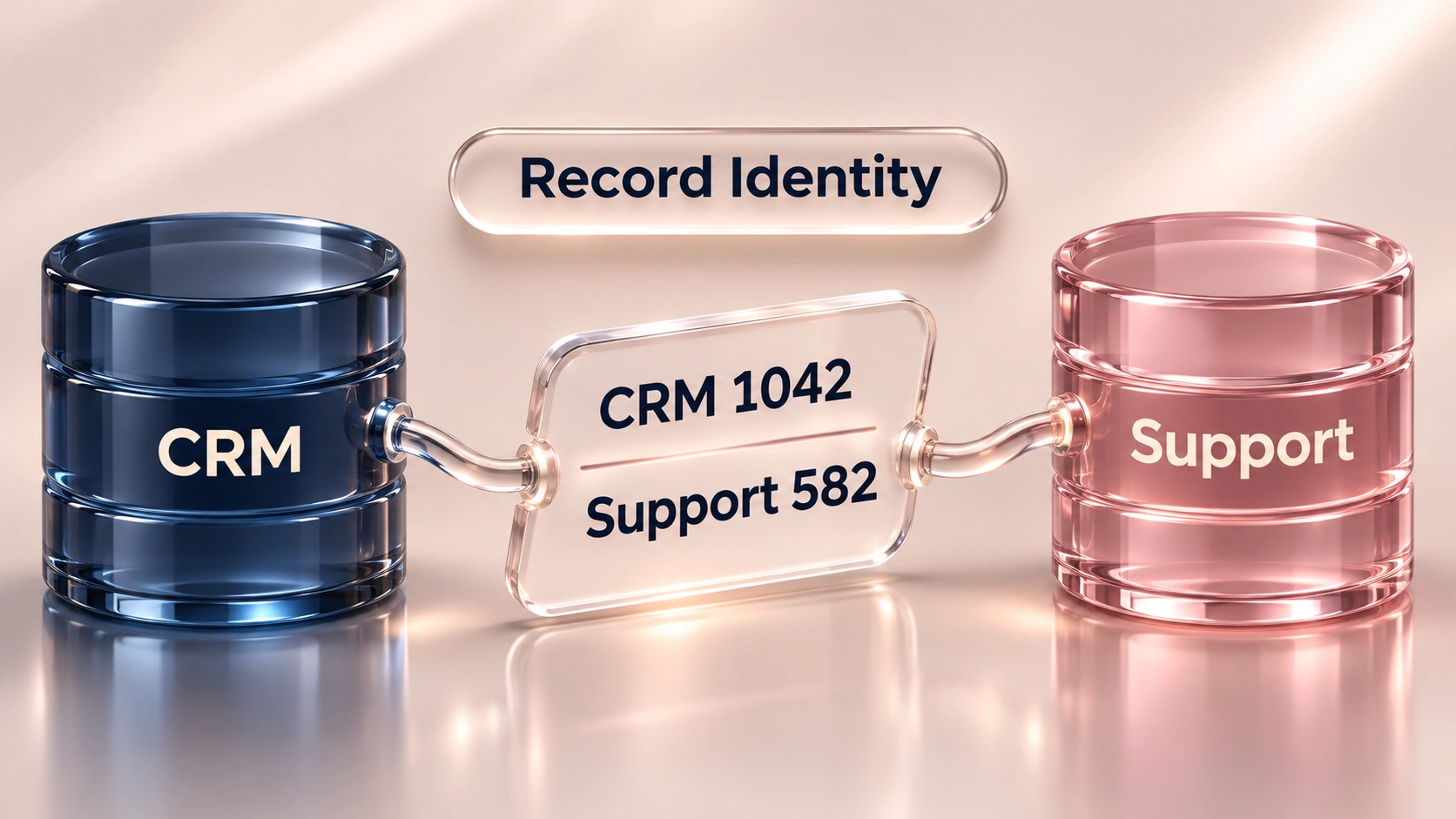
Customer identity needs a durable mapping when two applications assign different identifiers to the same organization, especially after an employee corrects its name. Email addresses can change, so the mapping connects stable internal identifiers where the applications provide them. Engineers can retain the CRM identifier beside the support application’s identifier in an integration database. Subsequent updates then target the established record instead of creating another customer from a changed email address.
Microsoft Graph’s delta query documentation illustrates how incremental synchronization can retrieve changes while preserving a provider-issued continuation position throughout a sequence of requests. Its nextLink continues a result set; its deltaLink supports a later change request after the current round finishes. The documentation describes repeated entities and varying replication delays. Consumers need repeat-safe processing and a recovery route for an expired synchronization position.
Account for Deletion and Conflict
Deletion requires an explicit business policy when a source application removes a customer record that still has active cases in the destination application. Engineers must distinguish a deleted customer from a field omitted in a partial update. Retention requirements may call for a restricted historical record while operational screens use an inactive state. Business owners must approve that behavior and test it against their retention obligations. The policy must address the treatment required by an authorized erasure request.
Periodic reconciliation provides a second way to detect drift when a delivery was missed or an employee changed data outside the expected workflow. Engineers can compare source records with their mapped counterparts using a business-approved comparison rule. Differences enter a repair queue with the originating values preserved for review. The repair procedure must respect field ownership, especially when a destination contains a legitimate local edit. Buyers should ask how an operator proves that a reconciliation run reached its intended record population.
Supplier request quotas affect the time required to repair a backlog after an outage, so capacity planning needs to cover recovery traffic alongside ordinary updates. The integration can reserve part of its permitted request budget for current work while historical repairs progress through a separate queue. Operators need a view of the oldest pending update and the last completed synchronization round. The measurements help them judge whether a customer-facing team is working with current information during recovery.
Treat Webhooks as Recoverable Messages
Webhook delivery introduces a separate responsibility when a remote application sends an event while the receiving application is busy or temporarily unavailable. The receiver authenticates the request using the provider’s supported verification method, then saves an accepted event in durable storage. Background workers can process that saved event after receipt. Separation between receipt and business processing allows the operator to inspect a failure against an identifiable delivery.
GitHub’s webhook recommendations provide a concrete example: receivers should use a queue for asynchronous processing and return a successful response within ten seconds. The deadline belongs to GitHub’s delivery contract. Other providers publish their own requirements. GitHub preserves the original delivery identifier during redelivery, which helps consumers recognize a repeated event. Integration acceptance tests verify that a replay leaves the intended business result intact.

Retry According to the Failure
Temporary connection failures merit a bounded retry policy that accounts for the destination’s capacity and the business operation’s tolerance for delayed completion. Microsoft’s retry guidance describes delayed attempts and warns that repeated operations can cause side effects to recur. Recoverable interruptions call for another attempt; invalid requests call for correction. After the configured retry limit is reached, failed work belongs in a review queue with an assigned operator and a documented repair procedure.
Publish Changes Through an Outbox
Database changes create a timing problem when an application saves a customer update and must send a corresponding message to another system. The database write might succeed while message delivery fails. AWS’s transactional outbox guidance describes storing the business change and an outbox entry within the same database transaction. The relay publishes the committed message. Receivers still need duplicate handling for repeated delivery attempts.
Project teams need to distinguish an accepted database transaction from confirmation that the destination applied the customer update, since employees may need to inspect both states. Integration records can retain the originating change identifier alongside the destination’s processing result. Support staff can then investigate a specific address change using an application-level trail. Logs retain the identifiers needed for repair, with access limited according to the information they contain.

Test Recovery and Agree on Ownership
Acceptance testing should follow a customer update through an interrupted connection, then verify how the operator restores agreement between the connected applications after service is restored. Include a repeated delivery in a separate test. Another test should verify the outcome when an employee changes the destination record during the interruption. Evidence should show the expected final record alongside the actual result, with a named owner approving the conflict policy.
OPERENDIA’s backend development work covers API development and permission systems, which are key engineering services for companies establishing connections between existing business applications. The integration brief should identify the authoritative records and the intended direction of updates. Procurement teams can then request evidence of acceptance for the recovery procedure and agree on who will maintain the connection after release. The resulting scope ties the implementation to an observable business record that employees can trust during daily work.
 Make your brand matter.