Brand Recognition in AI Content Needs a Customer Test
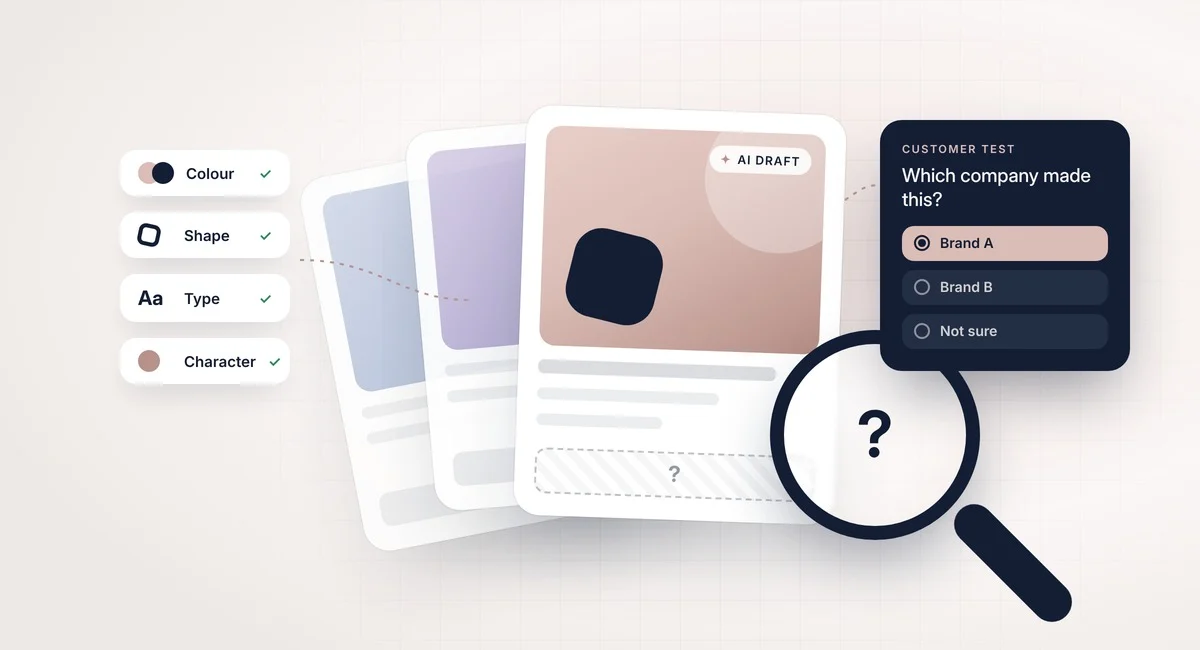
Your team can approve an AI-written advertisement for its tone and still have an unanswered question concerning what the company's customers will remember. The copy may sound conversational and use the approved vocabulary. Buyers might associate it with another supplier. Brand recognition in AI content requires evidence from the people expected to recognize the brand, as well as the team's editorial judgment.
Consider a hypothetical software company whose advertising repeatedly uses a familiar illustrated character to explain a specific purchasing problem. Its new AI-generated variants retain the friendly voice, yet replace the character with interchangeable office photography. Reviewers might approve the language. Customer testing would help determine which company buyers associate with the revised advertisement.
Tone Approval Leaves an Attribution Question
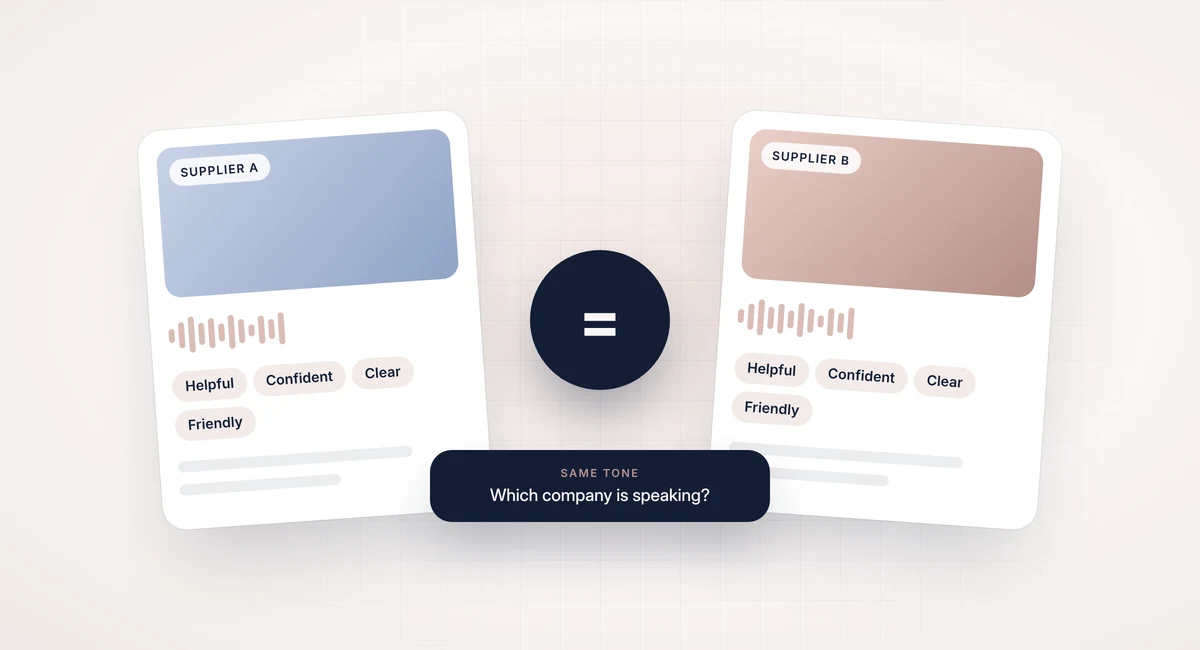
Tone instructions describe how a company wishes to speak, and familiar adjectives can fit many businesses within the same category. Two suppliers can sound helpful and confident while selling different products. Copy becomes more specific when it addresses an actual customer decision and supports the product claim with evidence.
OPERENDIA's discussion concerning buyer recognition examines the commercial meaning customers attach to a business when they consider a purchase. AI production introduces a narrower editorial decision: which existing advertising elements should remain recognizable as the surrounding content changes? Teams can compare customer responses to proposed variants against responses to the current approved advertisement.
Production reviewers judge whether a draft belongs to their company after repeated exposure to the brief and approved examples. Customers may see the advertisement during an unrelated task. Testing should account for the intended placement and viewing conditions. Show the proposed mobile creative at its intended size, for example, so the brand name's legibility can be realistically assessed.
Better Individual Drafts Can Resemble One Another
Researchers Anil Doshi and Oliver Hauser examined AI assistance in a 2024 short-fiction experiment, yielding findings relevant to similarity across finished works. The published research found higher creativity ratings for AI-assisted stories, especially among less creative writers. AI-assisted stories were more similar to one another. The task concerned short fiction; applying its findings to advertising requires separate evidence from actual campaigns.
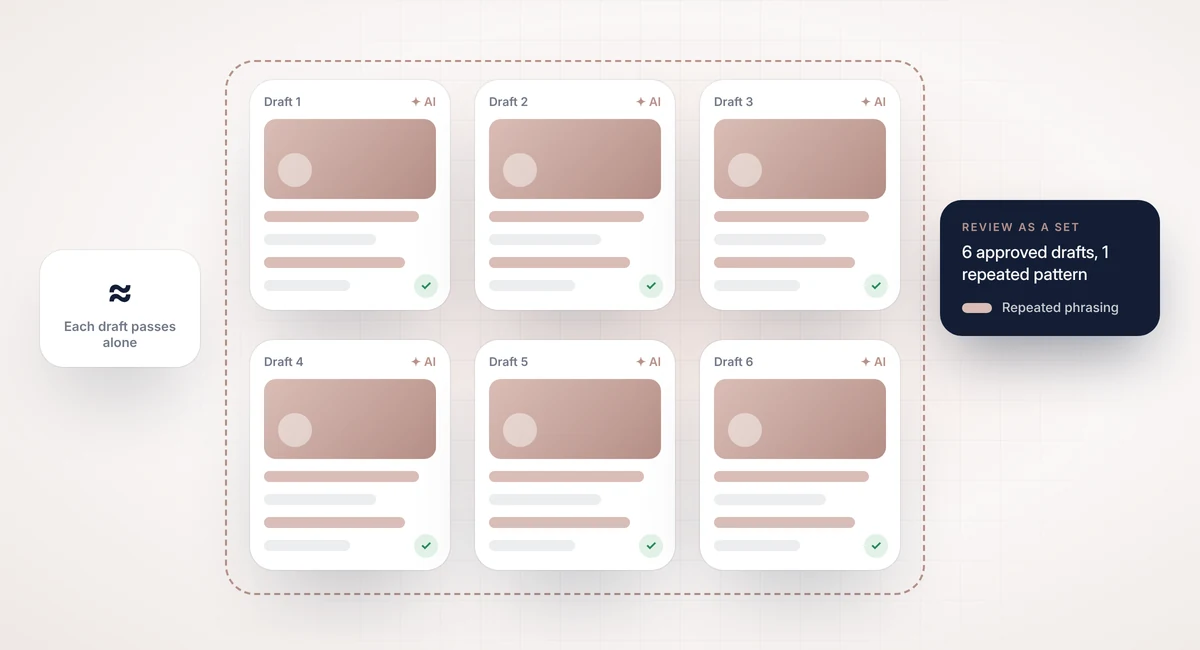
Editors can investigate a related production risk during a collective review of proposed advertisements, after approving the advertisements' individual factual accuracy. Repeated phrasing might be evident throughout the collection, even when an isolated draft reads well. Compare the recurring argument with other category advertising. If a competitor could use the same explanation unchanged, return to the product decision the advertisement should address.
WARC's public strategy report summary from October 1, 2026, discusses AI's growing role and the continuing importance strategists attach to judgment. The survey concerns practitioners' views. Customer attribution research supplies a different kind of evidence: which company people associate with the creative they have seen.
Protect the Cue Customers Already Associated with You
Established visual cues deserve investigation when an AI revision changes their appearance or removes them from the advertisement. The Ehrenberg-Bass Institute's asset research examines competing brand associations and differences between commercial settings. Internal approval establishes permission to use an asset; customer research investigates the memory attached to it.
Kantar's discussion of Coca-Cola's Masterpiece advertisement supplies a concrete example of recognizable branding within AI-assisted creative work. The bottle travels through an art gallery, and the production uses AI to animate paintings. Kantar describes a human-created script and reports favorable predictions from its LINK AI assessment. Readers should interpret those predictions as the vendor's assessment, with actual sales requiring separate measurement.
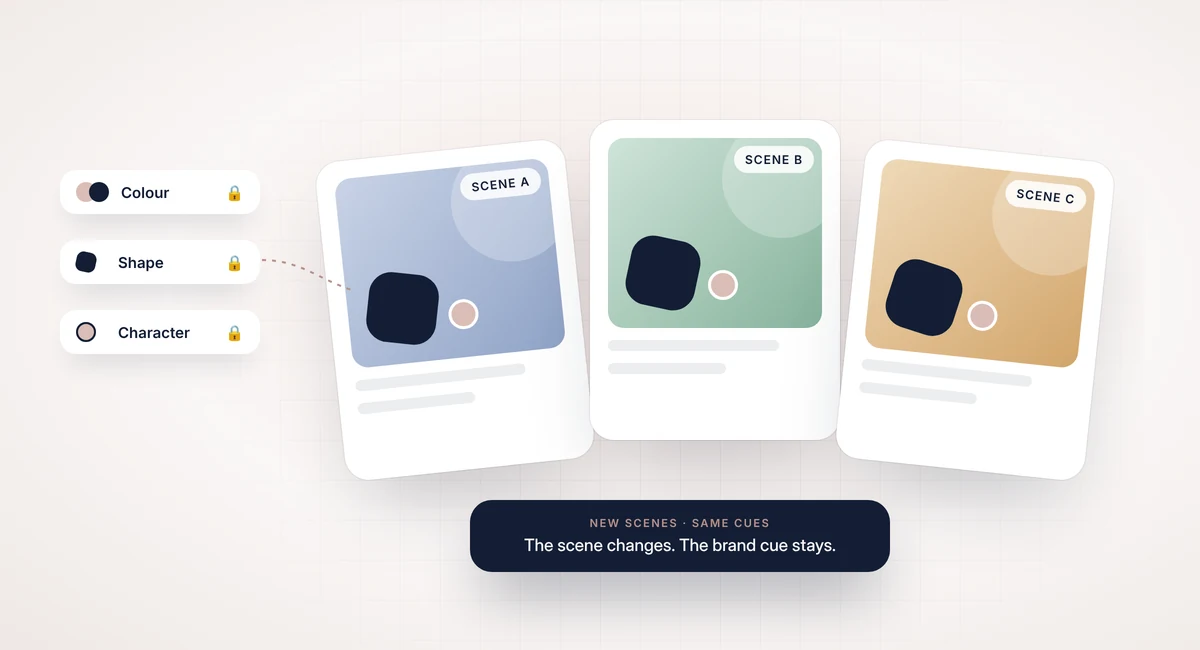
Creative directors can preserve an established cue while testing new ways to present a specific product claim within the same advertisement. The proposed revision might change the setting yet retain the familiar character. Another version could retain the setting and change the character's behavior. Document the intended change so a research result can inform a particular creative decision.
Reviewers still need to intervene when a technically accurate draft opts for a familiar category argument rather than addressing the customer's actual decision. Ask the writer to identify the evidence behind the proposed claim. Someone choosing software for a small finance team may need to know how an invoice exception is routed to the responsible employee. The approved demonstration could answer the question with a specific sequence. Repeating general promises about efficiency would leave the question of buying unresolved.
Ask Which Company the Creative Suggests
Research planning starts with the target population and the decision the business intends to make based on the results. Existing customers may recognize familiar assets faster than people who buy from competing suppliers. Record those groups separately where the research design supports the comparison. Let a qualified researcher determine the sample and analysis required for the decision's financial significance.
Ask participants which company they associate with an asset prior to presenting possible brand names, then retain their actual answers for review. Incorrect attribution to a named competitor deserves separate treatment from an uncertain response. Leading questions can supply the association with the test it was supposed to investigate. The wording should allow participants to report their own recollection.
System1's brand assessment method examines correct identification and the speed at which people recognize a brand's assets during its research exercises. Speed can add information when an asset produces accurate answers only after extended thought. Match the viewing conditions to the research question. Isolated-asset exercises investigate an association; a finished-advertisement test evaluates the creative customers would receive.
Keep the company name in the finished advertisement during testing whenever the approved creative requires its inclusion in the execution. Removing it creates a different research task. Compare the results against the current advertisement under equivalent conditions, and examine the uncertainty associated with any apparent difference.
Approve the Creative Decision the Evidence Supports
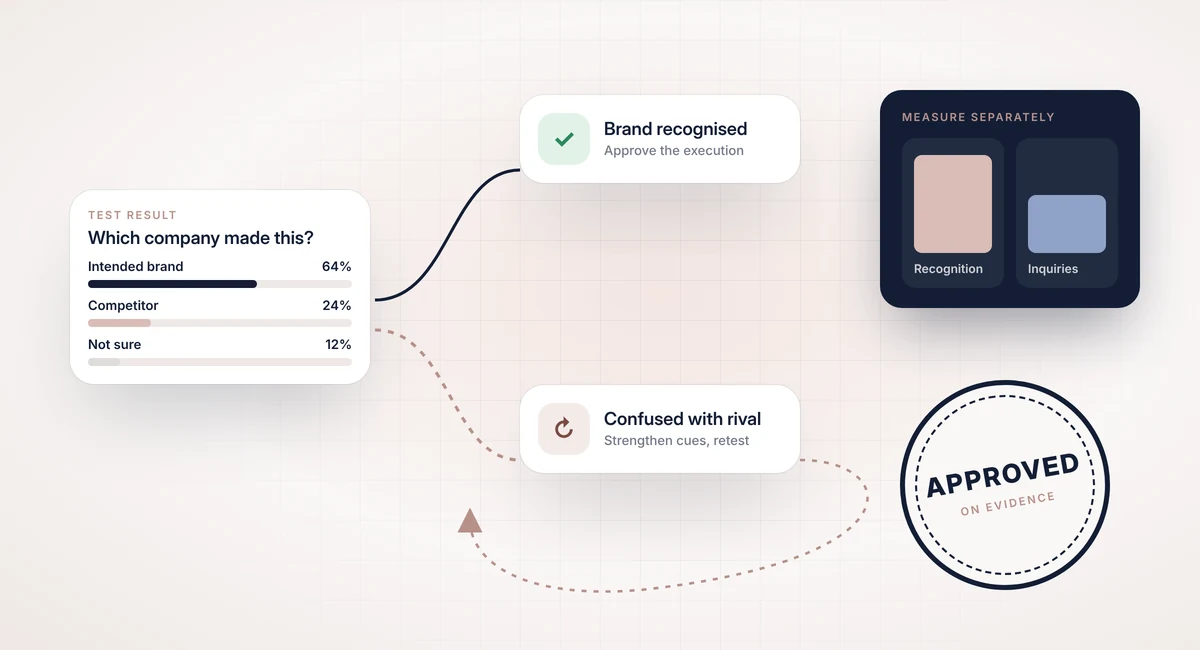
Suppose a hypothetical test finds buyers remember an advertisement's product explanation but frequently name a competing supplier when asked who advertised it. The team has a specific revision to investigate: strengthen the intended company's identification within the execution. Retest the revised version with comparable participants. Useful product explanations can remain in the creative while the branding receives further work.
The commercial report should retain separate measures for recognition and purchasing behavior, since remembering a company leaves the buying decision open. Track qualified inquiries through the agreed measurement process if the campaign seeks sales conversations. Compare production savings against research costs when assessing the AI-assisted workflow. Faster content creation becomes a budget advantage only within the costs actually recorded.
Researchers should record the exact creative version participants saw, so that later production changes receive an appropriate review against the tested execution. Replacing the opening image after testing changes what the audience receives. The approval record should identify the person responsible for assessing such revisions and the circumstances requiring another customer test. During a campaign, compare incoming customer questions with the product explanation in the advertisement. Persistent confusion can justify revisiting the message even when buyers identify the company.
Keep the Brief Useful during Production
The next production brief should identify the customer decision and the evidence permitted in the advertisement, with approved assets attached as working files. Explain which creative elements the team may change. Record the version approved for distribution so later revisions can be assessed against the same reference. Review the rendered advertisement and its destination page, as customers will encounter them during the campaign.
OPERENDIA's brand architecture work covers verbal identity and commercial language for companies preparing their next creative production briefs. If your team is expanding AI-assisted content production, discuss the current creative with OPERENDIA using an approved advertisement and the customer response you want to investigate.
 Make your brand matter.